Most people arrive at this site mid-problem rather than mid-purchase. Something is sore, it has been sore before, and the shopping is a means to an end. This section is for that — working out what is actually happening before spending anything.
It matters because three of the four common causes of a sore earlobe are not allergies, and none of those three is fixed by buying a different metal. People spend a lot of money solving the wrong problem.
Start by working out which problem you have
The four common causes. Only the first responds to changing metal, and it is not the most common one.
What it feels like
What it probably is
What actually fixes it
Itchy, red, both ears, exactly where the metal touches
The four common causes. Only the first responds to changing metal, and it is not the most common one.
The single most useful distinction is itch versus ache. Allergic contact dermatitis is an immune response and itch is what the immune system produces. Pressure and friction produce soreness without it. If your lobes ache but do not itch, the metal is probably not your problem.
How to stop the irritation — seven steps in order, cheapest first. Most people are done by step two or three, and the first three cost almost nothing.
Earrings for a new or healing piercing — why a healing channel is far less forgiving than a healed one, and the threading detail almost nobody has heard of.
Nickel allergy, explained — how the reaction works, where nickel hides outside jewelry, what the EU regulates that the US does not, and where the evidence stops.
How to read a jewelry listing — four questions, four minutes. This is the entire method behind the site, written so you can run it yourself.
Swimming, showering and travel — what survives chlorine and seawater, and what to pack when a reaction abroad is not an option.
The cheapest thing you can do, before anything else
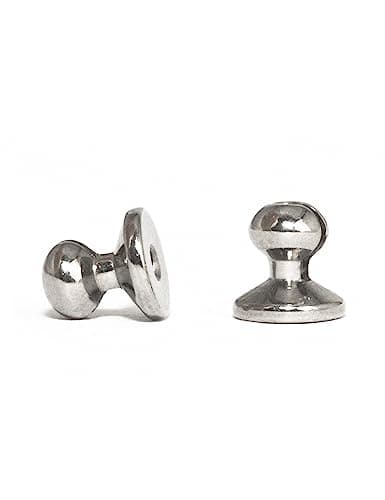
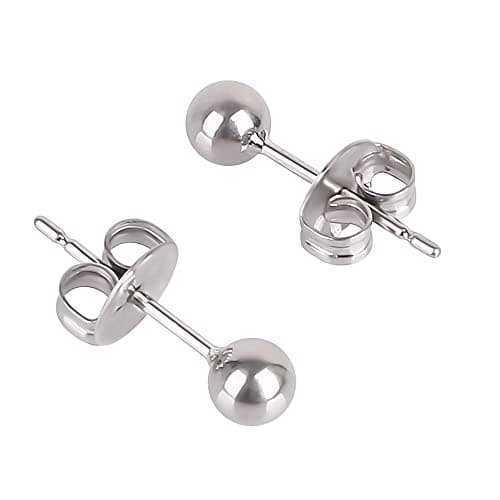
Replace the backs. Not the earrings — the backs.
A butterfly back is a separately manufactured component, frequently a cheaper alloy than the earring it holds on, and it is the part most likely to have been swapped from a drawer at some point without you thinking about it. It touches your skin for exactly as long as the front does.
If one ear reacts and the other does not, a mismatched back is nearly always the explanation. A pack of stated-metal titanium backs costs a fraction of a new pair of earrings and isolates the variable in a week. Why this works so often.
Where this site stops
We are not clinicians. Nothing in this section diagnoses anything, and it deliberately does not tell you how to care for a piercing, how long to wait before changing jewelry, or whether what you are looking at is normal. Those depend on things a website cannot see.
A piercing that is hot, swollen, throbbing, spreading redness or producing pus needs medical attention rather than a different pair of earrings. So does a reaction that will not settle after the metal has changed — at that point patch testing by a dermatologist is the thing that will actually tell you what you react to, and it can distinguish nickel from cobalt and chromium, which produce similar reactions and are handled differently.
What we can tell you is what sellers state about their metals, and where they state nothing. That is the whole method, and it is published so you can check it.
Everything in this section
12 pages, and what each one is for
Every roundup below shows its top pick with a live price where we have one. Where we do not, the button says so rather than showing you a number we cannot stand behind.