There is a chemical test you can do at your kitchen table in thirty seconds. It is genuinely useful, it is widely misunderstood, and it answers a narrower question than most people expect.
Gentle Carat earns a commission when you buy through the links on this page, at no extra cost to you. It never decides what we recommend or how we rank it — here is the full disclosure.
The home test is a dimethylglyoxime (DMG) spot test. You put a drop of DMG solution and a drop of ammonia on a cotton swab, rub it on the metal for about thirty seconds, and look at the swab. Pink or red means nickel is being released at the surface. Clear means it is not — at that spot, at that moment. It is a release test, not a composition test, and that distinction is the whole reason it is so often misread.
What the test actually does
Dimethylglyoxime forms a bright pink complex with nickel ions. The test does not see inside the metal; it sees nickel ions that have come out of the metal onto the swab in the time you rubbed it. That is why it is described as a nickel release test rather than a nickel content test.
The distinction matters constantly in this category. 316L stainless steel contains roughly 10 to 14 percent nickel by weight and typically releases very little of it, which is why most people wear it comfortably and a minority cannot. A DMG test on a 316L piece will frequently come up clear. The nickel is still in there. It is simply not coming out fast enough to register — and, for most wearers, not fast enough to matter either.
How to do it properly
Pick the right spot. Test the part that contacts skin: the earring post and back, the necklace clasp, the inside of a ring, the watch case back. The decorative front is not what causes the rash.
Clean the surface lightly first. Hand cream and polish residue sit between the swab and the metal.
Two drops on a swab — the DMG solution and the ammonia — then rub firmly on the spot for about thirty seconds.
Read the swab, not the jewelry. Pink or red on the cotton is the positive result.
Test more than one spot on anything with several components. A post, a back and a clasp are three different pieces of metal and may give three different answers.
Where the test earns its keep
It is most useful on things you already own and cannot look up: the inherited earrings, the watch with no paperwork, the belt buckle that might be the reason your navel itches, the glasses frames that leave marks behind your ears. For those, thirty seconds and a swab beats guessing.
It is least useful as a purchase filter, because the pieces most likely to be a problem — plated fashion jewelry — are exactly the ones where a clear result means the least. You would be testing the coating.
What the spot test can and cannot settle.
Question
Can the test answer it?
Is this surface releasing nickel right now?
Yes — this is exactly what it measures
Does this piece contain nickel?
No. Content and release are different things
Is this plated piece safe once the plating wears?
No. You tested the plating, not the base
Am I allergic to nickel?
No. That is a patch test, done by a clinician
Does it meet the EU release limit?
No. That is EN 1811, a laboratory method with artificial sweat over a week
What the spot test can and cannot settle.
The standard the test is a rough proxy for
The European Union restricts how much nickel jewelry may release: 0.2 micrograms per square centimeter per week for post assemblies inserted into pierced ears, and 0.5 for items in prolonged skin contact. The reference method is EN 1811, which involves immersing the item in artificial sweat for a week and measuring the result on laboratory instruments.
A kitchen-table swab is not that. It is a qualitative indicator that was designed to flag obvious offenders, and it does that job well. The United States, for its part, has no equivalent federal release limit for jewelry, which is the single most important fact about this whole category and the reason a test kit is a reasonable thing for an American buyer to own.
The alternative: buy things that do not need testing
The reason this site exists is that testing is a workaround. A listing that states implant-grade titanium (ASTM F136), niobium, or solid yellow gold at 14K or above has already answered the question, and no swab is required. The picks below are drawn from across the site for exactly that reason: an earring, a set of hoops, a ring, a watch and a necklace, each one chosen because the seller named the metal.
Ranked on what the seller actually discloses. Tap a row for the full write-up, or go straight to the listing.
#
Product
Best for
Score
Price
1
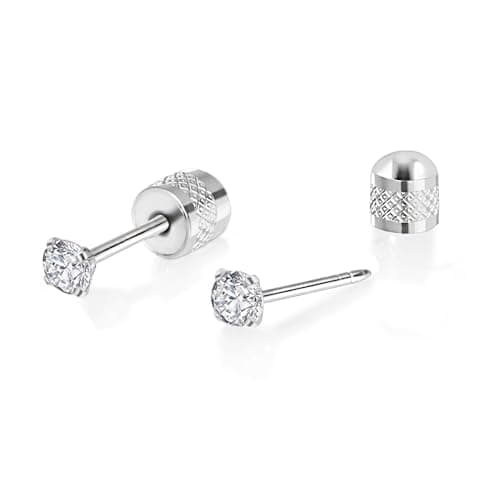
DAI JY Titanium Flat-Back StudsA flat disc behind the lobe instead of a butterfly clip, which is the difference between sleeping comfortably on a stacked ear and not.
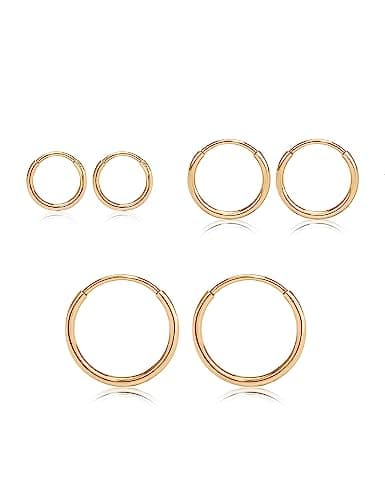
Limerencia G23 Titanium Slim Huggie Hoops, 3 pairsThree pairs of slim huggies on a stated implant-grade alloy, which is exactly what a second and third lobe piercing need and rarely get.
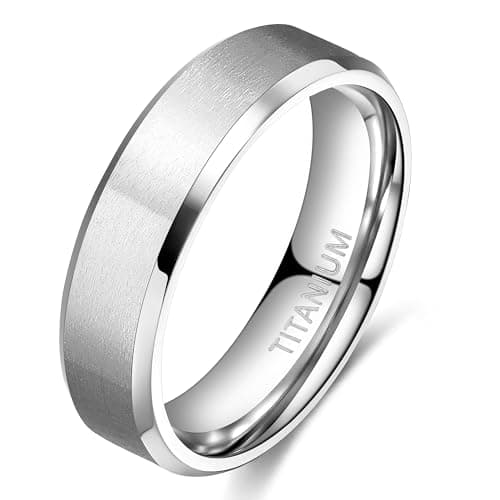
TIGRADE Matte Titanium Band, 4-10mmSolid titanium in a matte finish across four widths and a genuinely wide size range, which is the practical choice for a ring that will get knocked about.
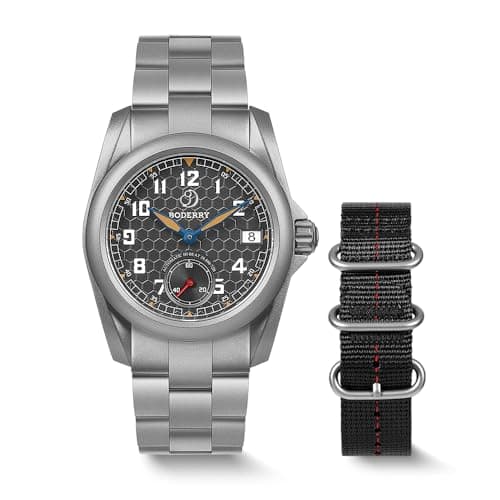
BODERRY Full Titanium Automatic Field Watch"Full titanium" is the phrase that matters on a watch listing, because it is the only one that implies the back as well as the front.
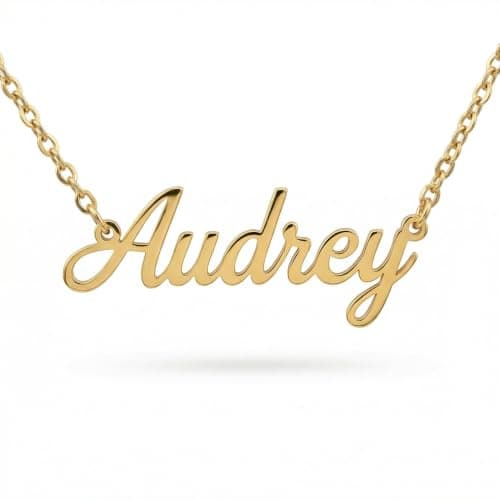
Roseka 14K Solid Gold Name NecklaceSays "solid" and "14K" together, which on a personalized necklace is the difference between an heirloom and a piece that wears through in a year.
“Score” is a disclosure score, not a test result. It rates how completely the seller states the post metal, the back metal and the nickel claim, and how that metal holds up for reactive skin. The full rubric is published on our methodology page.
#1 · Sleeping on a stacked ear
DAI JY Titanium Flat-Back Studs
A flat disc behind the lobe instead of a butterfly clip, which is the difference between sleeping comfortably on a stacked ear and not.
Post material
Titanium post
From the seller’s own product title: “Titanium Flat Back Stud Earrings for Women Men Cartilage Helix Tragus Piercing Jewelry”
Back material
Flat back — a disc that sits flush, and is part of the same fitting
From the seller’s own product title: “Flat Back Stud Earrings”
Nickel claim
Names a metal, makes no nickel claim. The seller’s own words: “Titanium Flat Back Stud Earrings”
The butterfly back is the single most under-disclosed component in this whole category — separately manufactured, frequently a cheaper alloy, and pressed against the skin behind the lobe all night. A flat back removes it.
With several piercings in one ear, backs also collide. A flush disc keeps the profile behind the ear flat enough that a pillow does not drive one earring into another.
"Titanium" here has no grade attached. That is less specific than the G23 hoops above, but any titanium contains no nickel as an alloying element, so the practical difference is small.
Who it’s for
Anyone with more than one hole per ear who sleeps in their earrings.
Skip it if
Skip this if you want the earring to read as jewelry from across a room. Flat-back studs are deliberately minimal.
Three pairs of slim huggies on a stated implant-grade alloy, which is exactly what a second and third lobe piercing need and rarely get.
Post material
G23 titanium, cited as ASTM F136 implant grade
From the seller’s own product title: “Limerencia G23 Titanium Slim Huggie Hoop Earrings, Hypoallergenic F136 Implant Grade Pure Titanium for Sensitive Ears (3 Pairs Set Gold)”
Back material
Hinged huggie — closes on itself, so there is no separate back
From the seller’s own product title: “Huggie Hoop Earrings”
Nickel claim
Says hypoallergenic, not nickel-free. The seller’s own words: “Hypoallergenic F136 Implant Grade Pure Titanium”
A curated ear needs several earrings at once, and the usual way people get there is a multipack of unnamed metal. Buying three pairs where the alloy is stated — and stated with a standard number — is the version of that purchase this site can actually recommend.
Slim huggies suit upper lobe holes better than studs do, because they sit tight to the lobe and do not press a flat back against the skin behind. For a second hole close to the first, that clearance matters more than it sounds.
One inconsistency worth naming: the title says both "G23" and "pure titanium". G23 is an alloy — titanium with aluminum and vanadium — so it is not pure titanium, and the two phrases cannot both be right. The alloy claim is the specific one and the one we score.
Who it’s for
Anyone building a second or third lobe piercing who wants every hole on the same stated alloy.
Skip it if
Skip this if your piercings are new. Hoops move in the channel far more than a flat-back stud does, and movement is what a healing hole least tolerates.
Solid titanium in a matte finish across four widths and a genuinely wide size range, which is the practical choice for a ring that will get knocked about.
Post material
Titanium, matte finish, 4 to 10mm
From the seller’s own product title: “TIGRADE Titanium Rings 4MM 6MM 8MM 10MM Wedding Band in Comfort Fit Matte for Men Women Size 3-15, Silver 6mm, Size 10.5”
Back material
Solid throughout
From the seller’s own product title: “Wedding Band in Comfort Fit Matte”
Nickel claim
Names a metal, makes no nickel claim. The seller’s own words: “TIGRADE Titanium Rings 4MM 6MM 8MM 10MM Wedding Band in Comfort Fit Matte”
Titanium is hard but it is not scratch-proof, and a high polish shows every mark. A matte finish absorbs the same wear without looking damaged, which across ten years of daily wear is the difference between a ring that ages and one that looks battered.
The metal question is identical to the polished bands: solid, single alloy, nothing plated, nothing bonded. The finish is cosmetic and does not change what touches your skin.
Sizes 3 to 15 in four widths is unusually complete for this shelf. Titanium cannot practically be resized — it is too hard to cut and rejoin the way gold is — so ordering the right size first time matters more here than with any other ring metal.
Who it’s for
Everyday wear, manual work, and anyone who has already scratched a polished band and regretted it.
Skip it if
Skip this if you want a mirror shine. Matte is the point of this listing, and a brushed surface will never look like polished metal.
"Full titanium" is the phrase that matters on a watch listing, because it is the only one that implies the back as well as the front.
Post material
Titanium case, described as full titanium
From the seller’s own product title: “BODERRY Automatic Watch for Men, Full Titanium Gray Field Watch, 72HR Power Reserve, 100M Waterproof, Sapphire Crystal, Luminous Hands-Voyager S72”
Back material
Titanium bracelet implied by "full titanium"; not itemized separately
From the seller’s own product title: “Full Titanium”
Nickel claim
Names a metal, makes no nickel claim. The seller’s own words: “Full Titanium Gray Field Watch”
Here is the thing nobody tells watch buyers with reactive skin: the case back is a different part from the case, and on a great many "titanium" watches the back is stainless steel. The back is also the only part in continuous contact with the inside of your wrist, warm and damp, for as long as you wear it.
"Full titanium" is the phrase to search for, and it is why this watch leads. It does not itemize the back, but it makes a whole-watch claim rather than a case-only one, which is a materially different promise.
The rest is watch specification rather than skin specification. An automatic movement with a 72-hour reserve, sapphire crystal and 100m water resistance is a lot of watch at this price, and none of it touches you.
Who it’s for
Someone whose wrist reacts under a steel watch and who wants the whole watch, not just the visible part, in titanium.
Skip it if
Skip this if you need a quartz movement you can forget about. An automatic stops if it sits in a drawer for three days.
Says "solid" and "14K" together, which on a personalized necklace is the difference between an heirloom and a piece that wears through in a year.
Post material
14K solid gold nameplate and chain
From the seller’s own product title: “Roseka 14K Solid Gold Name Necklace for Women”
Back material
Clasp metal not named — the component that sits at the nape all day
Not named in the seller’s product title — the headline nearly every buyer reads. That omission is the finding, not a gap in our notes.
Nickel claim
Names a metal, makes no nickel claim. The seller’s own words: “14K Solid Gold Name Necklace”
Personalized jewelry is the category where plating fails fastest, because a cut-out name has far more edge per gram than a plain pendant does, and edges are where a coating wears first. Solid gold has no coating to lose.
Fourteen-karat gold is 58.3 percent gold, conventionally alloyed with silver and copper in yellow gold. That is why solid yellow gold at 14K and above is this site's standing recommendation for people who cannot wear nickel.
The clasp is the gap, and on a necklace it is the gap that matters most: it sits still against one patch of skin at the nape, under hair, warm and damp, which is exactly where necklace reactions start. The title does not name it.
Who it’s for
Someone buying a name necklace to keep, whose skin has ruled out plated pieces.
Skip it if
Skip this if the clasp is your known problem. Ask the seller before ordering, because a gold necklace on a steel clasp is a common build.
Yes, for what they measure. The dimethylglyoxime spot test turns pink when nickel ions are coming off the surface you rubbed. A pink result is reliable. A clear result means that surface is not releasing much nickel right now — which is not the same as the item being nickel-free.
Will a nickel test work on plated jewelry?+
Not usefully. You would be testing the plating, which is exactly the layer that hides whatever is underneath. Once the coating wears through at a contact point, the base metal becomes the surface, and that is the metal you actually needed to test.
Does stainless steel test positive for nickel?+
Often not, even though it contains nickel. 316L contains roughly 10 to 14 percent nickel by weight but releases very little, and the spot test only detects what is released. That gap between content and release is why most people wear steel comfortably and a minority cannot.
Where should I test an earring?+
The post and the back — the parts that touch you, and in the case of the post the part that sits inside the piercing. Testing the decorative front tells you about a surface that never contacts broken skin.
Can a test kit tell me if I am allergic to nickel?+
No. It tests the object, not you. Whether your immune system reacts to nickel is established by a patch test applied and read by a clinician, usually over several days.