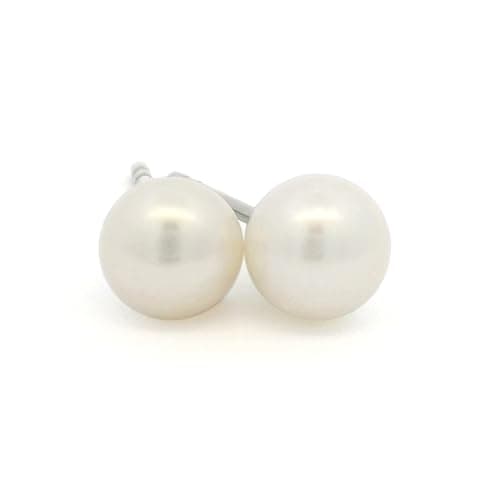
Nobody has ever reacted to a pearl. The reaction comes from the few millimeters of metal behind it, which is the part the listing describes last, if at all.
Gentle Carat earns a commission when you buy through the links on this page, at no extra cost to you. It never decides what we recommend or how we rank it — here is the full disclosure.
A pearl is calcium carbonate laid down in layers by a mollusk. It is inert against skin and it is not what is bothering you. The post is: a few millimeters of metal sitting inside the piercing, chosen by the manufacturer as a findings part and described in the listing, if at all, after the pearl’s size, luster and shape. Buy the post. The pearl is the part you can judge from a photograph.
How we judged these
Criteria first, ranking second. Nobody here has worn these earrings; the scores rate what each listing states. In order:
Is the post metal named, and how specifically? A cited standard like ASTM F136 is the strongest claim available on this shelf.
Is the pearl described accurately? “Freshwater cultured” and “crystal pearl” are both honest. “Pearl” alone is not a description.
What fastens behind? Flat backs and screw backs beat butterfly clips, which are usually a separate and undisclosed alloy.
Size, stated in millimeters, because it decides both look and weight.
Honest downsides on every pick.
The three things sold as “pearl”
What each kind of pearl is, and what it means for wearing them every day.
Name on the listing
What it is
Durability
Skin
Freshwater cultured
A real pearl, grown in a mussel around an implanted nucleus
Soft — scratches, and dulls with perfume and hairspray
Inert
Crystal or glass pearl
A glass core with a pearlescent coating
Harder than nacre; the coating can eventually wear
Inert
Imitation or faux
Usually a plastic or glass bead with a coating
Varies widely; the cheapest option
Inert
What each kind of pearl is, and what it means for wearing them every day.
None of those distinctions is a health question. They are value and durability questions, and a listing that names which one it is deserves credit for it — two of the picks below do.
Why pearl listings are so quiet about metal
Pearl earrings are sold on the pearl. The listing tells you the diameter to a tenth of a millimeter, the color, the shape and the luster grade, and then describes the entire metal component as “silver” — which, as it is used there, is a color rather than a material.
That is why so many people with sensitive ears believe they have reacted to pearls. They have not. They have reacted to whatever the findings supplier used for the post, which on an inexpensive pearl stud is very often an unnamed base metal with a plated finish. The listing-reading method applies exactly: find the specific claim about the post, and if there is not one, treat the question as open.
Caring for a real pearl, which is not like other jewelry
Nacre is soft and porous. Perfume, hairspray, lotion and even sustained sweat dull it, and the conventional advice — pearls on last, off first — exists for exactly that reason. Clean them with a soft damp cloth, never in an ultrasonic cleaner, and keep them away from anything that would clean silver.
This is one place where a crystal pearl is arguably the better everyday buy. Glass does not care about hairspray, it survives being dropped on a bathroom floor, and it costs a fraction to replace when it is lost.
Where each pick fits
The two picks citing ASTM F136 lead, because a standard number is a claim that could in principle be checked. The unnumbered titanium picks follow. The 316L screw-back is last among the featured picks: the grade is stated and the fastening is the most secure on the page, but steel contains nickel as an alloying element and a pearl stud is worn for long stretches.
For the same metals in a plainer shape, see hypoallergenic studs, and if the pearl is going in a second or third hole, the stacked-lobe page covers clearance and backs.
Quick picks
Ranked on what the seller actually discloses. Tap a row for the full write-up, or go straight to the listing.
#
Product
Best for
Score
Price
1
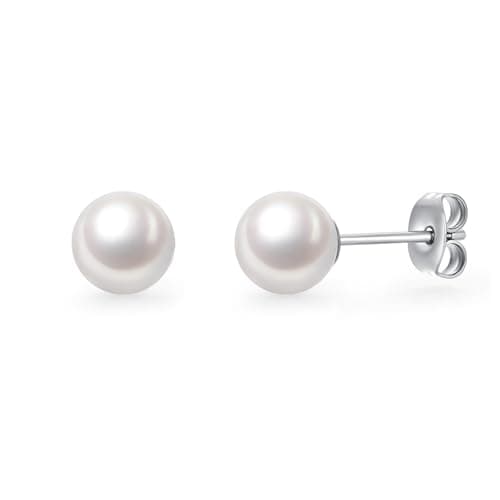
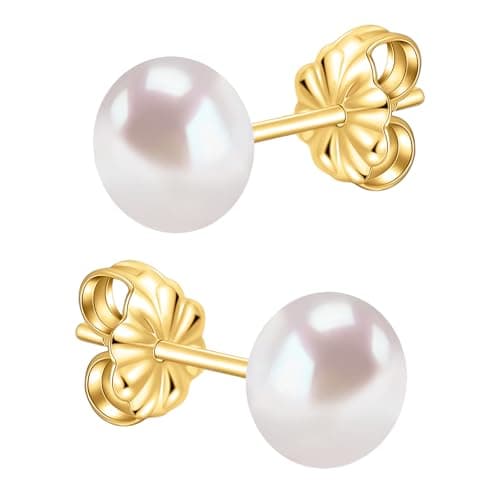
TitanHeart F136 Titanium Freshwater Pearl Studs, 8mmCites ASTM F136 by number and puts a real cultured pearl on it, which is the combination this shelf almost never offers.
Stjarna F136 Titanium Crystal Pearl Studs, 5mmF136 titanium again, this time under a crystal pearl rather than a cultured one — and the listing is upfront about which it is.
Limerencia Titanium Freshwater Cultured Pearl EarringsTitanium and a stated cultured pearl from a maker whose entire catalog is sensitive-ear jewelry — the metal claim is less specific, the track record is better.
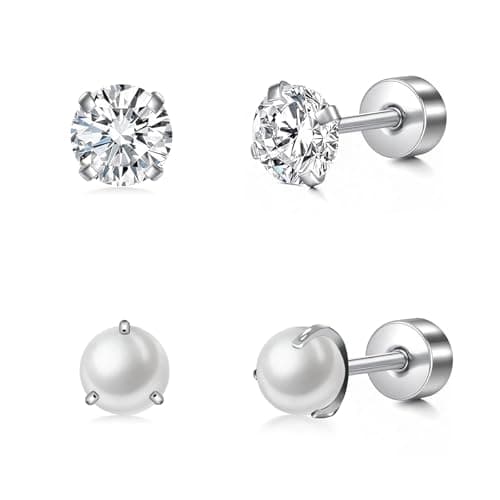
GUIJUEYE Titanium Pearl and CZ Earrings, 2 pairsA pearl pair and a stone pair on the same stated titanium post, which is the sensible way to buy for two holes at once.
“Score” is a disclosure score, not a test result. It rates how completely the seller states the post metal, the back metal and the nickel claim, and how that metal holds up for reactive skin. The full rubric is published on our methodology page.
#1 · A real pearl on a stated implant-grade post
TitanHeart F136 Titanium Freshwater Pearl Studs, 8mm
Cites ASTM F136 by number and puts a real cultured pearl on it, which is the combination this shelf almost never offers.
Post material
F136 titanium post
From the seller’s own product title: “TitanHeart F136 Pure Ttitanium Hypoallergenic White Freshwater Cultured Pearl Stud Earrings for Women (8mm)”
Back material
Back type not named in the title
Not named in the seller’s product title — the headline nearly every buyer reads. That omission is the finding, not a gap in our notes.
Nickel claim
Says hypoallergenic, not nickel-free. The seller’s own words: “F136 Pure Ttitanium Hypoallergenic”
ASTM F136 is the composition standard behind the phrase implant-grade titanium — Ti-6Al-4V ELI. A listing that cites the document number is making a claim you could in principle check, which is the strongest shape of claim this site recognizes short of a test report.
"Freshwater cultured" is the correct name for a real pearl grown in a mussel, as distinct from a glass or plastic imitation. It is a material fact stated plainly, and the pearl is in any case nowhere near the piercing.
The title misspells titanium and calls an alloy "pure", which is the sort of sloppiness that makes a reader wonder. The F136 citation is the specific claim and the one that carries the weight.
Who it’s for
Anyone who wants classic pearl studs and has already found that ordinary posts are the problem.
Skip it if
Skip this if you want small. Eight millimeters is a substantial pearl, and on a stretched lobe it is weight in the wrong place.
F136 titanium again, this time under a crystal pearl rather than a cultured one — and the listing is upfront about which it is.
Post material
F136 titanium post
From the seller’s own product title: “STJARNA Austrian Crystal Pearl F136 Titanium Earrings 5mm Pearl for Women”
Back material
Back type not named in the title
Not named in the seller’s product title — the headline nearly every buyer reads. That omission is the finding, not a gap in our notes.
Nickel claim
Names a metal, makes no nickel claim. The seller’s own words: “F136 Titanium Earrings”
A crystal pearl is a glass core with a pearlescent coating. It is not a real pearl and this listing does not pretend otherwise — it says crystal pearl, which is the honest name for it.
For everyday wear that is arguably the better buy: glass is harder than nacre, so a crystal pearl survives being knocked about in a way a cultured pearl does not, and it costs less to replace when it is lost.
Five millimeters is the size that reads as a classic small pearl stud. It is also light, which matters if your lobes already ache by evening.
Who it’s for
Daily wear, work, and anyone who loses earrings often enough that a real pearl feels reckless.
Skip it if
Skip this if you specifically want a real pearl. This is glass, clearly labeled, and it will never have the depth of nacre.
Limerencia Titanium Freshwater Cultured Pearl Earrings
Titanium and a stated cultured pearl from a maker whose entire catalog is sensitive-ear jewelry — the metal claim is less specific, the track record is better.
Post material
Titanium post — no grade stated
From the seller’s own product title: “Limerencia Titanium Freshwater Cultured Pearl Earrings”
Back material
Back type not named in the title
Not named in the seller’s product title — the headline nearly every buyer reads. That omission is the finding, not a gap in our notes.
Nickel claim
Names a metal, makes no nickel claim. The seller’s own words: “Titanium Freshwater Cultured Pearl Earrings”
The title is short, which cuts both ways: it names titanium and a cultured pearl and claims nothing it cannot support, but it also gives no grade and no dimensions.
Limerencia appears repeatedly across this site because the same maker turns up wherever a listing bothers to name an alloy. That is a pattern rather than a guarantee.
Real pearls are softer than every stone this site otherwise discusses — around 2.5 to 4.5 on the Mohs scale — so they scratch, and perfume and hairspray dull them. That is a care issue, not a skin one.
Who it’s for
Someone who wants pearls and prefers buying from a maker focused on reactive skin.
Skip it if
Skip this if you want the grade named. The F136 pick above cites a standard and this one does not.
A pearl pair and a stone pair on the same stated titanium post, which is the sensible way to buy for two holes at once.
Post material
Titanium post — no grade stated
From the seller’s own product title: “GUIJUEYE 2 Pairs Titanium Pearl & CZ Earrings for Sensitive Ears Women”
Back material
Back type not named in the title
Not named in the seller’s product title — the headline nearly every buyer reads. That omission is the finding, not a gap in our notes.
Nickel claim
Names a metal, makes no nickel claim. The seller’s own words: “Titanium Pearl & CZ Earrings for Sensitive Ears”
Buying a pearl pair and a cubic zirconia pair together solves the stacked-ear problem this site keeps running into: people fill a second hole with whatever is in the drawer, and whatever is in the drawer is usually the unnamed alloy that started the trouble.
The metal is named without a grade. That is the middle of this shelf — better than silence, weaker than an F136 citation.
Neither the pearl type nor the back is named. On a pearl listing, "pearl" alone can mean cultured, imitation or crystal, and it is worth asking which before buying if it matters to you.
Who it’s for
Someone filling two lobe holes who wants both on the same metal.
Skip it if
Skip this if you care whether the pearl is real. The listing does not say, and two picks above do.
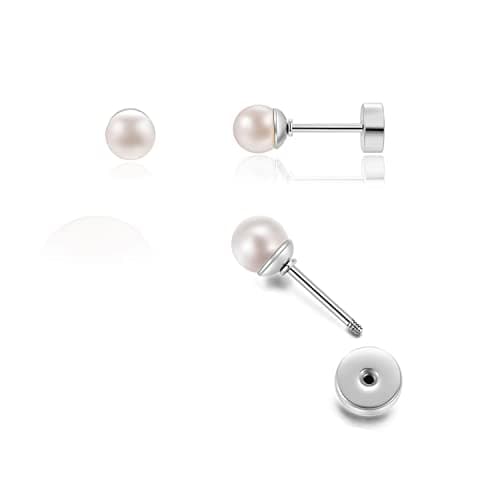
A screw fitting on a stated 316L post — the most secure fastening on this page, on the most ordinary metal.
Post material
316L surgical steel post
From the seller’s own product title: “Tiny Screw Back Pearl Stud Earrings for Women,Flat Back Pearl Cartilage Earrings Helix Earrings 316L Surgical Steel Cartilage Piercing Jewelry Gift Set fo Toddlers(4mm, Silver)”
Back material
Screw back — threads on, so it cannot be knocked off
From the seller’s own product title: “Screw Back Pearl Stud Earrings”
Nickel claim
Names a metal, makes no nickel claim. The seller’s own words: “316L Surgical Steel Cartilage Piercing Jewelry”
A screw back is the fastening piercers recommend for children and for anyone who keeps losing earrings, because it cannot be pulled off by a jumper or a pillow.
316L is stated, which is the grade most reactive people tolerate. It is not nickel-free — austenitic stainless steel contains roughly 10 to 14 percent nickel by weight — but release is low, which is why most people wear it without trouble.
The listing describes itself as a gift set for toddlers, and small children are the one group for whom this site would push back: a 4mm pearl is a small part, and a screw back is fiddly enough that adults lose patience with it.
Who it’s for
Anyone who tolerates steel and wants a pearl stud that stays put.
Skip it if
Skip this if steel is your trigger, or if you want the earring in and out quickly. Screw backs are slow by design.
Not to the pearl. Pearls are calcium carbonate and inert against skin. What causes the reaction is the post and back behind the pearl — frequently an unnamed base metal on inexpensive pearl studs. Change the post metal and the pearl is not the issue.
What metal should pearl earring posts be?+
Implant-grade titanium — ASTM F136, often sold as G23 — is the strongest option, with commercially pure titanium close behind. 316L stainless steel suits most people. Avoid unnamed base metal, especially plated, because the plating wears fastest exactly where the post passes through the piercing.
Are crystal pearls better than real pearls?+
For everyday wear, often yes. A crystal pearl is a glass core with a pearlescent coating: harder than real nacre, unbothered by hairspray, and much cheaper to replace. A cultured pearl has depth and character that glass does not, and needs more care.
Why did my pearl earrings turn my ears green?+
Green is copper oxidizing, which means there is copper in the post or the plating has worn through to a copper-containing base. It washes off and it is not an allergic reaction — but it does tell you the metal is not what you hoped.