Both are a layer of gold over something else. One is a legal term with a weight ratio behind it, the other is a coating measured in fractions of a micron, and on an earring post that gap is the whole story.
Gentle Carat earns a commission when you buy through the links on this page, at no extra cost to you. It never decides what we recommend or how we rank it — here is the full disclosure.
Gold filled is the better buy, and it is not a close call. To be sold as gold filled in the US, the bonded gold layer must be at least one twentieth of the item’s total weight — that is the “1/20” you see stamped on it. Gold plating is an electroplated coating typically around half a micron thick. For a nickel-sensitive buyer the practical question is not which looks better on day one, it is how long before the layer wears through on the post and you are wearing the base metal. On plating that is months. On gold filled it is years.
How we judged these
Criteria first, ranking second. Nobody here has worn these earrings, so the scores rate what each seller discloses and how the named material suits reactive skin — never a test result. In order:
Is the layer quantified? “1/20 14K gold filled” is a standard. “Thick gold layer” is a description. “Gold plated” with no micron figure is neither.
What is under the layer? Almost nobody names it. We say so on every entry rather than assuming it is benign.
Is the post treated differently from the body? A few listings put solid gold on the post, and that is the single most useful thing a gold-tone earring can do.
What fastens behind? Hinged huggies and lever-backs have no separate component; butterfly clips do, and they are the most under-disclosed part in the category.
Honest downsides on every pick, including the one ranked first.
The four gold surface treatments
These are not four grades of the same thing. Two of them are defined terms with rules behind them and two are descriptions, and it is worth knowing which is which before comparing prices.
The gold treatments from thinnest to thickest, and what each one means for the part inside your piercing.
Term
What it is
The base underneath
How long the gold lasts on a post
Gold flashed / gold washed
An extremely thin deposited layer, well under half a micron
Usually unnamed base metal
Weeks of daily wear, sometimes less
Gold plated
An electroplated layer, typically around half a micron
Usually unnamed base metal
Months. Wears at friction points first
Gold vermeil
A US-regulated term: at least 2.5 microns of gold, and the base must be sterling silver
Sterling silver — this is the part that makes vermeil different
A year or more, and what emerges underneath is silver
Gold filled
A layer bonded under heat and pressure, at least 1/20 of total weight in gold
Usually brass, occasionally sterling
Years. A genuinely different product
Solid gold (10K, 14K, 18K)
Gold alloyed all the way through
None — there is no layer
Indefinite
The gold treatments from thinnest to thickest, and what each one means for the part inside your piercing.
Why gold filled behaves so differently
The difference is not only thickness, it is how the gold gets there. Plating is an electrochemical deposit: the piece goes in a bath and a very thin film of gold is grown on the surface. Gold filled is mechanically bonded — a sheet of karat gold is pressure-bonded to a base metal core with heat, then worked into the finished shape. The result is a layer that is orders of magnitude thicker and metallurgically attached rather than deposited.
That is why the two are measured in different units. Plating is quoted in microns because that is all there is to measure. Gold filled is quoted as a fraction of the object’s weight, because the layer is a structural part of the object.
So is gold filled hypoallergenic?
For most people with sensitive ears, in practice, yes — and the honest version of the answer has two halves.
While the layer is intact, you are wearing gold. Karat gold is among the least reactive metals in jewelry, and a gold-filled layer is thick enough to stay intact on a post for years rather than months. That is the entire reason handmade jewelers use gold-filled ear wires for customers who cannot wear cheap earrings.
It is still a layer over a base metal. That base is usually brass — copper and zinc — which is why a worn gold-filled piece can eventually leave a green mark, the same copper reaction covered on the tarnish and green skin page. Brass is not normally a nickel alloy, but no listing on this shelf names its base, so a diagnosed nickel allergy is better served by titanium or by solid gold, where there is no layer to outlive.
Does gold filled tarnish?
The gold itself does not. What can happen is two other things that get called tarnishing. The first is wear: at an edge, a hinge or a post, the layer eventually thins and the base metal shows, which darkens and can mark skin. The second is surface film — lotion, hairspray, soap and sweat dulling the gold without changing it. The second wipes off with warm water and a soft cloth. The first does not, and it is the end of the piece’s life as a gold-colored object.
Chlorinated water accelerates both, which is worth knowing if you swim in your earrings. The swimming and travel guide covers what survives a pool and what does not.
Where the money actually goes
A rough hierarchy, in qualitative terms because this site never writes a price into copy: solid gold is the most expensive by a wide margin and the only one with no layer to lose. Gold filled sits in the middle and is usually a small premium over good plated jewelry. Vermeil overlaps gold filled on price and differs mainly in what is underneath — sterling rather than brass. Plated is the cheapest and is priced as a consumable, whether or not it is sold as one.
For a piece worn every day, gold filled is the value answer and solid gold is the permanent one. For a piece worn occasionally, plating is not irrational — it simply should not be in a piercing.
Where each pick fits
The hybrid leads: solid gold on the post, gold filled on the hoop, which puts the permanent material exactly where the wear happens. The two picks that state “1/20” follow, then the ones that name gold filled without the ratio. The ear wires are there because the cheapest fix for a drop earring is usually the hook rather than the earring. The solid gold flat-back is included as the tier above for contrast, and the plated huggie set as the tier below — a fair purchase for occasional wear, and the one pick here whose gold is measured in fractions of a micron.
Ranked on what the seller actually discloses. Tap a row for the full write-up, or go straight to the listing.
#
Product
Best for
Score
Price
1
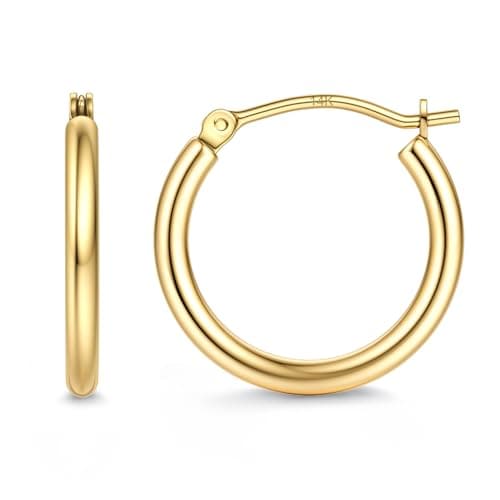
Jstyle Gold-Filled Hoops on a Solid Gold Post, 14mmSolid 14K on the post and gold filled on the hoop — which is the correct way round, because the post is the only part inside your body.
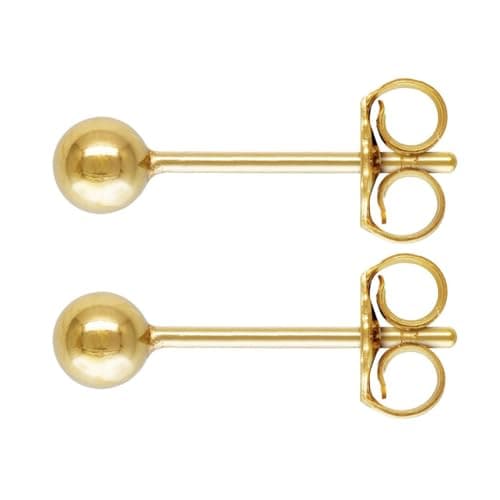
Adabele 1/20 14K Gold-Filled Ball Studs, 3mmStates the 1/20 ratio that makes gold filled a legal term rather than a marketing one, which almost no listing on this shelf bothers to do.
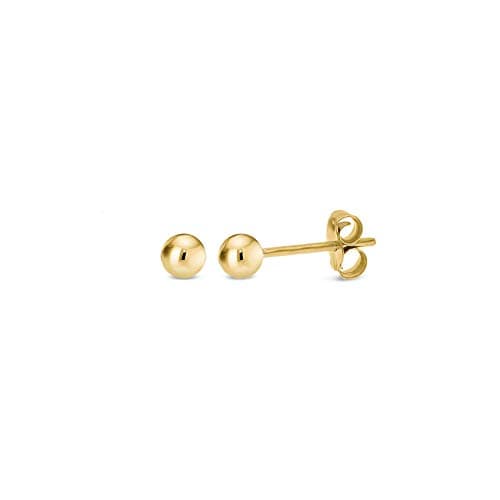
KEZEF 14K Gold-Filled Ball Studs, 3mmThe same shape and size as the pick above from a longer-established seller, with the layer described as thick rather than quantified.
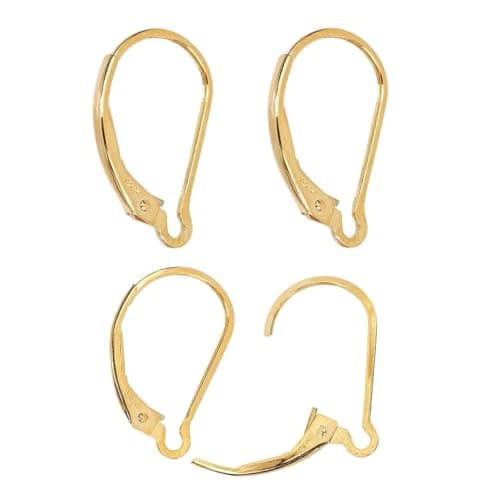
Adabele 1/20 14K Gold-Filled Leverback HooksGold-filled ear wires with the ratio stated — the cheapest way to fix a drop earring whose hook is the problem.
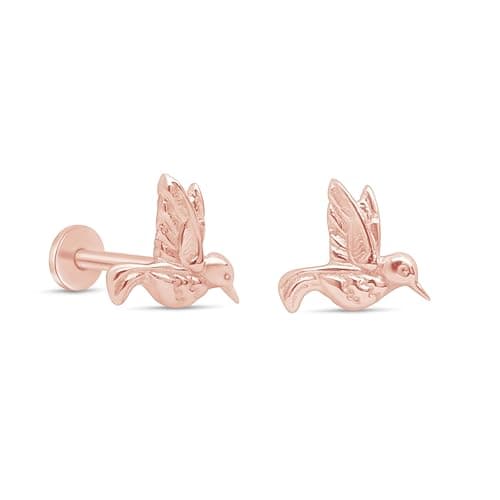
Estella Collection 14K Solid Yellow Gold Hummingbird Flat-Back Stud, 18GSolid 14K gold with an internally threaded flat back — the two things that make gold genuinely safe for a piercing, both stated in the title.
“Score” is a disclosure score, not a test result. It rates how completely the seller states the post metal, the back metal and the nickel claim, and how that metal holds up for reactive skin. The full rubric is published on our methodology page.
#1 · Solid gold exactly where it matters
Jstyle Gold-Filled Hoops on a Solid Gold Post, 14mm
Solid 14K on the post and gold filled on the hoop — which is the correct way round, because the post is the only part inside your body.
Post material
Solid 14K gold post; gold-filled hoop
From the seller’s own product title: “Jstyle 14K Solid Gold Hoop Earrings Post, No Tarnish 14K Gold Filled Hoop Earrings Lightweight, Hypoallergenic Earring for Sensitive Ears 14mm Comfort Fit Hoops Ideal Gift for Women”
Back material
Hinged hoop closes on itself; no separate back
From the seller’s own product title: “Comfort Fit Hoops”
Nickel claim
Says hypoallergenic, not nickel-free. The seller’s own words: “14K Solid Gold Hoop Earrings Post ... Hypoallergenic Earring for Sensitive Ears”
Read this title slowly, because it says something unusually specific: the post is solid 14K gold, and the hoop is gold filled. Most listings that mix materials do it the other way round or refuse to say, and the difference decides everything. The post passes through a wound; the hoop hangs in the air.
Solid gold on the post means there is no layer to wear through at the one point where wear actually happens. Gold filled on the hoop means the visible part keeps its color for years at a fraction of the price of a solid gold hoop.
The claim is stated as "hypoallergenic" on top of the metals, which adds nothing this site scores — the metals are the evidence and the adjective is the conclusion. The metals here are good enough that the adjective is redundant.
Who it’s for
Anyone who wants gold hoops for daily wear and has learned that plated posts are what go wrong.
Skip it if
Skip this if you want a large statement hoop. Fourteen millimeters is a small hoop that sits close to the lobe.
States the 1/20 ratio that makes gold filled a legal term rather than a marketing one, which almost no listing on this shelf bothers to do.
Post material
14K gold filled, stated as 1/20 by weight, over a base metal core
From the seller’s own product title: “1 Pair Adabele Real 1/20 14K Gold Filled 3mm Tiny Ball Post Stud Earrings”
Back material
Back type not named in the title
Not named in the seller’s product title — the headline nearly every buyer reads. That omission is the finding, not a gap in our notes.
Nickel claim
Names a metal, makes no nickel claim. The seller’s own words: “Real 1/20 14K Gold Filled”
"1/20 14K" is the whole claim in four characters. Under the US rules a piece may only be called gold filled if the bonded gold layer is at least one twentieth of the item's total weight, and a listing that prints the fraction is quoting the standard rather than gesturing at it.
That ratio is why gold filled behaves so differently from plating. Plating is measured in microns and is typically around half of one; gold filled is measured as a share of the whole object's weight, and the layer is bonded under heat and pressure rather than deposited in a bath.
The base under the gold is not named, and on gold filled it is usually brass. That matters only if the layer wears through, which on a stud takes years rather than months — but it is the reason this is not the same answer as solid gold.
Who it’s for
Someone who wants a gold look that lasts and wants the claim in a form they can check.
Skip it if
Skip this if nickel is confirmed and severe. Gold filled is a layer over an unnamed base, and solid gold or titanium removes the question entirely.
The same shape and size as the pick above from a longer-established seller, with the layer described as thick rather than quantified.
Post material
14K gold filled — described as a thick gold layer, ratio not stated
From the seller’s own product title: “Kezef 14K Gold Filled Ball Stud Earrings for Women - Thick 14K Gold Layer, Hypoallergenic for Sensitive Ears, Round Studs | 3mm”
Back material
Back type not named in the title
Not named in the seller’s product title — the headline nearly every buyer reads. That omission is the finding, not a gap in our notes.
Nickel claim
Says hypoallergenic, not nickel-free. The seller’s own words: “Thick 14K Gold Layer, Hypoallergenic for Sensitive Ears”
"Thick gold layer" is a description rather than a specification. It is true of gold filled as a category and it is not a number, so it sits one rung below the listing that prints 1/20.
A 3mm ball stud is the most forgiving shape in this whole category: nothing to catch, very little weight, and a smooth surface with no crevices for soap and skin oil to collect in.
Gold filled is the traditional material for exactly this purchase — the plain gold stud someone wears for years — which is why it long predates the current fashion-jewelry plating boom.
Who it’s for
Someone replacing the plain gold studs they wear every day, who does not want to pay solid gold prices.
Skip it if
Skip this if you want the ratio stated. The pick above prints it and costs less.
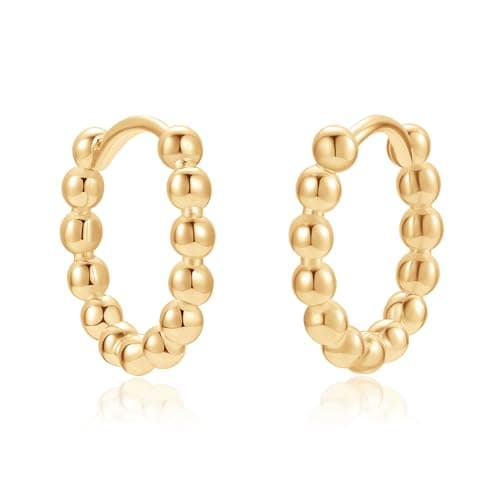
A hinged huggie at plated-jewelry money, in a material that outlasts plating by years.
Post material
14K gold filled over an unnamed base
From the seller’s own product title: “EVERU 14k Gold Filled Huggie Hoop Earrings for Women”
Back material
Hinged huggie — closes on itself, so there is no separate back
From the seller’s own product title: “Huggie Hoop Earrings”
Nickel claim
Names a metal, makes no nickel claim. The seller’s own words: “14k Gold Filled Huggie Hoop Earrings”
This is the price point where most people meet gold-plated jewelry, and gold filled at the same money is a straightforward upgrade in how long the color lasts.
The title is short: it names the material and the shape and claims nothing else. No allergy adjective, no ratio, no base metal. On this site a plain material claim with nothing bolted on scores better than an unsupported badge.
A hinged huggie has no separate back, which removes the component this site complains about most. It also sits tight to the lobe, so it is comfortable to sleep in compared with a dangling hoop.
Who it’s for
Anyone trading up from plated hoops without spending solid gold money.
Skip it if
Skip this if you need the base metal named. It is not, and on a hinged hoop the hinge pin is another unnamed part.
Gold-filled ear wires with the ratio stated — the cheapest way to fix a drop earring whose hook is the problem.
Post material
14K gold filled, stated as 1/20 by weight
From the seller’s own product title: “2pcs Adabele Real 1/20 14K Gold Filled Interch. Leverback Earring Hooks”
Back material
Lever-back — the hinged catch is part of the same wire
From the seller’s own product title: “Leverback Earring Hooks”
Nickel claim
Names a metal, makes no nickel claim. The seller’s own words: “Real 1/20 14K Gold Filled”
Gold-filled ear wires are the standard findings that handmade jewelers reach for, and they are the reason so many people who cannot wear cheap earrings can wear a maker's drops without trouble.
Swapping a hook takes about a minute with a pair of pliers: open the small loop sideways rather than pulling it apart, move the drop across, close it. Nothing is soldered on a standard hook.
A lever-back closes rather than relying on friction, so the earring stays put — and the hinge is part of the same wire, which means no second component in a possibly different alloy.
Who it’s for
Anyone with drop earrings they like and a hook that irritates them.
Skip it if
Skip this if you will not do the swap. Two bare hooks are useless on their own, and the finished pairs above are ready to wear.
From the seller’s own product title: “14K Solid Yellow Gold Hummingbird Flat Back Stud Earrings Pair | 18G Internally Threaded - Cartilage Helix Tragus Conch Daith | Hypoallergenic Piercing Minimalist Bird Jewelry”
Back material
Flat back, internally threaded — the thread sits in the decorative end, not on the post
From the seller’s own product title: “18G Internally Threaded”
Nickel claim
Says hypoallergenic, not nickel-free. The seller’s own words: “Hypoallergenic Piercing Minimalist Bird Jewelry”
Solid gold means there is no plating to wear through, which removes the single most common failure mode in this category. What it does not automatically remove is the alloy question: gold is alloyed with other metals for hardness, and in white gold that whitening metal is sometimes nickel. Yellow gold, as here, is normally alloyed with copper and silver and is very well tolerated.
The internally threaded detail is why this sits at the top of the gold list rather than in the middle. On externally threaded jewelry the screw thread is cut into the post, so sharp edges pass through the piercing on every insertion. Internally threaded leaves the post smooth. For the cartilage placements this is explicitly sold for, that matters a great deal.
It is priced as fine jewelry rather than fashion jewelry, and the listing offers a single stud as well as a pair. Read which one you are adding to the basket.
Who it’s for
A cartilage or lobe piercing you intend to keep, where you want real gold and no surface to lose.
Skip it if
Skip this if you want a matched pair on a budget. This is fine-jewelry pricing, and the single-stud option exists because people buy it one at a time.
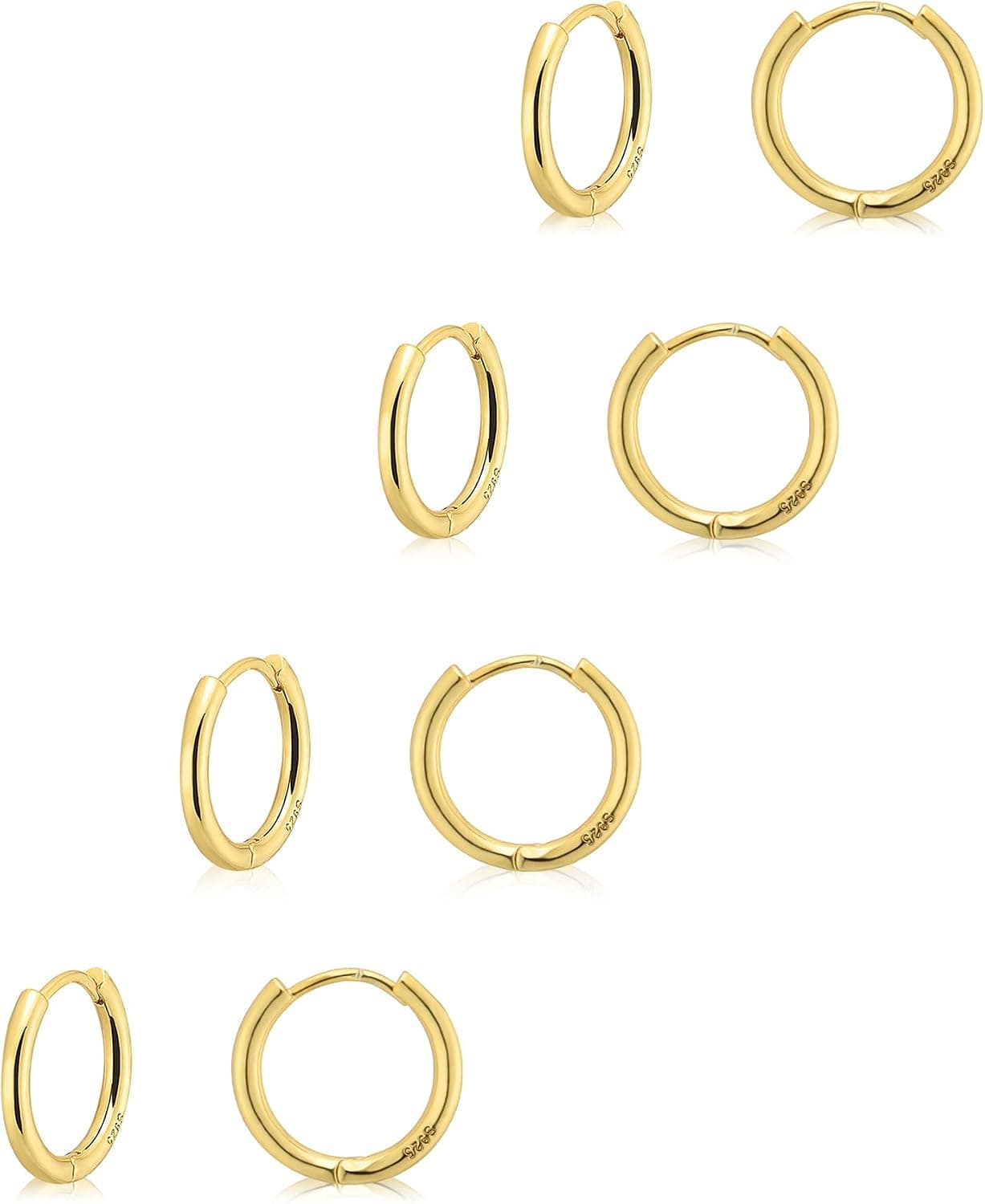
Gokeey 14K Gold-Plated Huggie Hoop Set, four sizes
Four diameters in one order, which is how you find out what size huggie you actually wear.
Post material
14K gold plated — base metal not named in the title
From the seller’s own product title: “Gokeey Small Gold Huggie Hoop Earrings Set for Women Men, Hypoallergenic 14K Gold Plated Hoop Earring Cartilage Earrings Stack Sets for Multiple Piercing Jewelry Cute Mini Tiny Lightweight Earrings for Sensitive Ears Everyday”
Back material
Huggie closure — hinged, no separate back
From the seller’s own product title: “Huggie Hoop Earrings”
Nickel claim
Says hypoallergenic, not nickel-free. The seller’s own words: “Hypoallergenic 14K Gold Plated Hoop Earring”
Huggie diameter is almost impossible to judge from a product photograph, and it is the difference between a hoop that sits tight to the lobe and one that stands away from it. A graduated set solves that in a single purchase.
The hinged closure is the structural advantage huggies have over post-and-back hoops: one piece of metal, no separate fastening to be a different alloy.
The gap is the base metal. "14K gold plated" tells you what is on top and nothing about what is underneath — and on a hoop, which flexes every time it opens and closes, plating wears faster than it does on a rigid stud.
Who it’s for
Building a stacked ear in gold tone, or working out your huggie size before spending more.
Skip it if
Skip this for daily wear if you react to plated jewelry. There is no named base metal here, and a flexing hoop is the hardest place for a plated finish to survive.
In practice, for most people with sensitive ears, yes — while the layer is intact you are wearing karat gold, and a gold-filled layer lasts years on a post rather than months. It is still a layer over a base metal, usually brass, and no listing names that base. For a diagnosed nickel allergy, solid gold or titanium removes the question entirely.
What is the difference between gold filled and gold plated?+
Thickness and how the gold is attached. Gold filled must be at least one twentieth of the item’s weight in gold, bonded under heat and pressure. Gold plating is an electroplated layer typically around half a micron thick. The practical result is that plating wears through at friction points in months and gold filled lasts years.
Does gold filled jewelry tarnish?+
The gold layer does not tarnish. Two other things get mistaken for it: surface film from lotion, hairspray and sweat, which wipes off; and genuine wear at edges and posts, which exposes the base metal underneath and does darken. Chlorine accelerates both.
Is gold filled the same as gold vermeil?+
No. Vermeil is a regulated term meaning at least 2.5 microns of gold over a sterling silver base. Gold filled is a much thicker bonded layer — at least 1/20 by weight — usually over brass. Vermeil has the better base metal; gold filled has the better layer.
How long does gold filled jewelry last?+
Years of regular wear, and often decades on pieces that are not rubbed constantly. Earring posts and ring bands wear fastest because they are in constant friction; a pendant or a hoop that mostly hangs can outlast the wearer’s interest in it.
Can I wear gold filled earrings in a new piercing?+
It is not the conventional first choice. A fresh piercing is an open wound and the standard recommendation is implant-grade titanium, where there is no layer at all. Gold filled is a reasonable choice once the piercing is fully healed.