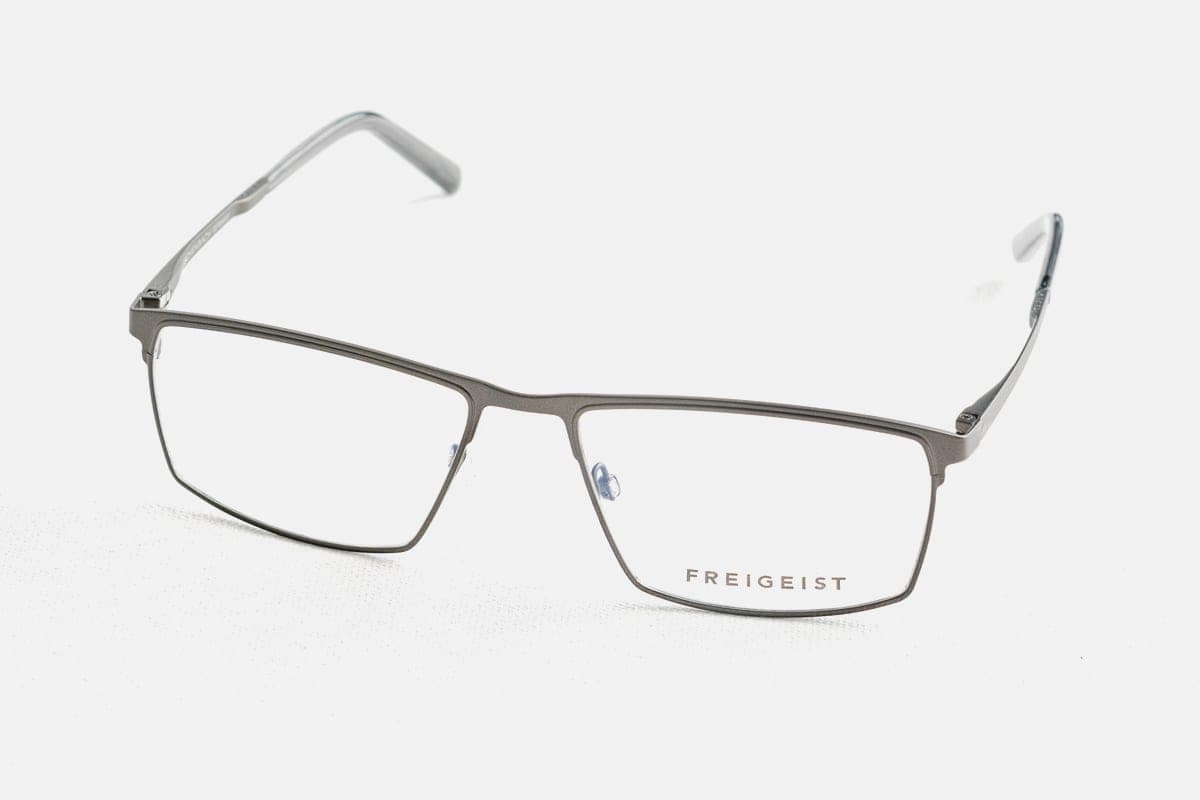
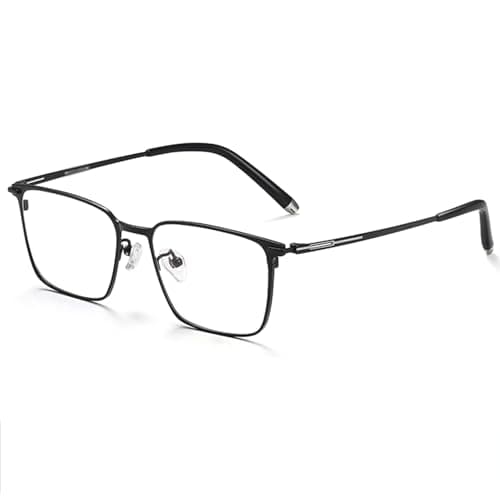
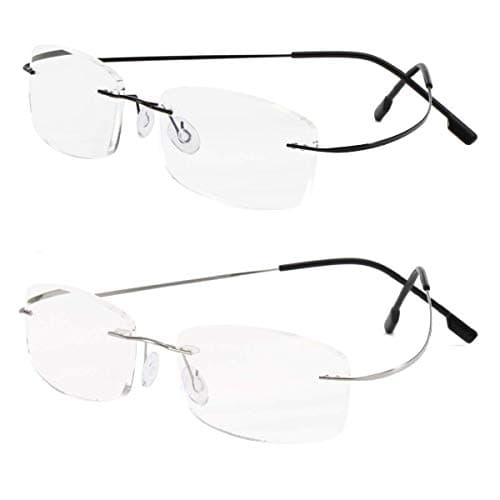
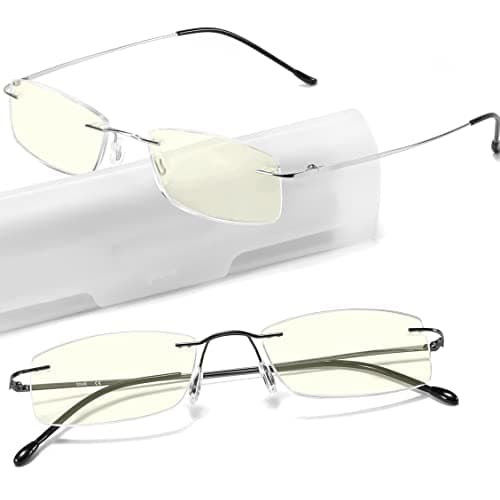
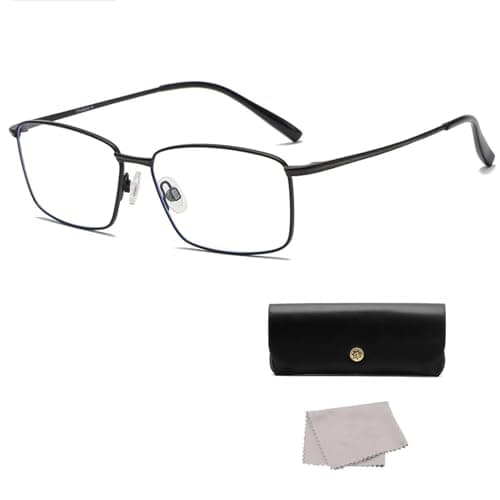
Glasses touch you in three small places under constant pressure for every waking hour. It is the longest daily metal contact most people have, and cheap frames are made of the exact alloy to avoid.
Gentle Carat earns a commission when you buy through the links on this page, at no extra cost to you. It never decides what we recommend or how we rank it — here is the full disclosure.
If your glasses leave red, itchy marks behind your ears or on your nose, the usual cause is monel — a nickel-copper alloy that is the standard cheap frame material. Titanium frames remove that. But before replacing a frame, try replacing the nose pads: on most metal frames they are silicone or acetate on small arms, not the frame metal, and they cost a few dollars.
How we judged these
The site's five standing criteria, mapped onto eyewear: the frame takes the place of the post, and the nose pads and temple tips take the place of the back. That mapping is not a stretch — it is the same question in both cases. What metal is against skin, and is the second component named?
One scope note. These are non-prescription readers and blue-light frames, which is what can be bought from a retailer without an optician. The frame material is the part this site can speak to. Your prescription is not our business and is not discussed.
Locate the reaction before you spend anything
Frame reactions are highly localized, and the location tells you which component to change. It is not always the frame.
Where the mark is
What is touching you there
Change this first
Sides of the nose bridge
Nose pads — usually silicone or acetate, not the frame metal
The pads. A few dollars, and replaceable on most screw-mounted frames.
Top of the nose bridge
The frame bridge itself, on a saddle-bridge design
The frame metal, or move to a frame with separate pads
Behind the ears
Temple tips — usually plastic or rubber sleeves over the arm
The tips, or a frame with metal-free arms
Along the temple arms
Bare frame metal
The frame metal. Titanium is the fix.
Frame reactions are highly localized, and the location tells you which component to change. It is not always the frame.
This is the eyewear version of the point this site makes about earring backs: the component causing the problem is usually small, cheap and replaceable, and people replace the expensive thing instead.
What cheap frames are actually made of
Monel is the answer, and it deserves to be better known. It is a nickel-copper alloy — genuinely majority nickel by weight in some grades — and it is the default material for inexpensive metal frames because it is easy to form, takes a plating well and costs very little.
Frames are then usually plated on top. While that plating holds, many people wear monel without difficulty. When it wears through — and it wears exactly where the frame is gripped, behind the ears and on the bridge — the nickel underneath comes into contact with skin that has been under constant pressure all day.
That is why frame reactions so often appear suddenly after months of comfortable wear, and why "they were fine at first" is such a common description.
Titanium, beta-titanium and the things that are not titanium
Frame material claims. The fourth row is the one that catches people, and it is the cheapest material on the shelf.
What the listing says
What it is
Safe for a nickel allergy?
Pure titanium / Grade 1–2
Unalloyed titanium. One element.
Yes.
Beta titanium
A titanium alloy with more flex, used for springy temples.
Yes — no nickel as an alloying element.
Titanium (unqualified)
Some titanium alloy. Less specific, still titanium.
Usually a nickel-titanium alloy (nitinol). Contains nickel.
Not reliably. Ask.
Frame material claims. The fourth row is the one that catches people, and it is the cheapest material on the shelf.
Weight, which is a different complaint entirely
Not every mark glasses leave is an allergy. A heavy frame concentrates pressure on the bridge of the nose, and sustained pressure produces indentations and soreness with no itching at all.
The tell is the same one this site uses everywhere: itch versus ache. An allergic reaction itches and is red. A pressure mark is a dent that is tender and does not itch. If yours is the second, weight is the variable to change — and titanium's density advantage is precisely why ultralight frames are made from it.
Quick picks
Ranked on what the seller actually discloses. Tap a row for the full write-up, or go straight to the listing.
#
Product
Best for
Score
Price
1
VisionGlobal Pure Titanium Blue-Light Frame"Pure titanium" in the title rather than "titanium finish" — which is the distinction the whole frame category turns on.
Viseng Rimless Titanium Readers (2 pack)Rimless removes the metal from around the lenses entirely, leaving only the bridge and the temples — less frame is less contact.
touk Titanium Rimless Readers, 2 packSold on lightness and rimless construction, which is the right pitch if your complaint is dents on the bridge rather than itching.
MIRYEA Rimless Titanium Multifocus ReadersRimless titanium in a progressive lens, for people who need more than one working distance and still react to frame metal.
“Score” is a disclosure score, not a test result. It rates how completely the seller states the post metal, the back metal and the nickel claim, and how that metal holds up for reactive skin. The full rubric is published on our methodology page.
#1 · Pure titanium, stated plainly
VisionGlobal Pure Titanium Blue-Light Frame
"Pure titanium" in the title rather than "titanium finish" — which is the distinction the whole frame category turns on.
Post material
Pure titanium frame
From the seller’s own product title: “VisionGlobal Pure Titanium Frame/Metal Readers for men/women Blue Light Blocking,Hand-set Diamond Fashion Glasses”
Back material
Nose pads and temple tips not named in the title — the two contact points that matter most
Not named in the seller’s product title — the headline nearly every buyer reads. That omission is the finding, not a gap in our notes.
Nickel claim
Names a metal, makes no nickel claim. The seller’s own words: “Pure Titanium Frame/Metal Readers”
Cheap metal frames are usually monel, a nickel-copper alloy, and monel is the single most likely reason a pair of glasses leaves red marks behind your ears. Swapping to titanium removes that variable outright, because there is no nickel in it as an alloying element.
Glasses touch skin in exactly three places: the bridge of the nose and behind each ear. All three are small areas under constant pressure, which is why a frame reaction shows up as two patches behind the ears and one on the nose rather than as a general rash.
The gap here is the same one every frame listing has: the nose pads are usually silicone or acetate on small metal arms, not the frame metal, and they are in the longest firm contact with your skin. On most screw-mounted frames they are replaceable for a few dollars, which is worth trying before replacing a whole frame.
Who it’s for
Anyone who has had red marks or itching from metal frames and wants the frame metal settled.
Skip it if
Skip this if your reaction is specifically on the nose bridge. That is usually the pads rather than the frame, and pads are the cheaper thing to change first.
Pure titanium with the frame weight actually quoted, which almost nothing on this shelf bothers to do.
Post material
Pure titanium frame
From the seller’s own product title: “Stylish Pure Titanium Reading Glasses for Men and Women, Blue Light Blocking Computer Readers, Lightweight Eyeglasses”
Back material
Nose pads and temple tips not named in the title
Not named in the seller’s product title — the headline nearly every buyer reads. That omission is the finding, not a gap in our notes.
Nickel claim
Names a metal, makes no nickel claim. The seller’s own words: “Stylish Pure Titanium Reading Glasses”
Commercially pure titanium rather than an alloy: one element, no aluminum or vanadium, and nothing that could be nickel. For someone who has worked through frame materials without success, that is about as simple as the metal gets.
Pure titanium is softer than the Ti-6Al-4V alloy, which for a frame is mostly a good thing — it is why titanium temples can be bent to fit and spring back rather than snapping.
The blue-light filter is a lens feature and has nothing to do with skin. It is here because it is what the listing commits to.
Who it’s for
Screen work, and anyone who wants the simplest possible metal against their face.
Skip it if
Skip this if you need a specific magnification not offered in the listing's range — readers are sold by strength and the options vary by colorway.
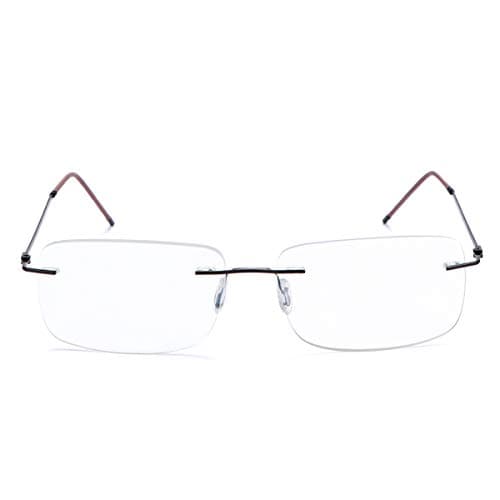
Rimless removes the metal from around the lenses entirely, leaving only the bridge and the temples — less frame is less contact.
Post material
Titanium metal frame, rimless
From the seller’s own product title: “Viseng Set of 2 Rimless reading glasses titanium metal ultra light Readers of Men Women”
Back material
Nose pads and temple tips not named in the title
Not named in the seller’s product title — the headline nearly every buyer reads. That omission is the finding, not a gap in our notes.
Nickel claim
Names a metal, makes no nickel claim. The seller’s own words: “Rimless reading glasses titanium metal ultra light”
A rimless design mounts the lenses on screws through drilled holes and dispenses with the surround. For someone reacting to frame metal, that is a genuine reduction in contact area — there is simply less frame touching you.
It is also the more fragile construction. Rimless frames flex at the mount and are easier to break than a full rim, which is a real trade-off if you are hard on glasses.
Two pairs in one order is the practical part. Readers get left in cars, kitchens and coat pockets, and the second pair is usually the one you actually use.
Who it’s for
Anyone who wants the least possible metal on their face, and who keeps losing readers.
Skip it if
Skip this if you sit on your glasses. Rimless is the most delicate frame construction there is, whatever it is made of.
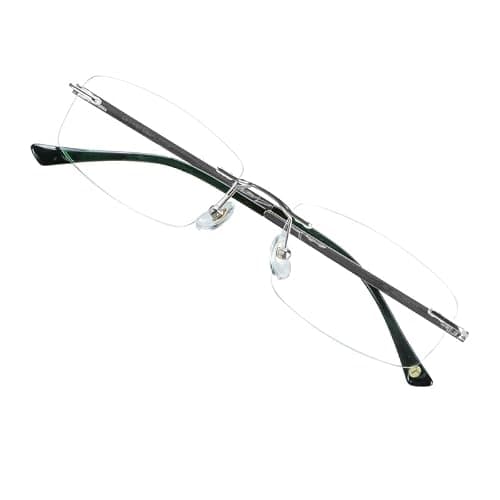
Sold on lightness and rimless construction, which is the right pitch if your complaint is dents on the bridge rather than itching.
Post material
Titanium frame, rimless
From the seller’s own product title: “touk 2 Pack Titanium Rimless Reading Glasses Blue Light UV Blocking, Lightweight Frameless Spring Hinge Readers with Case for Men Women +1.5”
Back material
Nose pads and temple tips not named in the title
Not named in the seller’s product title — the headline nearly every buyer reads. That omission is the finding, not a gap in our notes.
Nickel claim
Names a metal, makes no nickel claim. The seller’s own words: “Titanium Rimless Reading Glasses”
Not every mark a pair of glasses leaves is an allergy. A heavy frame concentrates pressure on the bridge of the nose, and sustained pressure produces indentations and soreness that look like a reaction and are not one. The tell is whether it itches.
If your complaint is dents rather than itch, weight is the variable to change first — and titanium's density advantage is the entire reason ultralight frames are made from it. Rimless removes the surround as well, so there is less frame again.
One word to watch for on frames generally: "titanium alloy". Some eyewear alloys sold under that name are nickel-titanium, which is exactly the metal a reader here is avoiding. This title says titanium without the qualifier.
Who it’s for
Anyone whose glasses leave indentations on the bridge of their nose after a long day.
Skip it if
Skip this if you sit on your glasses. Rimless is the most delicate frame construction there is, and a spring hinge does not change that.
The same titanium proposition in a bigger rectangular shape, for faces the small round readers do not suit.
Post material
Titanium frame
From the seller’s own product title: “Titanium Reading Glasses for Men, Blue Light Blocking Computer Reader, Rectangular Frame Lightweight Eyeglasses”
Back material
Nose pads and temple tips not named in the title
Not named in the seller’s product title — the headline nearly every buyer reads. That omission is the finding, not a gap in our notes.
Nickel claim
Names a metal, makes no nickel claim. The seller’s own words: “Titanium Reading Glasses for Men”
Frame shape is not a material question, but it is the reason people abandon a pair that was otherwise fine. A rectangular frame sits differently on the bridge and distributes weight across a wider span than a small round reader does.
"Titanium" without a grade is less specific than "pure titanium" or a Grade number, but any titanium contains no nickel as an alloying element, so the practical difference for a frame is small.
As everywhere on this shelf, the pads and tips go unnamed.
Who it’s for
Anyone who finds small round readers pinch, and wants a wider frame in a safe metal.
Skip it if
Skip this if you want a stated grade. Two frames on this page say "pure titanium" and this one says titanium.
Rimless titanium in a progressive lens, for people who need more than one working distance and still react to frame metal.
Post material
Titanium frame, rimless
From the seller’s own product title: “Rimless Progressive Multifocus Reading Glasses Blue Light Blocking No Line Multifocal Computer Readers for Women Men Rectangular Eyewear Titanium Lightweight Magnification Presbyopia Eyeglasses”
Back material
Nose pads and temple tips not named in the title
Not named in the seller’s product title — the headline nearly every buyer reads. That omission is the finding, not a gap in our notes.
Nickel claim
Names a metal, makes no nickel claim. The seller’s own words: “Rectangular Eyewear Titanium Lightweight”
This is on the list because the multifocus segment of the reader market is almost entirely plastic or monel, and finding it in titanium is genuinely difficult. If you need two focal distances and react to frame metal, the options narrow fast.
Progressive readers take some getting used to — the transition between zones is gradual and there is a learning period where the edges of your vision feel odd. That is a lens characteristic, not a fault.
The frame claim is titanium without a grade, and rimless keeps the contact area small.
Who it’s for
Someone who needs more than one reading distance and has already established that frame metal is a problem.
Skip it if
Skip this if you have never worn progressives. Start with single-strength readers; a progressive lens is a bigger adjustment than a frame change.
Titanium and beta-titanium frames, and acetate plastic frames. Avoid monel — the standard cheap frame alloy, which is nickel-copper — and be careful with "memory metal", which is usually a nickel-titanium alloy.
Can you be allergic to glasses frames?+
Yes, and it is common. Frames touch skin at the nose bridge and behind both ears under constant pressure for every waking hour. Nickel from a monel frame is the usual cause; the nose pads and temple tips are the other candidates.
Why do my glasses leave marks behind my ears?+
Either a reaction to the frame metal or the plastic temple tips, or simple pressure from a frame that grips too tightly. Itching points to a reaction; a painless indentation points to fit and weight.
Are titanium eyeglass frames worth it?+
If metal frames have marked or irritated you before, yes — titanium contains no nickel as an alloying element and is much lighter, which addresses both the allergy and the pressure problem. If frames have never bothered you, the benefit is mostly weight.
Can I replace the nose pads on my glasses?+
On most screw-mounted metal frames, yes, for very little. Titanium and silicone replacement pads are sold specifically for people who react. It is the cheapest fix available and worth trying before replacing a frame.
Are plastic frames safer than metal?+
Usually, since acetate contains no metal. The hinges and any core wire inside the arms are still metal, and a minority of people react to acetate itself or to its plasticizers — less commonly than to nickel, but it happens.