
Skip to content
Gentle CaratGentle Carat home

How to read a jewelry listing

Four minutes, four questions. This is the entire method behind every recommendation on this site, and you can do it yourself.

By Scooter M. · Verified on

A person browsing an online store on a phone at a table

Gentle Carat earns a commission when you buy through the links on this page, at no extra cost to you. It never decides what we recommend or how we rank it — here is the full disclosure.

Ask four questions of any listing: what is the post made of, what is the back made of, which word is used about nickel, and is there a number anywhere. A listing that answers all four is telling you the truth about what it is. One that answers none is selling you an adjective.

The four questions, in order

1. What is the post made of?

The post is the part inside your piercing. Search the listing for the word post and for a metal name. If the listing describes the decorative front in loving detail and never mentions the post, you have learned something — just not what you were hoping.

2. What is the back made of?

Named separately, or not named at all. Backs are separately manufactured and frequently a cheaper alloy than the earring. This is the question with the lowest answer rate across the whole category, and the one that resolves the most problems.

3. Which word is used about nickel?

“Nickel-free” is a factual claim a seller can be held to. “Hypoallergenic” is not, and has no legal definition for jewelry in the US. “Nickel-safe” sits between them and usually means present but below a release threshold. The full breakdown.

4. Is there a number anywhere?

F-136. G23. 316L. Grade 2. TA1. 20G. 925. A number means the seller is pointing at a document or a measurement that you can go and read. An adjective points at nothing. This single test separates the good listings from the rest faster than anything else.

Words that are doing no work

Phrases that appear constantly on this shelf and commit the seller to nothing checkable.
PhraseWhat it actually tells you
HypoallergenicNothing. No legal definition for jewelry in the US.
For sensitive earsNothing. It is a target market, not a material.
Surgical steelA family, not an alloy. Without a grade number it could be 304, 316L or 430.
Titanium steelIt is stainless steel. Not a titanium alloy and not a recognized designation.
Lead-free, cadmium-freeReal claims about metals that are not causing your earlobe to itch.
Medical gradeSounds like a standard, points at no specific document. Unlike ASTM F-136, which does.
Titanium plated / IPA coating over an unnamed base. The coating wears at the post first.
WaterproofUnregulated. True of solid titanium and steel; meaningless on anything plated.
Phrases that appear constantly on this shelf and commit the seller to nothing checkable.

Words that are doing work

  • ASTM F-136 / G23 / implant grade — a specified titanium alloy. What it means.
  • 316L — a specific stainless alloy with molybdenum for pitting resistance. More.
  • Pure titanium / Grade 1 / Grade 2 / TA1 — unalloyed titanium.
  • Nickel-free — a checkable factual claim about composition.
  • 925 / sterling — 92.5 percent silver. Says nothing about the other 7.5 percent, but it is a real standard.
  • Vermeil — a US-regulated term requiring a minimum gold thickness over sterling. The only plating word with teeth.
  • A gauge (20G, 18G) and a post length — not about allergy, but it is the difference between an earring that fits and one you return.

A worked example

Take a real title: “Hypoallergenic G23 Implant Grade Titanium Screw Back Earrings | 20G F136 Pure Titanium Flat Back CZ Studs”. Run the four questions.

  1. Post? F136 implant-grade titanium, 20 gauge. Answered, with a standard number.
  2. Back? Described as a screw-on flat back, but the metal is not named separately. Partially answered.
  3. Nickel word? “Hypoallergenic” only. The weaker claim — though with F136 stated, the metal is doing the work the word is not.
  4. Numbers? Two: F136 and 20G. Both checkable.

That is a good listing, and it took under a minute. Now try it on “Hypoallergenic Flat Back Stud Earrings for Sensitive Ears Women”, which answers none of the four. Same shelf, same price bracket, completely different amount of information — and both are on our main roundup, at opposite ends, for exactly that reason.

Quick picks

Ranked on what the seller actually discloses. Tap a row for the full write-up, or go straight to the listing.

#ProductBest forScorePrice
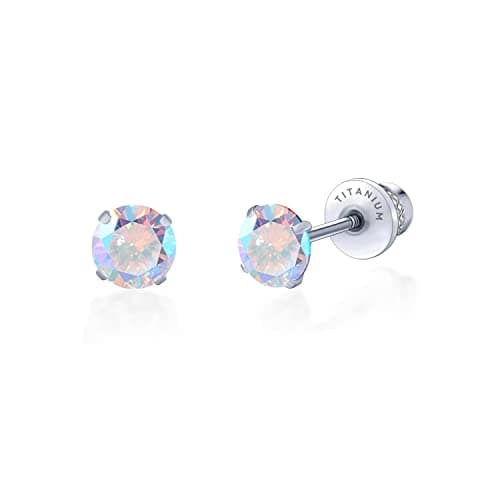
1Limerencia F136 Titanium Screw-Back Flat-Back CZ Studs (20G)Limerencia F136 Titanium Screw-Back Flat-Back CZ Studs (20G)The clearest material claim in this whole category: the standard number, the gauge and the fastening are all in the title before you have clicked anything.The default safe stud8.2disclosureCheck price
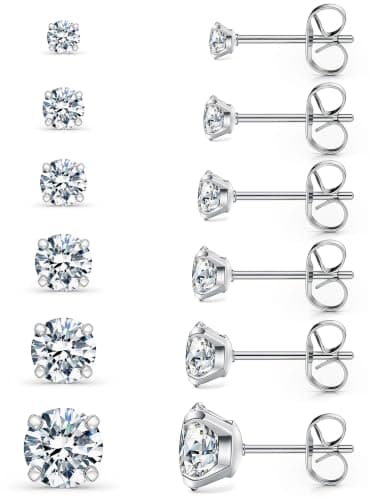
2316L Stainless Steel CZ Studs, 6 pairs (3–8mm)316L Stainless Steel CZ Studs, 6 pairs (3–8mm)The grade number is in the title, which is the single thing that separates a useful steel listing from a decorative one.The cheap everyday set6.2disclosureCheck price
3Flat-Back Stud Earrings for Sensitive EarsFlat-Back Stud Earrings for Sensitive EarsFlat-back studs whose title names the shape and the intended buyer, and never names a metal at all.Plain flat-backs3.6disclosureCheck price

“Score” is a disclosure score, not a test result. It rates how completely the seller states the post metal, the back metal and the nickel claim, and how that metal holds up for reactive skin. The full rubric is published on our methodology page.

Limerencia F136 Titanium Screw-Back Flat-Back CZ Studs (20G)

#1 · The default safe stud

Limerencia F136 Titanium Screw-Back Flat-Back CZ Studs (20G)

The clearest material claim in this whole category: the standard number, the gauge and the fastening are all in the title before you have clicked anything.

Post material
F136 implant-grade titanium, 20 gauge
From the seller’s own product title: “Limerencia Hypoallergenic G23 Implant Grade Titanium Screw Back Earrings | 20G F136 Pure Titanium Flat Back CZ Studs
Back material
Screw-on flat back; the same titanium is implied but the metal is not separately named
Not named in the seller’s product title — the headline nearly every buyer reads. That omission is the finding, not a gap in our notes.
Nickel claim
Says hypoallergenic, not nickel-free. The seller’s own words: “Hypoallergenic G23 Implant Grade Titanium

Two numbers do all the work here. F136 is the ASTM specification for the Ti-6Al-4V ELI alloy used in surgical implants, and G23 is the grade designation for that same alloy. A seller putting both in the title is pointing at a published document rather than reaching for an adjective, and that is rarer than it should be.

The flat back matters as much as the metal. A flat disc sits against the back of the lobe instead of a butterfly clip pressing a small area, which is why piercers use this shape for anything that has to be slept in. Combined with a screw thread rather than a friction push-fit, it is about as low-drama as an earring gets.

What the title does not do is name the back separately. In practice a screw-back on a titanium post is almost always the same titanium, and the design leaves little room for it to be anything else — but the seller has not committed to it in the headline, and we score what is stated rather than what is likely.

Who it’s for

Anyone who has reacted to something before and wants to stop running experiments. Also the sensible default for a piercing you intend to sleep in.

Skip it if

Skip this if you want a decorative statement earring. A 20-gauge flat-back CZ stud is deliberately unobtrusive, and if you want to be seen wearing something, this is not it.

Disclosure score

8.2

  • Post metal stated10
  • Back metal stated5
  • Strength of nickel claim7
  • Material for reactive skin10
  • Everyday wearability9

A disclosure score, not a test result. Nobody here wore these. Read how the rubric works.

316L Stainless Steel CZ Studs, 6 pairs (3–8mm)

#2 · The cheap everyday set

316L Stainless Steel CZ Studs, 6 pairs (3–8mm)

The grade number is in the title, which is the single thing that separates a useful steel listing from a decorative one.

Post material
316L stainless steel
From the seller’s own product title: “6 Pairs Stud Earrings Set, Hypoallergenic Cubic Zirconia 316L Earrings Stainless Steel CZ Earrings 3-8mm (Steel color)
Back material
Not named in the title
Not named in the seller’s product title — the headline nearly every buyer reads. That omission is the finding, not a gap in our notes.
Nickel claim
Says hypoallergenic, not nickel-free. The seller’s own words: “Hypoallergenic Cubic Zirconia 316L

'316L' is doing all the work in this title. Most steel jewelry is sold as 'surgical steel', which has no legal definition for jewelry and could be 304, 430 or something unnumbered. A specific alloy designation is a claim you can go and read about, and 316L is the good one — the molybdenum in it is what resists pitting in sweat.

Six sizes from 3mm to 8mm covers most of what anyone actually wears, and cubic zirconia at this price is exactly what you would expect: bright when new, gradually less so.

For the large majority of people, including many with a mild nickel sensitivity, this is the correct everyday answer and titanium is an upgrade they do not need.

Who it’s for

Anyone who wears steel without trouble and wants a full size range for the price of one titanium pair.

Skip it if

Skip this if you have reacted to surgical steel before. 316L contains eight to twelve percent nickel by weight even though it releases very little, and if you are past that threshold no grade number will help.

Disclosure score

6.2

  • Post metal stated8
  • Back metal stated2
  • Strength of nickel claim6
  • Material for reactive skin7
  • Everyday wearability8

A disclosure score, not a test result. Nobody here wore these. Read how the rubric works.

Flat-Back Stud Earrings for Sensitive Ears

#3 · Plain flat-backs

Flat-Back Stud Earrings for Sensitive Ears

Flat-back studs whose title names the shape and the intended buyer, and never names a metal at all.

Post material
Not named in the title
Not named in the seller’s product title — the headline nearly every buyer reads. That omission is the finding, not a gap in our notes.
Back material
Flat back; metal not named
Not named in the seller’s product title — the headline nearly every buyer reads. That omission is the finding, not a gap in our notes.
Nickel claim
Says hypoallergenic, not nickel-free. The seller’s own words: “Hypoallergenic Flat Back Stud Earrings

This pick is included as the clearest example on the site of the problem this site is about. The title is six words of benefit language — hypoallergenic, flat back, sensitive ears — and contains no metal whatsoever.

The flat-back shape is genuinely the right shape for a sensitive or sleeping-in piercing. That is a design point in its favor and it is separate from the material question, which the headline simply does not address.

Scored accordingly: the lowest post and back disclosure of anything on this page. If you buy it, read the full listing first, because the title will not tell you what is going through your ear.

Who it’s for

Someone who wants the flat-back shape cheaply and is willing to go and read the specifications themselves.

Skip it if

Skip this if you are shopping on a reaction. A headline that says 'hypoallergenic' and never names a metal is exactly the pattern that gets people burned twice.

Disclosure score

3.6

  • Post metal stated1
  • Back metal stated1
  • Strength of nickel claim4
  • Material for reactive skin4
  • Everyday wearability8

A disclosure score, not a test result. Nobody here wore these. Read how the rubric works.

Questions people actually ask

What should I look for in a jewelry listing for sensitive ears?

Four things: the post metal, the back metal, which word is used about nickel, and whether there is a standard number anywhere (F-136, 316L, Grade 2). A listing that answers all four is unusually good.

Does 'surgical steel' mean anything?

On its own, not much. It has no legal definition for jewelry and could describe 316L, 304 or 430, which contain very different amounts of nickel. The grade number is the useful part.

Why do listings name two metals?

Usually because a multipack contains both and the seller does not want to break out which pair is which. It is honest as far as it goes, and it makes the set unusable for anyone avoiding one of the two.

Is 'medical grade' the same as 'implant grade'?

No. “Implant grade” normally points at ASTM F-136, a published specification. “Medical grade” points at nothing in particular and carries whatever weight the seller intends.

Should I trust a listing that makes no allergy claim at all?

Often more than one that makes a vague claim. A listing that names 316L and says nothing about hypoallergenic has given you the useful fact and made no promise it cannot keep.

Sources

Read next