Gentle Carat earns a commission when you buy through the links on this page, at no extra cost to you. It never decides what we recommend or how we rank it — here is the full disclosure.
Only as safe as the metal underneath. Gold plating is a thin layer applied over a base metal, and it wears fastest at the post — the exact point in contact with the inside of your piercing. Gold-plated over surgical steel or sterling silver is usually fine. Gold-plated over unnamed brass is a reaction waiting for a warm day. The listing has to name the base metal, and most do not.
The vocabulary, in ascending order of how much gold you get
Gold surface treatments from thinnest to thickest. Vermeil and gold filled are the two with actual definitions behind them.
Term
What it means
How long the surface lasts
Gold flashed / gold washed
An extremely thin layer, well under half a micron.
Weeks of daily wear, sometimes less.
Gold plated
An electroplated layer, typically around 0.5 microns.
Months of daily wear. Wears at friction points first.
Gold vermeil
A US-regulated term: at least 2.5 microns of gold over sterling silver.
A year or more — and crucially, the base is sterling.
Gold filled
A bonded layer that must be at least 1/20th of the item's weight in gold. Far thicker than plating.
Years. Effectively a different product.
Solid gold (10k, 14k, 18k)
Gold alloyed all the way through. No surface to wear off.
Indefinite.
Gold surface treatments from thinnest to thickest. Vermeil and gold filled are the two with actual definitions behind them.
Why the post is where plating fails
Plating wears where things rub. On an earring, the decorative front rubs against nothing and the post is pushed through a channel of skin twice a day, sits in it for hours, and is gripped by a metal back. It is the highest-friction, highest-moisture part of the piece.
So the failure mode is specific and predictable: the front still looks perfect while the post has worn through to the base metal. If a pair of plated earrings was fine for four months and then started itching, nothing changed about your allergy. The plating ran out.
What a good plated listing says
The base metal, by name. “14k gold plated over 316L surgical steel” is a genuinely useful sentence. “14k gold plated” is not.
The thickness, or a term that implies one. Microns, or the words vermeil or gold-filled.
Whether the post is plated at all. The better designs use a solid titanium or steel post with a plated decorative front, which sidesteps the whole problem. When a seller does this, they usually say so, because it is the good news on the page.
What about white gold?
Worth a specific warning, because it is the one place where solid gold can be the problem rather than the solution. Gold is naturally yellow; white gold is gold alloyed with a white metal to change the color, and one of the traditional whitening metals is nickel. Many modern white golds use palladium instead, but nickel-white-gold is still sold, and it is usually rhodium-plated on top — which means it behaves like a plated piece and gets worse as the rhodium wears.
If you react to nickel and want gold, yellow gold at 14k or above is the simpler answer. If you specifically want white, look for palladium white gold or platinum, and expect to pay for it.
Is plated ever the right buy?
Yes, in two cases. First, when the base is named and good — plated-over-titanium or plated-over-316L gives you the look of gold with a base metal you would have been happy to wear anyway. Second, for occasional wear: a pair worn six times a year will not wear through in your lifetime.
Where it goes wrong is daily wear over an unnamed base. The picks below are all in the first category: plated finishes over a base the listing actually names.
Quick picks
Ranked on what the seller actually discloses. Tap a row for the full write-up, or go straight to the listing.
#
Product
Best for
Score
Price
1
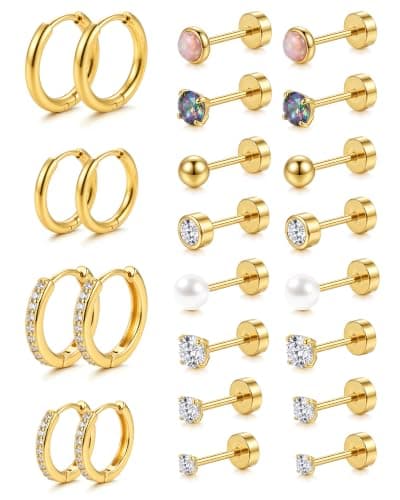
18K Gold-Plated Surgical Steel Flat-Back and Screw-Back Stack SetA plated set that names its base metal and says nickel-free rather than hypoallergenic — both unusual, both the right way round.
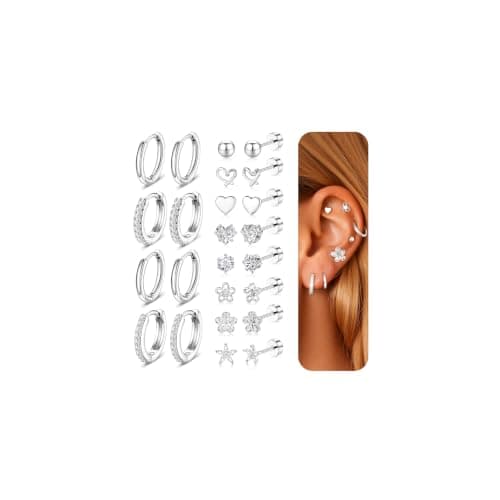
14k Gold-Plated Surgical Steel Flat-Back SetNames the plating karat and the base metal in the same breath, which is the minimum a plated listing should do and often does not.
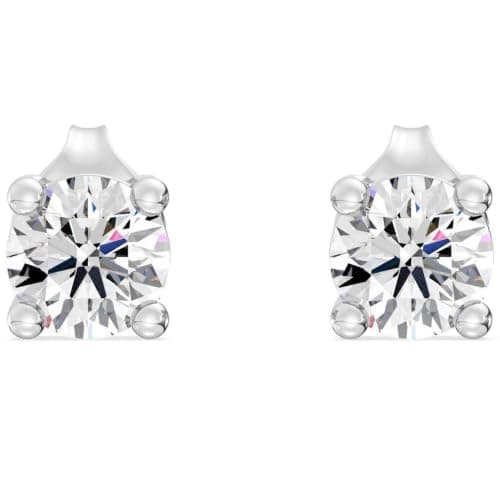
Gilded Lab-Grown Diamond Studs, 10KT Solid GoldSolid 10KT gold with the back type named — and one caveat about white gold that the title does not address.
“Score” is a disclosure score, not a test result. It rates how completely the seller states the post metal, the back metal and the nickel claim, and how that metal holds up for reactive skin. The full rubric is published on our methodology page.
#1 · Gold tone over a named base
18K Gold-Plated Surgical Steel Flat-Back and Screw-Back Stack Set
A plated set that names its base metal and says nickel-free rather than hypoallergenic — both unusual, both the right way round.
Post material
Surgical steel, 18K gold plated
From the seller’s own product title: “18K Gold Plated Hypoallergenic Earring Stack Set, Surgical Steel Flat Back & Screw Back Studs, Multi-Size Small Huggie Hoops, Nickel-Free CZ Pearl Opal Cartilage Earrings”
Back material
Flat backs and screw backs; both named as part of the surgical steel construction
From the seller’s own product title: “Surgical Steel Flat Back & Screw Back Studs”
Nickel claim
Explicitly nickel-free. The seller’s own words: “Nickel-Free CZ Pearl Opal Cartilage Earrings”
Two things make this the pick of the plated options. It names the base metal — surgical steel, not an unnamed alloy — and it says nickel-free explicitly rather than hedging with hypoallergenic. The plating is a finish over a metal you would have been willing to wear anyway.
That is the whole test for plated jewelry. Plating wears through at the post first, because the post is the highest-friction, highest-moisture part of the piece. When it eventually does, the question is what you are left standing on. Here, it is steel.
Both fastening types appear in the title and both are attributed to the steel construction, which is why this scores highest on back disclosure of anything on this page.
Who it’s for
Anyone who wants a warm gold-tone stacked ear and has been avoiding plated jewelry because of the base-metal question.
Skip it if
Skip this if surgical steel is what you react to. Plating buys you time, not immunity, and eventually you are wearing the base.
Names the plating karat and the base metal in the same breath, which is the minimum a plated listing should do and often does not.
Post material
Surgical stainless steel, 14k gold plated
From the seller’s own product title: “Hypoallergenic Gold Stud Earrings for Women - 14k Gold Plated Surgical Stainless Steel Flat back Earrings Set Small Huggie Hoop Flatback Earring for Sensitive Ears Screw Back Cartilage Piercing Jewelry”
Back material
Screw backs and flat backs, described as part of the same steel construction
From the seller’s own product title: “Flat back Earrings Set ... Screw Back Cartilage Piercing Jewelry”
Nickel claim
Says hypoallergenic, not nickel-free. The seller’s own words: “Hypoallergenic Gold Stud Earrings”
'14k gold plated over surgical stainless steel' is a complete sentence about materials, and it is remarkable how few plated listings manage one. You know what is on top and what is underneath.
What it does not give you is plating thickness. Fourteen karat describes the gold's purity, not how much of it there is — a flash plating and a heavy plating can both be 14k. Micron figures, or the words vermeil or gold-filled, are what indicate quantity.
The screw-back and flat-back combination is well suited to cartilage, where security matters more than speed of changing.
Who it’s for
Gold-tone daily wear on a steel base, for someone who wants the look without an unnamed core.
Skip it if
Skip this if you need the finish to last years of daily wear. Without a thickness figure you cannot tell whether the plating is generous or nominal, and the post is where you will find out.
Solid 10KT gold with the back type named — and one caveat about white gold that the title does not address.
Post material
10KT solid gold, white or yellow
From the seller’s own product title: “Gilded Lab-Grown Diamond Stud Earrings 10KT White Gold and 10KT Yellow Gold | Hypoallergenic Fine Gold Jewelry | 4-Prong Basket, Push Back Nut | VS2 SI1 Clarity, F Color, Round Cut”
Back material
Push-back nut, named explicitly
From the seller’s own product title: “4-Prong Basket, Push Back Nut”
Nickel claim
Says hypoallergenic, not nickel-free. The seller’s own words: “Hypoallergenic Fine Gold Jewelry”
Solid gold rather than plated means there is no surface to wear through, which removes the failure mode that ruins most plated earrings. That is a genuine advantage and it is what you are paying for.
The caveat is white gold specifically. Gold is naturally yellow; white gold is gold alloyed with a whitening metal, and one of the traditional whitening metals is nickel. Many modern white golds use palladium instead, and most are rhodium-plated on top — which means a white gold earring can behave like a plated piece as the rhodium wears. The title offers both colors and does not say which alloy the white uses.
Ten karat is 41.7 percent gold, so the majority of the metal is the alloy rather than the gold. At that ratio the alloy composition matters more than it would at 18k.
Who it’s for
Yellow gold, for someone who wants a permanent piece with no plating to lose and tolerates gold alloys.
Skip it if
Skip the white gold variant if nickel is your trigger, unless the seller confirms a palladium alloy. Yellow gold at the same karat sidesteps the question entirely.
Are gold plated earrings safe for sensitive ears?+
Only if the base metal is safe, because the plating wears through at the post first. Gold plated over surgical steel or sterling silver is usually fine. Gold plated over an unnamed base is a gamble, and the odds get worse with every month of wear.
Are gold plated stainless steel earrings good for sensitive ears?+
Generally yes, and they are one of the better value options in this category. The base is a metal most people tolerate, so when the plating eventually wears you are down to steel rather than down to brass.
Is gold vermeil better than gold plated?+
Meaningfully, yes. Vermeil is a regulated term in the US requiring a minimum gold thickness over a sterling silver base, so it tells you both how much gold there is and what is underneath. Ordinary gold plating guarantees neither.
Is white gold safe if I am allergic to nickel?+
Not automatically. White gold is gold alloyed with a whitening metal, and nickel is one of the traditional choices. Palladium white gold and platinum avoid the issue. Yellow gold at 14k and above is the simplest safe answer.
How long does gold plating last on earrings?+
On the decorative front, years. On the post, months of daily wear, because that is where the friction and moisture are. That asymmetry is why a plated earring can look pristine and still start irritating you.
Are 14k gold earrings hypoallergenic?+
Solid 14k yellow gold is generally very well tolerated: 58.3 percent gold with the balance usually copper and silver. The caveat is white gold, where the whitening alloy may be nickel.