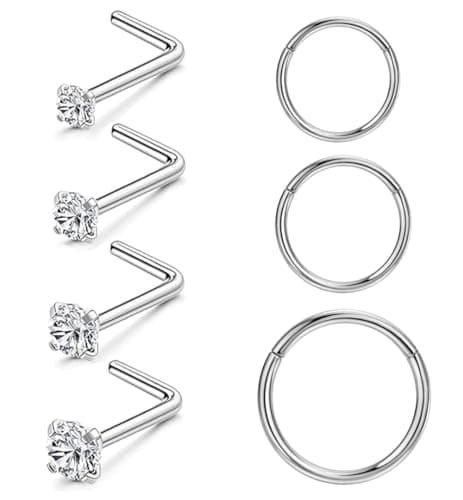
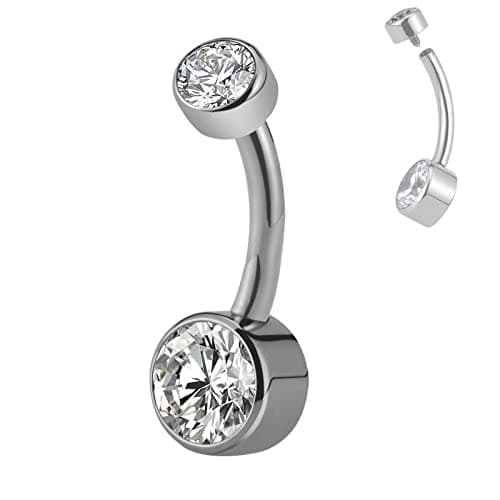
Every body piercing has the same underlying problem — metal sitting inside a wound-shaped channel for months. The answers are more consistent than the product categories suggest.
Gentle Carat earns a commission when you buy through the links on this page, at no extra cost to you. It never decides what we recommend or how we rank it — here is the full disclosure.
For any body piercing, the specification that matters is the same three things: implant-grade titanium (ASTM F-136), internally threaded or threadless, and the correct gauge and length for the placement. Get those right and the material question is closed regardless of whether the piercing is a navel, a nostril or a helix.
This is a buyer's guide rather than a category roundup, because the categories are a retailing convention and the physics is not. A navel bar and a cartilage stud face the same problem — metal inside a slow-healing channel, in contact with lymph, for months — and they have the same answer.
How we judged these
Criteria stated before the ranking, as everywhere on this site. Each pick was scored on whether the metal is named with a grade, whether the fastening is named, how specific the nickel language is, how well the metal suits reactive skin, and everyday practicality. One criterion carries extra weight on this page and it is the one almost nobody talks about: threading.
Threading: the detail that separates piercing jewelry from fashion jewelry
This is the single most useful thing on the page, so it goes early.
Threading types. In a long-healed lobe this is a detail; in a navel or cartilage piercing it is the difference between an uneventful jewelry change and a fortnight of regret.
Type
Where the thread is
What happens on insertion
Use it for
Externally threaded
Cut into the bar itself.
A spiral of sharp metal edges is dragged through the channel every time.
Nothing. Avoid.
Internally threaded
Inside the ball; the bar is smooth.
Nothing sharp passes through the piercing.
Everything, especially navel and cartilage.
Threadless / push-pin
No thread at all — a bent pin grips inside a hollow post.
Nothing sharp, and quick to change once you have the knack.
Fresh and healing piercings. The piercer default.
Threading types. In a long-healed lobe this is a detail; in a navel or cartilage piercing it is the difference between an uneventful jewelry change and a fortnight of regret.
Cheap body jewelry is overwhelmingly externally threaded, because it is cheaper to manufacture. Listings rarely say which they are — so when one does say "internally threaded" in the title, that is a seller telling you something real.
Gauge and length by placement
Wrong size is a more common problem than wrong metal, and it produces symptoms that look identical. These are the usual figures; yours are whatever you were actually pierced at.
Common gauges by placement. Confirm yours with a piercer rather than assuming — studios differ.
Placement
Typical gauge
Typical size
Healing
Navel
14G (1.6mm)
10mm curved barbell
6–12 months
Nostril
20G or 18G
6–8mm post
4–6 months
Septum
16G, sometimes 14G
8–10mm ring
2–3 months
Helix / cartilage
16G or 18G
6–8mm flat-back bar
6–12 months
Lobe
20G or 18G
6–8mm post
6–8 weeks
Common gauges by placement. Confirm yours with a piercer rather than assuming — studios differ.
Why the navel is the hardest case
A navel piercing heals for six months to a year, sits under a waistband where it is rubbed by every pair of trousers you own, and passes through a fold of tissue that moves whenever you do. It is a surface-adjacent piercing, which is a category with a genuinely higher rejection rate than a lobe.
None of that is a reason to avoid one. It is the reason the specification matters more here than anywhere else on this page: implant-grade titanium, internally threaded, correct bar length, and left alone while it settles.
The boundary
This page is about metal. It is not aftercare, it does not tell you when to change jewelry, and it cannot tell you whether a piercing is healing normally or rejecting. Those come from your piercer. Anything hot, swollen, spreading or discharging is a clinical question and it is more urgent than any of this.
Quick picks
Ranked on what the seller actually discloses. Tap a row for the full write-up, or go straight to the listing.
#
Product
Best for
Score
Price
1
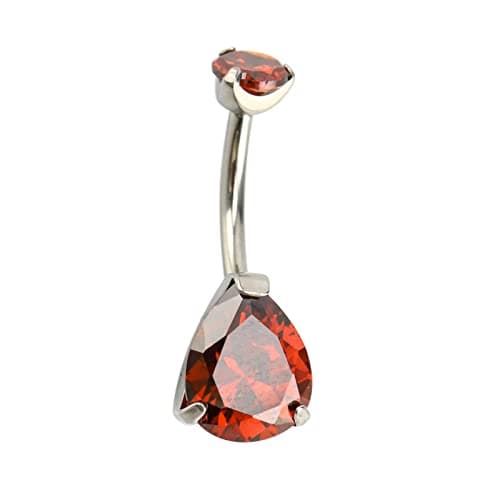
Dainty Spirit Body Jewelry Implant-Grade Titanium Floating Navel Ring, Internally ThreadedThe strongest title in this whole set: implant grade, nickel-free and internally threaded, all stated up front.
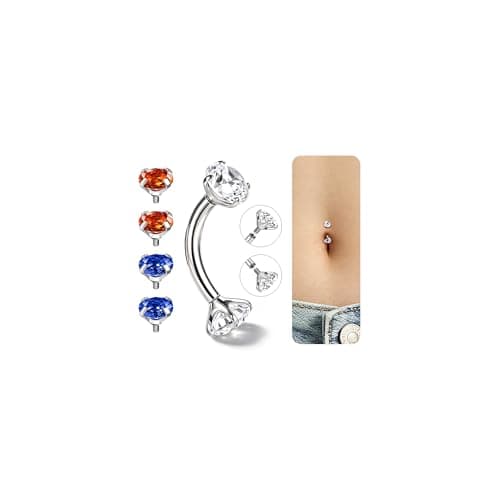
limerencia G23 Titanium Belly Button Ring, 14GFrom the same maker as this site's top-scoring earrings, with the same habit of putting the grade in the title.
6ixGosh G23 Titanium Belly Button Ring, 14G, 8–16mmThe widest stated length range here, which is the variable most people get wrong when they buy navel jewelry online.
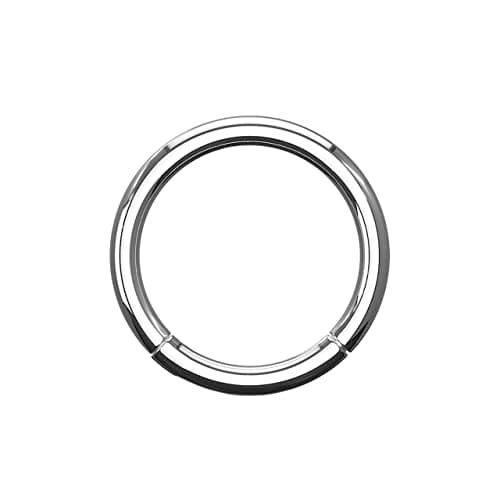
Satix Implant-Grade Titanium Hinged Segment Ring, 16G–20GA hinged segment ring in implant-grade titanium that the seller lists for septum, nostril, helix, rook and lip — one piece of hardware, several piercings.
SEEDRILL G23 Titanium Nose Ring Studs, 20GA short title that spends its words on the grade rather than on adjectives — G23 titanium, 20 gauge, and not much else.
“Score” is a disclosure score, not a test result. It rates how completely the seller states the post metal, the back metal and the nickel claim, and how that metal holds up for reactive skin. The full rubric is published on our methodology page.
The strongest title in this whole set: implant grade, nickel-free and internally threaded, all stated up front.
Post material
Implant-grade titanium, internally threaded
From the seller’s own product title: “Implant Grade Titanium Belly Button Ring Floating Navel Hypoallergenic Nickel Free Internally Threaded Jewelry in Pink”
Back material
Internally threaded ends — the thread is in the ball, not on the bar
From the seller’s own product title: “Internally Threaded”
Nickel claim
Explicitly nickel-free. The seller’s own words: “Hypoallergenic Nickel Free Internally Threaded”
"Internally threaded" is the detail worth paying for and it is the one almost no listing mentions. On externally threaded jewelry the screw thread is cut into the bar itself, so a spiral of sharp metal edges is dragged through the piercing every time it goes in. Internally threaded puts the thread inside the ball and leaves the bar smooth.
In a lobe that healed a decade ago, that is a detail. In a navel piercing — slow-healing, under a waistband, easily irritated — it is the difference between a jewelry change that passes unnoticed and one that sets you back a fortnight.
It also says nickel-free rather than hypoallergenic, which is the stronger of the two claims and the only one a seller can actually be held to.
Who it’s for
Anyone changing navel jewelry regularly, and anyone whose piercing has been slow to settle.
Skip it if
Skip this if you want a plain look. A floating navel design puts the decorative element at the bottom and reads as jewelry rather than as a discreet retainer.
From the same maker as this site's top-scoring earrings, with the same habit of putting the grade in the title.
Post material
G23 implant-grade titanium, 14 gauge
From the seller’s own product title: “limerencia G23 Titanium Belly Button Rings 14G Hypoallergenic Medical”
Back material
Curved barbell with threaded balls; the ball metal is not separately named
Not named in the seller’s product title — the headline nearly every buyer reads. That omission is the finding, not a gap in our notes.
Nickel claim
Says hypoallergenic, not nickel-free. The seller’s own words: “G23 Titanium Belly Button Rings 14G Hypoallergenic”
A navel piercing is a surface-adjacent piercing that heals notoriously slowly — commonly six months to a year — and it sits under a waistband, which means friction and trapped moisture on top of everything else. The metal matters here for longer than it does almost anywhere.
Fourteen gauge is the standard navel size. A curved barbell is the standard shape, because a straight bar cannot follow the curve of the tissue and a ring rotates in it.
The one gap: a barbell has threaded balls on each end, and those are separate components. This title does not name their metal, which on an otherwise well-specified listing is the piece of information we would most like to have.
Who it’s for
A healed navel piercing where you want a stated implant-grade alloy and a shape that will not fight the anatomy.
Skip it if
Skip this if your piercing is still healing and your piercer fitted something specific. Navel piercings are slow, and swapping early is how they get angry.
The widest stated length range here, which is the variable most people get wrong when they buy navel jewelry online.
Post material
G23 titanium, 14 gauge, 8mm to 16mm bar length
From the seller’s own product title: “G23 Titanium Belly Button Ring, 14G, 8-16MM”
Back material
Not named in the title
Not named in the seller’s product title — the headline nearly every buyer reads. That omission is the finding, not a gap in our notes.
Nickel claim
Names a metal, makes no nickel claim. The seller’s own words: “G23 Titanium Belly Button Ring”
Bar length is the navel equivalent of post length in an earring, and it matters more. Too short and the bar compresses the tissue it passes through; too long and it levers and catches on clothing. Bodies differ, and so does the same body across a year.
A listing that states an 8mm to 16mm range is telling you it has thought about that. Most navel listings quote one length and leave you to find out.
The title names the alloy and no allergy claim, which is the honest ordering, though it says nothing about the balls on either end.
Who it’s for
Anyone who has bought navel jewelry that did not fit, or whose piercing has changed since it was done.
Skip it if
Skip this if you do not know your current bar length. The range only helps if you pick the right end of it, and a piercer can tell you in seconds.
A hinged segment ring in implant-grade titanium that the seller lists for septum, nostril, helix, rook and lip — one piece of hardware, several piercings.
Post material
Implant-grade titanium, 16G to 20G, 6mm to 12mm
From the seller’s own product title: “Satix Hypoallergenic Nose Rings Hoop 20g 18g 16g Implant Grade Titanium Septum Jewelry Hinged Segment Ring Body Piercing Nose Hoop Lip Rings Nose Helix Cartilage Rook Earrings 6mm-12mm”
Back material
Hinged segment closure — the ring is one piece, no separate fastening
From the seller’s own product title: “Hinged Segment Ring”
Nickel claim
Says hypoallergenic, not nickel-free. The seller’s own words: “Hypoallergenic Nose Rings Hoop ... Implant Grade Titanium”
A hinged segment ring is a hoop with a small section that swings open on a hinge and clicks shut. Structurally it is the best case for reactive skin, for the same reason a huggie earring is: there is no separate captive bead or threaded ball to be a different alloy.
The gauge and diameter ranges are the useful part of this title. Septum piercings are usually 16G, nostrils 18G or 20G, and diameter decides whether the ring sits snug or hangs — 8mm is the common septum starting point.
Because the seller lists it across so many placements, read the option you are actually adding to the basket. A 6mm ring is a snug helix hoop; a 12mm one is a visible septum ring.
Who it’s for
Anyone with more than one piercing who wants a single ring style that works across several of them.
Skip it if
Skip this if your septum piercing is fresh. Hinged rings are for healed piercings; a fresh septum should keep whatever your piercer fitted until they say otherwise.
A short title that spends its words on the grade rather than on adjectives — G23 titanium, 20 gauge, and not much else.
Post material
G23 titanium, 20 gauge
From the seller’s own product title: “SEEDRILL Hypoallergenic G23 Titanium 20G Nose Rings Studs Piercings Jewelry”
Back material
Not named in the title
Not named in the seller’s product title — the headline nearly every buyer reads. That omission is the finding, not a gap in our notes.
Nickel claim
Says hypoallergenic, not nickel-free. The seller’s own words: “Hypoallergenic G23 Titanium 20G Nose Rings”
G23 is Grade 23 titanium, the Ti-6Al-4V ELI alloy that ASTM F-136 specifies for surgical implants. There is no nickel in it as an alloying element, which is the entire reason it dominates piercing jewelry.
Unlike the MODRSA listing above, this one names a single metal and stops. That is a smaller claim and a cleaner one — there is no second alloy in the box to wonder about.
Twenty gauge is the standard nostril size in the United States. If you were pierced elsewhere, or with a needle at 18 gauge, a 20-gauge post will fit loosely and move in the channel, which is its own kind of irritation.
Who it’s for
Anyone who wants one metal, named, with a grade number attached, and no mixed-alloy ambiguity.
Skip it if
Skip this if you want variety. It is a plain stud listing, not an assortment, and the title gives you no styling detail at all.
Implant-grade titanium (ASTM F-136) first, then niobium, then commercially pure titanium. All three contain no nickel as an alloying element. Surgical steel contains nickel and releases very little; it is fine for many people and not for a fresh piercing.
What does internally threaded mean?+
The screw thread is inside the ball or decorative end, so the bar that passes through your piercing is smooth. Externally threaded jewelry has the thread cut into the bar itself, which drags sharp edges through the channel on every insertion.
Is titanium or surgical steel better for body piercings?+
Titanium, especially for anything healing. It has no nickel as an alloying element and is lighter. Steel is a reasonable everyday metal for long-healed piercings in people who tolerate it. The full comparison.
How long does a navel piercing take to heal?+
Commonly six months to a year — far longer than a lobe. It is a surface-adjacent piercing under a waistband, which is a demanding combination. Follow your piercer on timing rather than a website.
Can I put earrings in a body piercing?+
Gauges and lengths differ, so usually not directly. A standard lobe earring is 20G with a short post; a navel bar is 14G and curved. Using the wrong size is a common cause of irritation that gets blamed on metal.
Is gold-plated body jewelry safe?+
Only as safe as the base metal, and plating inside a piercing wears fastest of all. If you want gold tone in a piercing, look for plating on the decorative end over a titanium bar, or solid gold. More on plating.