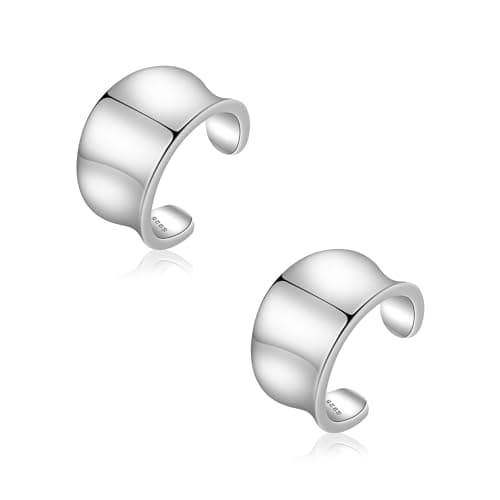
Nothing goes through you. That single structural fact makes the metal question smaller than it is anywhere else on this site — and it does not make it disappear.
Gentle Carat earns a commission when you buy through the links on this page, at no extra cost to you. It never decides what we recommend or how we rank it — here is the full disclosure.
An ear cuff grips the outer edge of the ear. Nothing passes through skin, so the metal rests on an intact barrier rather than sitting inside an open channel. Contact allergy still happens through intact skin — that is how watch cases and belt buckles cause rashes — but it takes more exposure and more time than a post in a piercing does. Sterling silver and stated stainless steel are both reasonable here in a way they are not for a fresh piercing.
How we judged these
Criteria first, ranking second. The scores rate what each seller discloses and how the named metal suits reactive skin — never a test result. In order:
Is the alloy named? “925 sterling silver” is a checkable claim. “Stainless steel” without a grade is a family, not a specification.
If it is plated, is the base named? This is the single most useful thing a plated listing can say, and one pick here says it.
Is it adjustable, and is a size given? A stated diameter in millimeters is the specification that decides whether it fits your ear.
Where on the ear does it sit? Helix, conch and lobe cuffs are different products with different fits.
Honest downsides on every pick.
Why intact skin changes the arithmetic
The reason this site is so exacting about earring posts is that a piercing is a wound with a metal object held inside it. The skin barrier — the thing that normally keeps metal ions from reaching the immune cells that react to them — is simply absent along the channel. That is why a stud can cause trouble in days when a bracelet in the same alloy causes none in years.
A cuff is on the other side of that line. It sits on unbroken skin, exactly like a ring or a watch case, and the exposure is correspondingly lower. That is not the same as zero: the classic nickel rashes documented in the literature are from watch backs, buckles and jeans studs, all of which touch intact skin. What it means practically is that a metal you would not put in a piercing may be perfectly comfortable as a cuff, and that you should still take it off at the first itch.
Where cuffs sit, and what fits
The three common cuff positions and what each one demands of the fit.
Position
Where it grips
What decides fit
Notes
Helix cuff
The upper outer rim of the ear
Rim thickness; adjustable bands cope with most
The classic, and the easiest to wear for long periods
Conch cuff
The bowl of the ear, inside the rim
Stated diameter — 12mm is common and not universal
Mimics the piercing with the slowest, most difficult healing
Lobe or fake-hoop cuff
Clips around the lower edge
Lobe thickness; the loosest of the three
Most likely to shift or drop during the day
The three common cuff positions and what each one demands of the fit.
Sterling silver, and the black mark that is not a reaction
Sterling silver is 92.5 percent silver with the balance usually copper, which is why it is also called 925. Silver itself very rarely causes contact allergy. What people notice is tarnish: silver reacts with sulfur in air and sweat to form silver sulfide, a dark film that can transfer to skin as a gray or black mark.
That mark is a stain, not a rash. It wipes off, it does not itch, and it tells you nothing about whether the metal suits you. The tarnish and green skin page works through the whole family of discoloration that gets mistaken for allergy.
The plating question, in the one place it matters least
Plated jewelry fails at friction points, and on an earring post the friction point is inside the piercing. A cuff has no such point: it rests, it is not dragged through anything. Plating on a cuff therefore lasts considerably longer than the same plating on a post.
It still matters what is underneath, because a coating is only ever as good as the base it hides. A gold-plated cuff over sterling silver becomes a sterling cuff as the plating wears. A gold-plated cuff over unnamed base metal becomes an unnamed base metal cuff. One pick on this page names its base. The gold-plated explainer covers the rest.
Where each pick fits
The sterling cuffs lead because 925 is a claim you can check against a hallmark. The conch cuff is second on the strength of a stated diameter, which almost no cuff listing gives. The plated sterling pick is third for naming its base metal. The two stainless sets are last because “stainless steel” without a grade is the vaguest common claim in jewelry — they are on the page because they are cheap, and because a cuff is the lowest-stakes place to find out whether steel suits you.
Quick picks
Ranked on what the seller actually discloses. Tap a row for the full write-up, or go straight to the listing.
#
Product
Best for
Score
Price
1
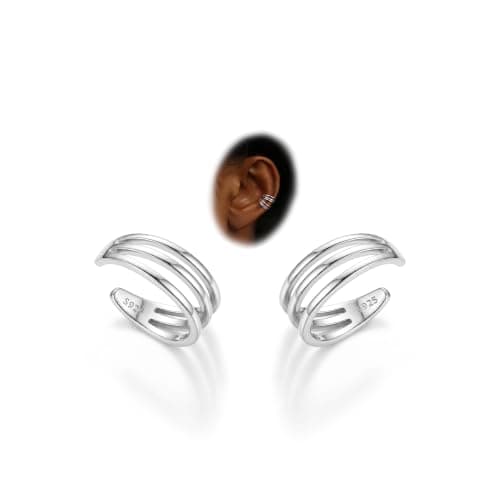
CHIC & ARTSY Sterling Silver Ear Cuff, adjustable925 sterling stated plainly, adjustable, and nothing goes through skin — which makes the metal question much smaller than it is for a stud.
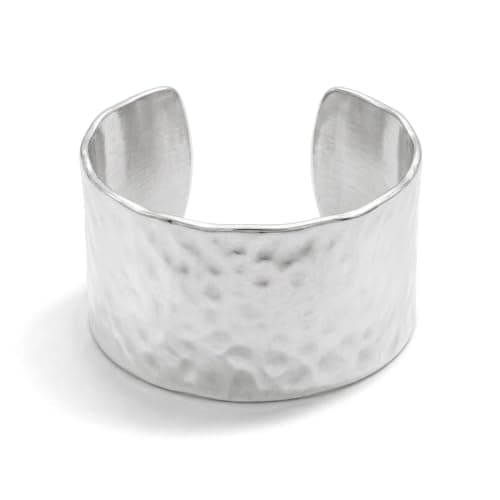
Hoops By Hand Sterling Silver Conch Cuff, 12mmA stated 925 cuff sized for the conch, which is the piercing people most often want and most often cannot heal.
Subiceto Sterling Silver CZ Ear Cuff, gold-platedGold-plated, and — unusually — the listing says what is underneath the plating, which is the whole problem with plated jewelry solved in one phrase.
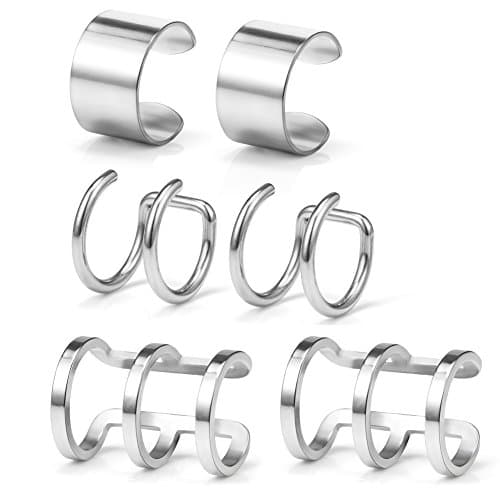
Ruifan Stainless Steel Ear Cuff Set, 6 piecesSix pieces for the price of a coffee, in stainless steel with no grade attached — the honest budget entry to a category you might not stick with.
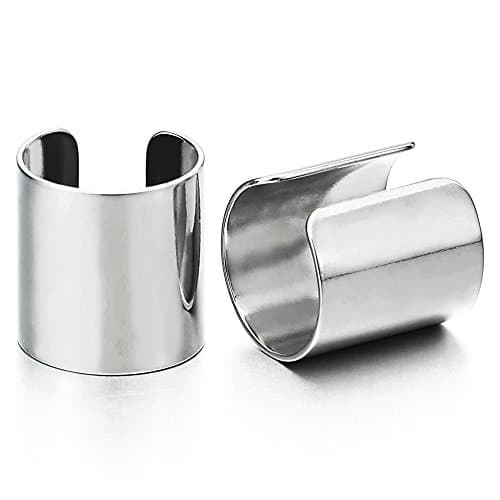
COOLSTEELANDBEYOND Stainless Steel Ear Clip, 2 piecesA minimal unisex clip in unnamed-grade stainless, for someone who wants one plain band rather than a set of shapes.
“Score” is a disclosure score, not a test result. It rates how completely the seller states the post metal, the back metal and the nickel claim, and how that metal holds up for reactive skin. The full rubric is published on our methodology page.
#1 · The cleanest metal claim on the shelf
CHIC & ARTSY Sterling Silver Ear Cuff, adjustable
925 sterling stated plainly, adjustable, and nothing goes through skin — which makes the metal question much smaller than it is for a stud.
Post material
925 sterling silver — the metal that grips the ear edge
From the seller’s own product title: “Ear Cuff Earrings 925 Sterling Silver Simple Hypoallergenic Adjustable No Piercing Ear Cuff Clip on Earrings for Women”
Back material
Nothing behind the ear — the cuff closes on the outer edge
From the seller’s own product title: “No Piercing Ear Cuff”
Nickel claim
Says hypoallergenic, not nickel-free. The seller’s own words: “925 Sterling Silver Simple Hypoallergenic”
The important structural point about a cuff: it touches intact skin on the outer rim of the ear, not the inside of a piercing channel. Contact allergy still happens through intact skin, but it needs more exposure and more time than a post sitting inside a wound does, so the stakes are genuinely lower.
Sterling silver is 92.5 percent silver with the balance usually copper. Silver itself very rarely causes contact allergy; what people notice from sterling is tarnish, and a black mark on skin from silver sulfide is a stain rather than a reaction.
Adjustable matters more than it sounds. A cuff that is too tight is the main reason people stop wearing them, and an adjustable band can be opened slightly rather than abandoned.
Who it’s for
Anyone who wants the look of a stacked ear without another piercing, and wants the metal stated.
Skip it if
Skip this if your ears ache under any pressure. A cuff works by gripping, and grip is pressure.
A stated 925 cuff sized for the conch, which is the piercing people most often want and most often cannot heal.
Post material
925 sterling silver, 12mm
From the seller’s own product title: “925 Sterling Silver Conch Hammered Ear Cuff, 12mm, Adjustable, No Piercing”
Back material
No fastening — the cuff holds by tension
From the seller’s own product title: “Adjustable, No Piercing”
Nickel claim
Names a metal, makes no nickel claim. The seller’s own words: “925 Sterling Silver Conch Hammered Ear Cuff”
A conch piercing goes through the thick cartilage bowl of the ear and is one of the slowest, most temperamental piercings to heal. A conch cuff sits in the same place and heals nothing, because it pierces nothing.
Twelve millimeters is a stated diameter, which is the specification that decides whether it fits your ear. Cuff listings usually skip it.
The title makes no allergy claim, which is honest. It names the alloy and the size and leaves the reader to judge.
Who it’s for
Someone who wants the conch look and has been told, or has learned, that cartilage piercings are not for them.
Skip it if
Skip this if you have a small or tightly curled conch. A fixed 12mm diameter does not suit every ear.
Gold-plated, and — unusually — the listing says what is underneath the plating, which is the whole problem with plated jewelry solved in one phrase.
Post material
925 sterling silver base under 14K gold plating
From the seller’s own product title: “Subiceto 925 Sterling Silver Ear Cuffs Non Piercing - Adjustable Hypoallergenic 14K Gold Plated Clip On Earrings for Women Cubic Zirconia Silver Ear Cuff Helix Cartilage Fake Piercing S08”
Back material
No fastening behind the ear
From the seller’s own product title: “Non Piercing”
Nickel claim
Says hypoallergenic, not nickel-free. The seller’s own words: “Adjustable Hypoallergenic 14K Gold Plated”
Plating is only a problem because of what is underneath it. A gold-plated piece over brass becomes a brass piece the moment the plating wears at a contact point; a gold-plated piece over sterling silver becomes a sterling silver piece. This listing names the base, which is the difference.
On a cuff the plating also lasts longer than it would on a ring or a post, because nothing is rubbing inside a piercing channel and nothing is under constant friction from a finger.
Cubic zirconia is inert and, on a cuff, is nowhere near broken skin anyway.
Who it’s for
Anyone who wants a gold-tone cuff and has been burned by plating wearing through to an unnamed base.
Skip it if
Skip this if you want the color to last indefinitely. Plating is a coating and coatings wear, even in the gentlest place to wear one.
Six pieces for the price of a coffee, in stainless steel with no grade attached — the honest budget entry to a category you might not stick with.
Post material
Stainless steel — no grade stated
From the seller’s own product title: “Ruifan Stainless Steel Ear Cuff Non piercing Fake Clip-on Cartilage Earring Set Women Men 6pcs - Silver”
Back material
No fastening behind the ear
From the seller’s own product title: “Non piercing”
Nickel claim
Names a metal, makes no nickel claim. The seller’s own words: “Stainless Steel Ear Cuff Non piercing”
"Stainless steel" without a number is the vaguest common metal claim in jewelry — it could be 316L, which most reactive people tolerate, or 430, or something else. The grade is the question and this title does not answer it.
It matters less here than it would on a post. Intact skin on the rim of the ear is a much higher barrier than the inside of a piercing, and a cuff is easy to take off the moment anything itches.
Six pieces lets you find out whether you actually like wearing cuffs before spending on sterling.
Who it’s for
A first try at ear cuffs, for someone who is not reacting to steel jewelry generally.
Skip it if
Skip this if you know steel is a problem for you. The sterling options on this page cost a little more and name their alloy.
They can, and it is pressure rather than metal. A cuff holds by gripping the rim of the ear, and a cuff that is too tight aches within an hour or two. Adjustable bands can be opened slightly, which is why they are worth paying for.
Can you be allergic to an ear cuff?+
Yes, but it takes longer and more exposure than a piercing does, because the metal is on intact skin rather than inside an open channel. The everyday nickel rashes documented in the literature — watch backs, belt buckles, jeans studs — are all from intact skin contact, so it is a real possibility rather than a theoretical one.
Are ear cuffs the same as clip-on earrings?+
No. A clip-on squeezes the lobe between two parts using a spring or screw. A cuff wraps the firmer cartilage edge higher up and holds by its own tension. They fit differently and they feel different, so disliking one does not predict disliking the other.
Will an ear cuff fall off?+
A well-fitted one usually stays put through a normal day, and lobe-style cuffs are the most likely to shift. If a cuff slides, it wants gently closing a fraction — which only works if the listing says it is adjustable.