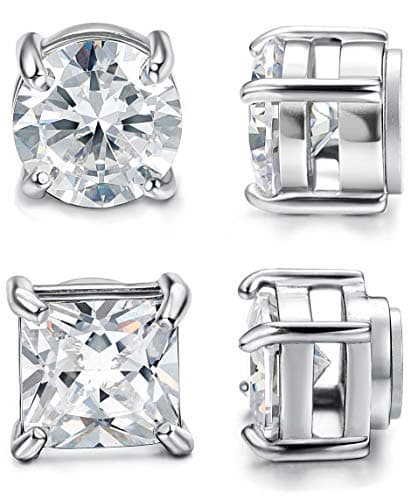
Nothing goes through the ear, which answers one problem and quietly creates another: the part pressed against the back of your lobe all day is a magnet, and not one listing says what it is made of.
Gentle Carat earns a commission when you buy through the links on this page, at no extra cost to you. It never decides what we recommend or how we rank it — here is the full disclosure.
Magnetic earrings work, and the best of the ones here is the Jstyle 6mm CZ pair — for someone with no piercings who wants a stud look. Nothing is inserted through the ear, so the question this site normally asks does not apply. But they are not an upgrade if you have working piercings: you swap a named post in an existing hole for an unnamed magnet clamped against the outside of your lobe, with sustained pressure and no air gap. If you want non-pierced earrings for sensitive skin, a clip-on with a stated metal or an ear cuff is usually the better answer.
How we judged these
Criteria first, ranking second. Nobody here has worn these earrings, so the scores rate what each seller discloses and how the named material suits reactive skin — never a test result. This category needs one adjustment to the usual rubric, and we would rather state it than have you wonder:
There is no post, so “post disclosure” is read differently here. On every other page on this site it means the metal that passes through the piercing. On this one it means the component that touches the front of the lobe, and back disclosure means the component that touches the back — which is the magnet.
Does the listing say it is non-pierced in words? Sounds obvious. Several listings leave you to infer it from the word “magnetic” and a photograph.
Is the magnet described at all? Material, coating, strength, anything. Spoiler: no.
Is the claim honest? A named metal scores above “hypoallergenic”, which is an adjective with no legal definition behind it.
Will it stay on? Shape and weight, judged from the published design.
Honest downsides on every pick, including the one ranked first.
What a magnetic earring actually is
Two parts and no hole. A decorative front sits against the front of your earlobe, a second piece sits behind it, and the two clamp together through the flesh. On most of these the back piece is the magnet and the front is steel; on some, both are magnetic. There is no post, no clutch and no piercing.
That is genuinely useful for a specific group of people. If you have never been pierced, if your piercings have closed, if you are resting a lobe that has been giving you trouble, or if your workplace or sport bans pierced jewelry, a magnetic stud gives you the look without the hole. It is also the only non-pierced option that produces a convincing flat stud front — a clip-on has visible hardware at the edge of the lobe and a cuff sits on the rim of the ear, not in the middle of it.
The component nobody names
Here is the finding this page exists for. Across all five listings, every single one names the metal of the earring and not one names the magnet. That matters because the magnet is not a hidden internal part. It is the piece pressed flat against the back of your earlobe for as long as you wear it.
You might reasonably think “Stainless Steel Magnetic Earrings” settles it. It does not, and the reason is a nice piece of metallurgy. The austenitic stainless steels used in jewelry are not meaningfully magnetic — the same alloying that gives 316L its corrosion resistance is what suppresses its magnetism, which is why this site’s stainless steel page describes the grade as non-magnetic. A piece of 316L cannot be the magnet. So when a title pairs “stainless steel” with “magnetic”, the steel is describing the decorative face and the magnet behind your lobe is a separate, undescribed component.
We are not saying the magnets are dangerous to wear, and we are not saying any seller is lying. We are saying the information is absent, and that on this site an absent material is a finding rather than a gap in our notes. If you have patch-tested positive to nickel, an unnamed metal component held under constant pressure against your skin is exactly the purchase you have learned to avoid.
Four ways to wear an earring without a piercing, and one with
Magnetic
Clip-on
Ear cuff
Pierced stud
Goes through the ear
No
No
No
Yes
How it stays on
Magnetic clamp
Mechanical clamp
Grips the rim
Post and back
Contact pressure
Constant, by design
Constant, usually adjustable
Light
Almost none
Metal usually named
The front only
Front and often the pad
Yes
Yes, on good listings
Works on a lobe
Yes
Yes
No, rim only
Yes
Holds a dangle
Poorly
Yes
Limited
Yes
Loose magnet in the house
Yes
No
No
No
Four ways to wear an earring without a piercing, and one with
The safety point nobody puts on the listing
There is a US federal safety standard covering consumer magnet products, and jewelry is explicitly inside its scope. The rule reaches products “designed, marketed, or intended to be used for entertainment, jewelry (including children’s jewelry)” that “contain one or more loose or separable magnets”. A magnetic earring is, definitionally, two separable magnets.
The requirement is that each loose or separable magnet small enough to fit inside the CPSC’s small parts cylinder must have a flux index below 50 kG²mm². The reason for the rule is blunt: swallowed magnets can attract each other through intestinal tissue, which the Commission says “can result in perforations, twisting and/or blockage of the intestines, infection, blood poisoning and death”.
None of the listings on this page mentions that standard or publishes a flux index. That is not an accusation — a compliant product has no obligation to advertise the fact, and we have not measured anything. It is a note that if you have a toddler, a magnetic earring is a small, shiny, detachable magnet that lives on a bedside table, and that the rule above exists because of what happens next. A clip-on does not create that problem at all.
So should you buy them?
If you have no piercings and want a stud look, yes, with eyes open. Buy a plain flat stud rather than a hoop or a dangle, because weight hanging below a clamp is what makes magnetic earrings slide and fall. Take them off at night, which gives the skin a break from constant pressure and is good practice with any clamped jewelry. Keep them off a child’s reach.
If you do have working piercings and you are here because your ears react, this is the wrong aisle. A piercing you already have, fitted with implant-grade titanium to a published standard, is a smaller and far better-documented exposure than an unnamed magnet held tight against skin. And if the reaction has been coming from the back rather than the earring — which more often than not it has — the fix is a few dollars of titanium backs, not a new category of jewelry.
Quick picks
Ranked on what the seller actually discloses. Tap a row for the full write-up, or go straight to the listing.
#
Product
Best for
Score
Price
1
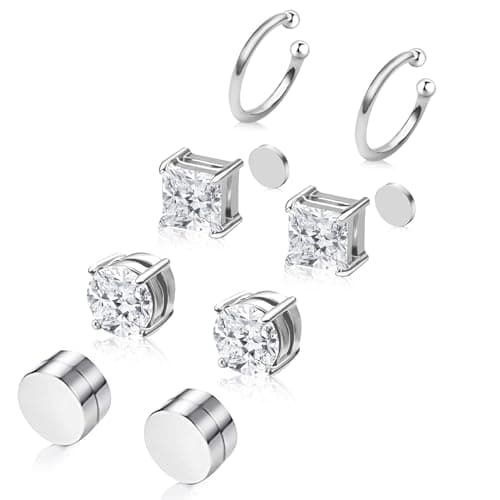
Jstyle Magnetic CZ Stud Earrings, 6mm, 2 PairsThe most informative title on this shelf: it names the front metal, gives the stone size, and says in plain words that the earring is non-pierced.
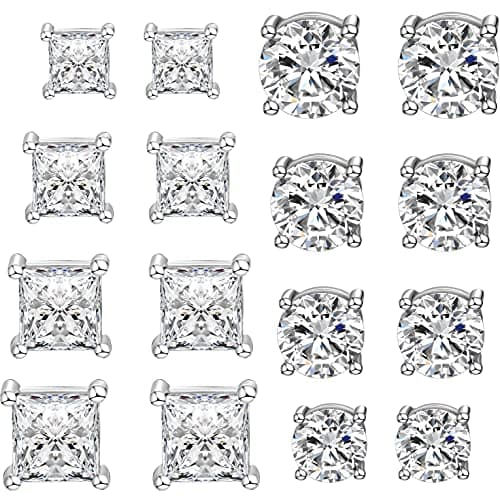
WAINIS Magnetic CZ Stud Earrings, 5-8mm, 8 PairsEight pairs with the size range printed on the listing, which is the one practical detail that decides whether a magnetic earring holds at all.
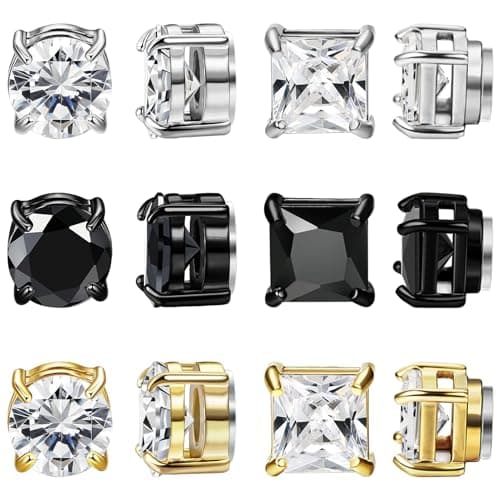
Trinckle Magnetic Studs, 4 PairsThe only title on this shelf that puts steel and magnet in the same phrase, which is also the clearest illustration of why that phrase cannot be taken at face value.
The closest any listing comes to describing the magnet
NEWITIN Magnetic CZ Stud Earrings, 6 PairsA competent multipack whose title is almost entirely about the look, with the mechanism named and the materials left at one word.
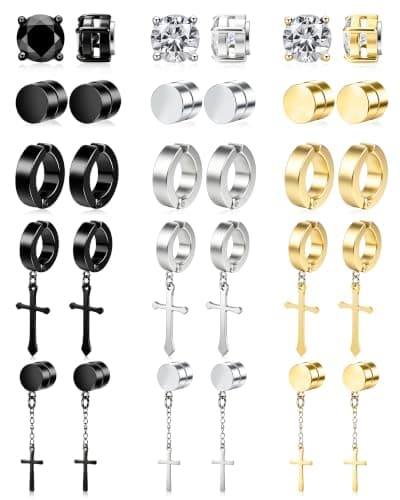
ONESING Magnetic Studs, Hoops and Dangles, 15 PairsThe widest spread of shapes here and the weakest disclosure: no allergy or nickel language at all, and several designs that fight the way a magnet holds.
“Score” is a disclosure score, not a test result. It rates how completely the seller states the post metal, the back metal and the nickel claim, and how that metal holds up for reactive skin. The full rubric is published on our methodology page.
#1 · Saying outright that nothing goes through the ear
Jstyle Magnetic CZ Stud Earrings, 6mm, 2 Pairs
The most informative title on this shelf: it names the front metal, gives the stone size, and says in plain words that the earring is non-pierced.
Post material
No post at all. The lobe is clamped between a front piece and a rear magnet, so nothing is inserted through the ear
From the seller’s own product title: “Non-Pierced Earrings”
Back material
A magnet. The title calls the earring stainless steel but never names the magnet or its coating, and austenitic stainless is not itself magnetic
From the seller’s own product title: “Comfortable Stainless Steel Earrings for Sensitive Ears”
Nickel claim
Names a metal, makes no nickel claim. The seller’s own words: “Comfortable Stainless Steel Earrings for Sensitive Ears”
This is the title to read if you want to understand what you are actually buying. It states the front metal, it gives a stone size you can picture (6mm), and it uses the words "Non-Pierced" rather than leaving you to infer it from the word "magnetic". On a shelf where most listings describe the look and skip the mechanism, that is worth something.
What it does not tell you is the part this site cares about most. A magnetic earring has two components in skin contact, not one, and the rear one is a magnet. The title's "Stainless Steel" cannot be describing it: the alloying that makes 316L corrosion-resistant also makes it essentially non-magnetic, which is why this site's own stainless-steel page says so. So the steel is the decorative front, and the magnet behind your lobe is unnamed.
That matters more here than it would on a stud, because of how the thing stays on. A post is held by a back; a magnet is held by clamping force, which means sustained pressure and no air gap for however long you wear it. Warmth, pressure and occlusion against skin are the conditions under which any metal that releases nickel causes the most trouble.
Who it’s for
Someone with no piercings, or with piercings they are resting, who wants a stud look and wants the listing to be straight with them about the mechanism.
Skip it if
Skip this if you have working piercings and tolerate titanium. A flat-back titanium stud is a named, standardized metal in a hole that already exists, which is a better-understood exposure than an unnamed magnet clamped to the outside.
Eight pairs with the size range printed on the listing, which is the one practical detail that decides whether a magnetic earring holds at all.
Post material
No post. Held on by clamping, stated as non-piercing
From the seller’s own product title: “Non-piercing Cubic Zirconia Clip on Earrings”
Back material
A magnet, not named or coated-described anywhere in the title
Not named in the seller’s product title — the headline nearly every buyer reads. That omission is the finding, not a gap in our notes.
Nickel claim
Says hypoallergenic, not nickel-free. The seller’s own words: “Hypoallergenic Stainless Steel Earrings for Sensitive Ears”
The size range is the reason this one ranks where it does. "5-8mm" tells you the front pieces span small to fairly large, and on a magnetic earring the diameter of the front piece is not only a style question — it is most of the clamping area. A bigger face spreads the hold over more skin, which is more comfortable; a smaller face concentrates it, which is less.
Eight pairs also changes what the purchase is. This is a box to work through rather than a pair to commit to, which is the sensible way to approach a category where fit varies this much between designs and nobody can tell you in advance which one your lobe tolerates.
The claim language is weaker than it looks. "Hypoallergenic" is a marketing adjective with no regulatory definition behind it, and it is doing the work here that a named metal should be doing. The front is steel; the magnet behind the lobe is not described.
Who it’s for
Someone buying magnetic earrings for the first time who would rather find out which size holds comfortably than guess once and be wrong.
Skip it if
Skip this if you want one considered pair rather than a tray of eight, or if you need the back component named before you will put it on.
#3 · The closest any listing comes to describing the magnet
Trinckle Magnetic Studs, 4 Pairs
The only title on this shelf that puts steel and magnet in the same phrase, which is also the clearest illustration of why that phrase cannot be taken at face value.
Post material
No post. Explicitly sold as a non-pierced earring
From the seller’s own product title: “Hypoallergenic Studs Non Pierced”
Back material
A magnet described as stainless steel, which is not a coherent description — the stainless used in jewelry is chosen partly because it is not magnetic
From the seller’s own product title: “Stainless Steel Magnet Studs”
Nickel claim
Says hypoallergenic, not nickel-free. The seller’s own words: “Hypoallergenic Studs Non Pierced”
"Stainless Steel Magnet Studs" is the single most interesting phrase on this shelf, and it is worth slowing down on. It reads as though the magnet has been named. It has not. The austenitic stainless steels used in jewelry are not meaningfully magnetic — that is a consequence of the same alloying that makes them resist corrosion, and it is why this site's stainless-steel coverage describes the grade as non-magnetic.
So one of two things is true: either the steel is the front piece and the magnet is a different, unnamed material, or the word is being used loosely for a steel-cased magnet. Both readings leave the actual magnet undescribed. We are not saying the seller is being dishonest; we are saying the phrase does not carry the information it appears to carry, and this is exactly the pattern this site exists to point at.
Four pairs, a plain stud look and no stone to catch. As a product it is unremarkable in a good way. As a listing it is a useful teaching example.
Who it’s for
Someone who wants a quiet, plain magnetic stud and is not relying on the listing's metal wording to decide whether it is safe for them.
Skip it if
Skip this if you read "Stainless Steel Magnet" as a specification. It is not one, and treating it as one is how people end up back where they started.
A competent multipack whose title is almost entirely about the look, with the mechanism named and the materials left at one word.
Post material
No post. Sold as non-piercing
From the seller’s own product title: “Clip On Unisex Non Piercing Magnet Fake Earrings”
Back material
A magnet; the title does not name it or its coating
Not named in the seller’s product title — the headline nearly every buyer reads. That omission is the finding, not a gap in our notes.
Nickel claim
Says hypoallergenic, not nickel-free. The seller’s own words: “Hypoallergenic, Clip On Unisex Non Piercing Magnet Fake Earrings”
The honest summary of this listing is that it is written for someone shopping by appearance. "5A Cubic Zirconia" is a stone-grading phrase used across costume jewelry with no standards body behind it, and it is the most specific-sounding thing in the title while telling you nothing you can check.
What it does do well is leave no doubt about the mechanism. "Non Piercing Magnet Fake Earrings" is unambiguous, and for a buyer who does not want a piercing that is the first thing they need to know.
Scored where it is because the front metal is named at one word and the magnet is not named at all. That is the shelf norm rather than a failing specific to this seller, which is itself the point of the page.
Who it’s for
Someone who wants the look of a stone stud, has no piercing, and is buying a spread of designs rather than one pair.
Skip it if
Skip this if stone grading language is going to influence your decision. "5A" is not a measurement, and no part of it speaks to what is touching your skin.
#5 · Trying shapes a magnet struggles with, cheaply
ONESING Magnetic Studs, Hoops and Dangles, 15 Pairs
The widest spread of shapes here and the weakest disclosure: no allergy or nickel language at all, and several designs that fight the way a magnet holds.
Post material
No post. Sold as a non-pierced set
From the seller’s own product title: “Non Pierced Earrings Set for Men Women”
Back material
A magnet; not named, and no coating described
Not named in the seller’s product title — the headline nearly every buyer reads. That omission is the finding, not a gap in our notes.
Nickel claim
Names a metal, makes no nickel claim. The seller’s own words: “Stainless Steel Magnetic Earrings”
This is the only listing on the shelf that makes no allergy claim whatsoever — no "hypoallergenic", no "nickel", no "for sensitive ears". That is scored as the weakest claim here, but there is a case that it is the most honest one: it names a material and stops, instead of reaching for an adjective that means nothing.
The reason it ranks last is physical rather than chemical. Fifteen pairs including hoops, crosses and dangles means several designs whose weight hangs below the clamp. A post through a healed lobe carries weight through the lobe; a magnet carries it entirely by friction against skin, so a hanging design either needs a stronger magnet, which means more pressure, or it slides and falls off. Neither is good.
Buy it as a way to find out which shapes work on your ears without spending much. Do not expect the dangles to behave like pierced dangles.
Who it’s for
Someone experimenting with a look who wants fifteen tries at it for the price of one pair, and who is not asking the listing to vouch for the metal.
Skip it if
Skip this if you want hoops or dangles that stay put through a day of movement, or if you want any allergy statement at all on the listing.
Plain studs, yes, through an ordinary day. The failures are shape-related rather than strength-related: hoops, crosses and dangles hang their weight below the clamp, so they rotate, slide and eventually drop. If you want a magnetic earring you will not lose, buy a small flat stud and nothing else.
Are magnetic earrings safe for sensitive ears?+
They remove the piercing from the equation, which removes the worst-case exposure. But they add constant pressure against the skin on both sides of the lobe, and the magnet itself is not named on a single listing we found. If your sensitivity is mild, many people wear these without trouble. If you have patch-tested positive to nickel, an unnamed metal held under pressure is not a safe assumption.
What are magnetic earrings made of?+
The decorative front is usually stainless steel, and the listings say so. The magnet is the part nobody states. It cannot be the stainless steel, because the grades used in jewelry are essentially non-magnetic, so it is a separate component of unstated material and unstated coating. That is the honest answer, and it is also the complaint.
Are magnetic earrings better than clip-ons?+
Better-looking, usually: a magnetic stud sits flat in the middle of the lobe and a clip-on has visible hardware at the edge. Worse on information, almost always: a clip-on’s metal is typically named front and back, where a magnet is named nowhere. And a clip-on is not a loose magnet in a house with small children. See clip-on earrings.
Can magnetic earrings damage your earlobe?+
The mechanism of concern is pressure rather than allergy: a strong magnet worn continuously squeezes the tissue between its two halves, and sustained pressure on skin is not something to maintain around the clock. Take them off at night and at any point the lobe feels sore, tender or marked. If soreness persists after you stop wearing them, that is a question for a clinician rather than for a shopping site.
Can children wear magnetic earrings?+
Our answer is to be careful, for a reason that has nothing to do with the metal. These are small separable magnets, and there is a federal safety standard covering magnet products precisely because swallowed magnets can attract through intestinal tissue and cause serious internal injury. None of these listings publishes a flux index or references the standard. With a young child in the house, that is a real consideration.
Sources
US CPSC — 16 CFR Part 1262, safety standard for magnet products — Effective 21 October 2022. Covers consumer products 'designed, marketed, or intended to be used for entertainment, jewelry (including children's jewelry)' that 'contain one or more loose or separable magnets'. Each loose or separable magnet that fits entirely within CPSC's small parts cylinder (16 CFR 1501.4) 'must have a flux index of less than 50 kG2 mm2', measured by the ASTM F963 method.
US CPSC — why the magnet standard exists — Swallowed magnets can attract each other through intestinal tissue, which the agency says 'can result in perforations, twisting and/or blockage of the intestines, infection, blood poisoning and death'.