Gentle Carat earns a commission when you buy through the links on this page, at no extra cost to you. It never decides what we recommend or how we rank it — here is the full disclosure.
On a stud, the post and the back are the two things touching you. On a drop earring the geometry changes entirely: one small component — a French hook, a lever-back or a post — passes through the piercing, and the charm, tassel, stone or bar hanging below it never touches broken skin at all. So the question narrows. Not “what is this earring made of” but “what is the wire made of”. The safest answer is implant-grade titanium (ASTM F-136, often sold as G23) or niobium; commercially pure titanium is close behind and lighter still.
How we judged these
Criteria first, ranking second. Nobody here has worn any of these earrings, so the scores below rate what each seller discloses and how well the named metal suits reactive skin — never a test result. The five things we looked at, in the order they mattered:
Is the wire’s metal named at all? This is the whole page. A drop earring can be honestly described as “sterling silver” while the hook is plated base metal, because the hook is a findings part bought by the bag.
Is a grade or standard given? “Titanium” is better than nothing. “G23” or “ASTM F136” is a claim with a document behind it.
What closes behind the lobe? A French hook closes nothing, which means no second component and no second alloy — but also nothing stopping the earring leaving. A lever-back is part of the same wire. A butterfly back is separately manufactured and is the most likely unnamed metal on any earring.
Weight and length. Stated in millimeters where the seller gives it, described qualitatively where they do not. We never estimate a figure a listing does not state.
Honest downsides. Every pick below carries a “skip it if”, including the ones we rank highest.
The four fastenings, and what each one commits you to
Drop earrings arrive on one of four fittings, and the choice is not cosmetic. It decides how many separate pieces of metal touch you, how likely the earring is to fall out, and how much of the seller’s description you can actually rely on.
How the four drop-earring fittings compare on the things that matter for reactive skin.
Fitting
What touches the piercing
Second component?
Watch out for
French hook (shepherd’s hook)
A single open wire through the lobe
None — nothing closes behind
The most commonly lost fitting, and the one most often sold as a generic findings part in an unnamed alloy
Lever-back
A wire with a hinged catch that closes
None — the hinge is part of the same wire
Sits close to the lobe, so long dramatic drops are rare on this fitting
Post and butterfly back
A straight post through the lobe
Yes — the back is separately manufactured
The back is the single most under-disclosed component in the whole category
Huggie or hoop with a charm
A hoop that closes on itself
None, usually
The charm’s attachment ring is a third metal nobody names
How the four drop-earring fittings compare on the things that matter for reactive skin.
The pattern is worth stating plainly: fewer separate pieces is better, not because extra pieces are inherently dangerous but because every additional component is another thing the listing does not describe. A lever-back is a good fastening for reactive skin mostly because there is nothing left to be vague about.
Weight, and the thing nobody writes about
Almost all the writing on sensitive ears is about metal, and for good reason. But the most common complaint specific to drop earrings is not itching. It is a dull ache at the bottom of the lobe by early evening, and a piercing hole that slowly turns from round into an oval over years.
That is mechanical, not immunological. A drop earring hangs its whole mass off the lower edge of the piercing, and unlike a stud it swings, so the load is not even constant. The tell is simple: an allergic reaction itches and usually shows redness around the hole, while a weight problem aches and does not itch. If yours aches, changing metal will not fix it — changing to a lighter earring will. Titanium is roughly 45 percent less dense than steel for the same shape, which is the practical reason it turns up so often on this page.
The cheapest fix is usually not a new pair of earrings
If you already own drop earrings you like and they irritate you, the odds are strongly on the hook rather than the ornament — because the ornament is the part the maker chose, and the hook is the part they bought by the hundred. Ear wires are sold in packs for a few dollars in titanium and niobium, and swapping one takes about a minute per earring with a pair of pliers: open the small loop sideways rather than pulling it apart, move the drop across, close it.
That is the same logic as replacing earring backs, which is the single cheapest intervention in this whole category, and it is why a pack of bare niobium wires sits in the picks below alongside finished earrings.
Metals, ranked for an ear wire
What each metal means specifically for the wire that goes through the piercing.
Metal
Nickel
Weight
Availability as a drop earring
Implant-grade titanium (ASTM F-136 / G23)
None as an alloying element
Very light
Good, and usually grade-stated
Commercially pure titanium
None — one element
Very light, softest of the titaniums
Good
Niobium
None — elemental, unalloyed
Denser than titanium
Poor as finished earrings; common as bare ear wires
316L stainless steel
8–12% by weight, low release
Heavy
Common, but the grade is often omitted
Plated base metal
Unknown, under the plating
Varies
Everywhere, and the default on unnamed fashion drops
What each metal means specifically for the wire that goes through the piercing.
Where each pick fits
The ranking below runs from the fastening we would choose first to the one that needs the most from you as a reader. The niobium entries sit mid-table deliberately: they are the most inert metal on the page and the least available as a finished earring, so one is a finished pair and one is a pack of wires for earrings you already own. The steel pick is last on disclosure and is on the page anyway, because it is what the shelf actually looks like and pretending otherwise would not help anyone.
Ranked on what the seller actually discloses. Tap a row for the full write-up, or go straight to the listing.
#
Product
Best for
Score
Price
1
Limerencia G23 Titanium Leverback Drop EarringsA lever-back names the one fastening on this shelf that closes rather than relies on friction, and it names the alloy grade holding it.
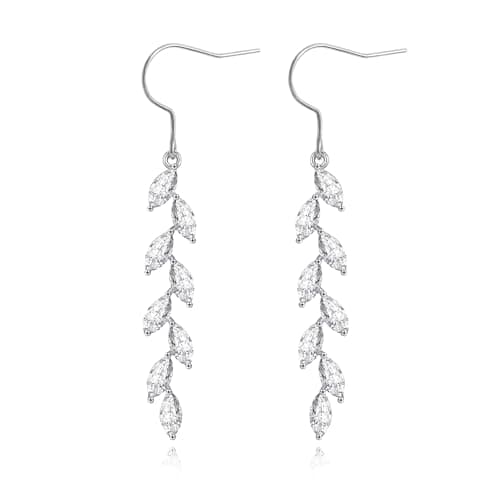
TGNEL CZ Olive Leaf Tassel Dangle EarringsA long tassel drop whose title is explicit that the hooks — the only part that goes through you — are pure titanium.
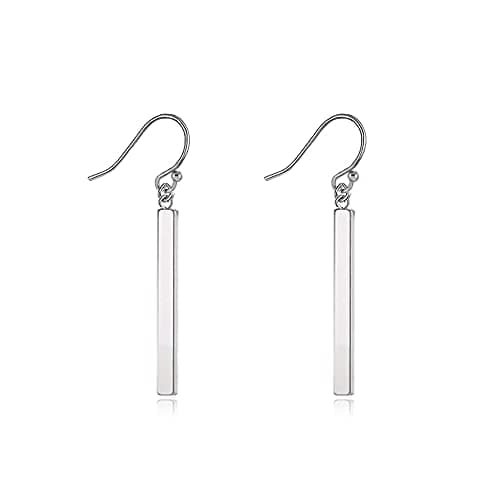
Limerencia Pure Titanium Vertical Bar Drop Earrings, 30mmA plain titanium bar on a titanium wire, with the drop length actually stated — which almost nothing on this shelf bothers to do.
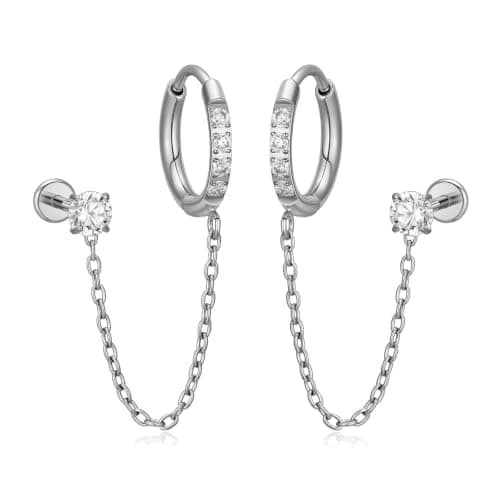
Humorrap ASTM F136 Titanium Chain Dangle EarringsThe only drop here that cites a published standard by number, and the only one designed to span two piercings.
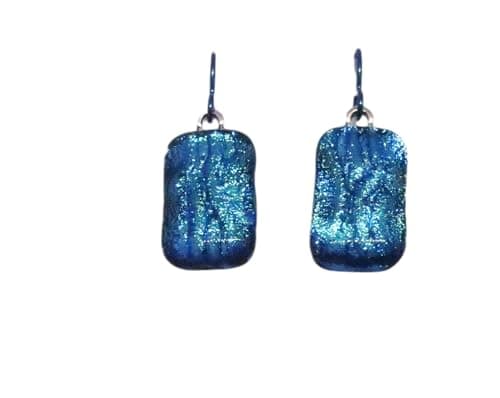
McCray Studios Dichroic Glass Dangle Earrings on NiobiumOne of the very few finished niobium earrings sold at retail rather than as a bag of ear wires for jewelry makers.
Niobium French Hook Ear Wires, 20G, 10 packThe cheapest route into niobium: replace the hooks on earrings you already have rather than hunting for finished pieces that barely exist.
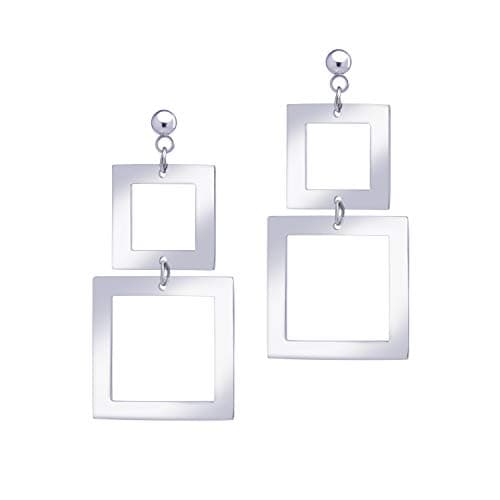
555Jewelry Stainless Steel Double Square Drop EarringsStainless steel with no grade number and no allergy claim at all — which is honest, and which is the whole reason it is scored where it is.
“Score” is a disclosure score, not a test result. It rates how completely the seller states the post metal, the back metal and the nickel claim, and how that metal holds up for reactive skin. The full rubric is published on our methodology page.
#1 · The most secure fastening
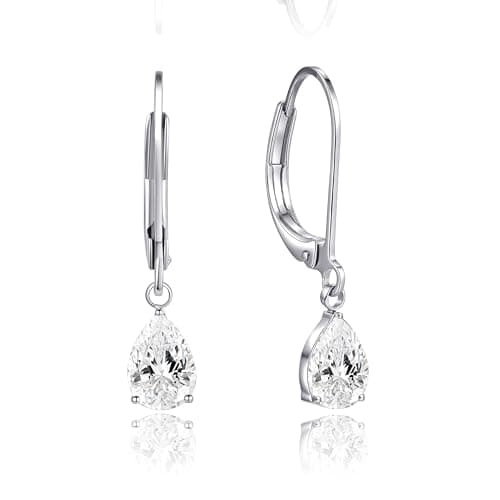
Limerencia G23 Titanium Leverback Drop Earrings
A lever-back names the one fastening on this shelf that closes rather than relies on friction, and it names the alloy grade holding it.
Post material
G23 titanium wire
From the seller’s own product title: “Limerencia G23 Titanium Leverback Earrings Dangle Drop Earrings for Women”
Back material
Lever-back — the hinge closes behind the lobe, so there is no separate clip to be a second metal
From the seller’s own product title: “Leverback Earrings”
Nickel claim
Names a metal, makes no nickel claim. The seller’s own words: “G23 Titanium Leverback Earrings”
A French hook is an open wire. It relies on the weight of the earring to stay seated, and it is the single most common way a drop earring is lost. A lever-back closes: the wire swings up into a hinged catch and stays there until you open it.
For this site the more interesting property is that a lever-back has no second component. A butterfly back is separately manufactured and frequently a cheaper alloy than the earring it holds, which is the most under-reported problem in the whole category. A hinge that is part of the same wire cannot be a different metal.
G23 is the common trade name for Ti-6Al-4V ELI, the same composition ASTM F-136 specifies for surgical implants. The title states the grade rather than saying 'titanium' and leaving it there, which is the distinction this whole site turns on.
Who it’s for
Anyone who has lost a drop earring off a hook, and anyone who wants the fastening to be the same metal as the wire.
Skip it if
Skip this if you want long and dramatic. A lever-back sits close to the lobe by design and the drop is short.
A long tassel drop whose title is explicit that the hooks — the only part that goes through you — are pure titanium.
Post material
Pure titanium ear hooks
From the seller’s own product title: “TGNEL Titanium Earrings | Sparkle CZ Olive Leaves Tassel Dangle Earring Charms, Hypoallergenic Pure Titanium Earrings Hooks for Sensitive Ears”
Back material
French hook — nothing fastens behind the lobe
From the seller’s own product title: “Pure Titanium Earrings Hooks”
Nickel claim
Says hypoallergenic, not nickel-free. The seller’s own words: “Hypoallergenic Pure Titanium Earrings Hooks”
Read this title carefully, because it is doing the right thing. It does not claim the whole earring is titanium. It claims the hooks are — and the hooks are the only part that enters the piercing. That is a narrower claim than most listings make and a more useful one.
The charms are cubic zirconia on a tassel. CZ is a synthetic stone, inert against skin, and it is hanging well clear of the piercing in any case. Its relevance here is weight rather than allergy.
Commercially pure titanium is one element, so no aluminum and no vanadium either. It is softer than the Grade 5 alloy, which for an ear wire is an advantage — a soft wire can be eased back into shape rather than snapping.
Who it’s for
Someone who wants a genuinely long earring and has been burned by an unnamed hook on a pretty drop.
Skip it if
Skip this if you sleep in your earrings or have a fresh piercing. A tassel this long snags on collars and hair, and movement is what a healing piercing least tolerates.
Limerencia Pure Titanium Vertical Bar Drop Earrings, 30mm
A plain titanium bar on a titanium wire, with the drop length actually stated — which almost nothing on this shelf bothers to do.
Post material
Pure titanium, whole earring
From the seller’s own product title: “Limerencia Pure Titanium Vertical Bar Dangle Earrings, Lightweight Drop Earrings Hypoallergenic for Sensitive Ears Women (30 mm, Silver)”
Back material
French hook — nothing fastens behind the lobe
Not named in the seller’s product title — the headline nearly every buyer reads. That omission is the finding, not a gap in our notes.
Nickel claim
Says hypoallergenic, not nickel-free. The seller’s own words: “Lightweight Drop Earrings Hypoallergenic for Sensitive Ears”
This is the rare drop earring where the ornament and the wire are the same stated metal, so there is no seam where an unnamed alloy can hide. On a category built out of mixed materials that is worth something.
Weight is the quiet problem with drop earrings and nobody writes about it. A heavy drop pulls down on the lower edge of the piercing all day, and over years that is how a lobe elongates. Titanium is roughly 45 percent lighter than steel for the same shape, and a bare bar has very little shape to it.
Thirty millimeters is a specification, not a marketing word. It is a little over an inch, which reads as a long line rather than a statement piece, and it is the length you can check against earrings you already own.
Who it’s for
Long-line minimalism, and anyone whose lobes ache after a day in ordinary drop earrings.
Skip it if
Skip this if you want sparkle. It is a plain polished bar and it is meant to be.
The only drop here that cites a published standard by number, and the only one designed to span two piercings.
Post material
ASTM F136 titanium
From the seller’s own product title: “Humorrap Titanium Dainty Chain Earrings for Women, ASTM F136 Titanium Double Piercing Dangle Earrings, Cubic Zirconia Huggie Hoop for Helix Conch Earlobe, Implant Grade Cartilage Stud Ear Cuff”
Back material
Huggie hoop closes on itself at one end; the second fitting is not separately named
Not named in the seller’s product title — the headline nearly every buyer reads. That omission is the finding, not a gap in our notes.
Nickel claim
Names a metal, makes no nickel claim. The seller’s own words: “ASTM F136 Titanium Double Piercing Dangle Earrings”
ASTM F-136 is the composition standard behind the phrase 'implant grade titanium' — Ti-6Al-4V ELI, the extra-low-interstitial version of the Grade 5 alloy. A listing that cites the document number rather than the marketing phrase is making a claim you could in principle check.
A chain spanning two piercings puts weight on both, which sounds worse and is usually better: the load is shared rather than hanging off one lobe. What it does demand is that both piercings are fully healed, because a chain transmits every snag from one to the other.
The second fitting is where the title goes quiet. It names the huggie end and not what closes at the other, which on a two-point earring is exactly half the contact.
Who it’s for
A healed second lobe or helix piercing, and anyone who wants the standard cited rather than implied.
Skip it if
Skip this if either piercing is new or still settling. A chain between two holes is the last thing a healing piercing needs.
McCray Studios Dichroic Glass Dangle Earrings on Niobium
One of the very few finished niobium earrings sold at retail rather than as a bag of ear wires for jewelry makers.
Post material
Niobium ear wire
From the seller’s own product title: “Exceptional Aqua Blue Dichroic Glass Dangle Niobium earrings N280”
Back material
French hook — nothing clips on behind the ear
From the seller’s own product title: “Dangle Niobium earrings”
Nickel claim
Names a metal, makes no nickel claim. The seller’s own words: “Dichroic Glass Dangle Niobium earrings”
Niobium is an elemental metal used unalloyed, so there is no nickel in it to release — not a low amount, none. That is a structurally stronger position than even implant-grade titanium, which is an alloy of three metals.
The hanging element is dichroic glass, a laminated glass that shifts color with the viewing angle. Glass is inert against skin and it is not the part that goes through the piercing anyway; the wire is, and the wire is the niobium.
The title names the metal and makes no allergy claim of any kind, which on this site scores as honest material-only wording rather than as a weakness. It also does not say what the small connecting loops are made of.
Who it’s for
Someone who reacts even to implant-grade titanium and has given up on finding niobium in anything but findings.
Skip it if
Skip this if you want a stud. It is a dangle, it moves, and it is glass — none of which suits a healing piercing or a heavy sleeper.
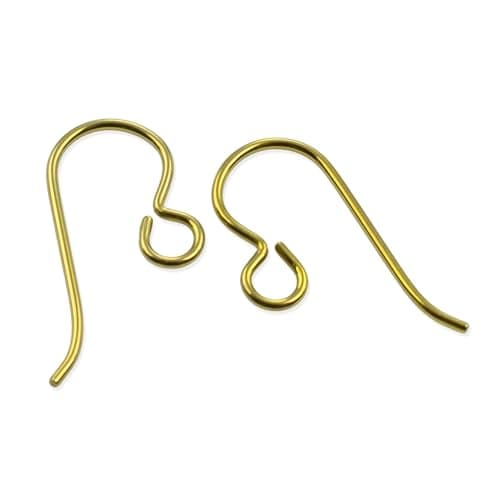
The cheapest route into niobium: replace the hooks on earrings you already have rather than hunting for finished pieces that barely exist.
Post material
Niobium, 20 gauge — stated as pure metal
From the seller’s own product title: “Yellow Niobium Ear Wires, Pure Metal Hypoallergenic French Hook 20 Gauge 8mm x 20mm, Pack of 10 USA Made, Professional Jewelry Making Supplies for Sensitive Ears”
Back material
French hook — no separate back to be a second metal
From the seller’s own product title: “Hypoallergenic French Hook 20 Gauge”
Nickel claim
Says hypoallergenic, not nickel-free. The seller’s own words: “Pure Metal Hypoallergenic French Hook”
This is the honest answer to the niobium scarcity problem. Almost everything sold in the metal is a finding rather than a finished earring, so the practical move is to buy the findings and swap them onto drops you already like.
Swapping a hook takes a pair of pliers and about a minute per earring: open the small loop sideways rather than pulling it apart, move the drop across, close it. Nothing is soldered.
"Yellow" here is an anodized color, not plating. Anodizing thickens niobium's own oxide layer so the color is the metal's surface rather than a coating on top of it, which is why anodized colors cannot flake off. The title does not spell that out, so treat it as the likely explanation rather than a stated one.
Who it’s for
Anyone who has narrowed the problem down to the hook and owns earrings worth saving.
Skip it if
Skip this if you will not do the swap. Ten pairs of bare wires are useless on their own, and a finished earring is the thing you actually wear.
555Jewelry Stainless Steel Double Square Drop Earrings
Stainless steel with no grade number and no allergy claim at all — which is honest, and which is the whole reason it is scored where it is.
Post material
Stainless steel — no grade stated
From the seller’s own product title: “555Jewelry Stainless Steel Shiny Polished Double Square Drop Earrings, Dangle Earrings for Women, Drop Earrings for Women & Ladies, Silver”
Back material
Fastening not named in the title
Not named in the seller’s product title — the headline nearly every buyer reads. That omission is the finding, not a gap in our notes.
Nickel claim
No nickel language at all. The listing never uses the word.
"Stainless steel" without a number is the vaguest common metal claim in jewelry. It could be 316L, which most reactive people wear comfortably, or 304, or 430. The grade is the whole question and this title does not answer it.
That said, the listing makes no allergy claim either — it names a metal and stops. On this site that scores better than a listing that says "hypoallergenic" while naming nothing, because at least the reader knows what they are being told.
All austenitic stainless steels contain nickel as an alloying element; 316L is roughly 10 to 14 percent by weight. Content is not release, which is why most people wear steel happily and a minority cannot. If you already know steel is a problem for you, this is not the pick on this page.
Who it’s for
Someone who already wears stainless steel without trouble and wants a geometric drop at the bottom of the price range.
Skip it if
Skip this if you react to steel, or if you need the grade confirmed before you will wear something. There is titanium elsewhere on this page for both cases.
Not inherently, and the reason is geometry: only the hook or post goes through the piercing, so the material question narrows to one small component. The two real risks are an unnamed ear wire and weight — a heavy drop aches and can stretch the piercing over years, which is a mechanical problem rather than an allergic one.
What metal should drop earring hooks be?+
Implant-grade titanium (ASTM F-136, frequently sold as G23) or niobium are the safest, with commercially pure titanium close behind and lighter. 316L stainless steel suits most people and a minority react to it. Avoid plated base metal for the wire specifically: the plating wears through where the wire passes through the piercing, which is the worst possible place for it to fail.
Can I change the hooks on earrings I already own?+
Usually yes, and it is the cheapest fix in the category. Titanium and niobium ear wires are sold in packs. Open the small loop sideways with pliers rather than pulling it apart, move the drop across, and close it. Nothing is soldered on a standard hook.
Why do my ears hurt but not itch with dangle earrings?+
That pattern points at weight rather than metal. An allergic reaction itches and reddens around the hole; a weight problem aches at the lower edge of the lobe and eases when the earring comes out. Switching to a lighter drop — titanium is roughly 45 percent less dense than steel — addresses it where switching alloys would not.
Are French hooks or lever-backs better for sensitive ears?+
Lever-backs, marginally, for two reasons: the hinge is part of the same wire so there is no second component in a possibly different alloy, and the earring is far less likely to fall out. French hooks have the advantage of putting nothing at all behind the lobe. Neither is a bad choice if the wire’s metal is stated.