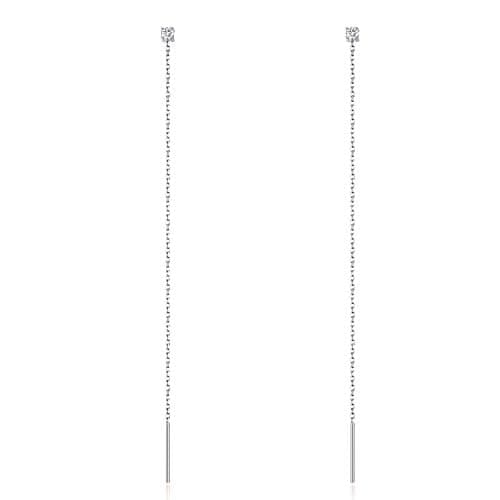
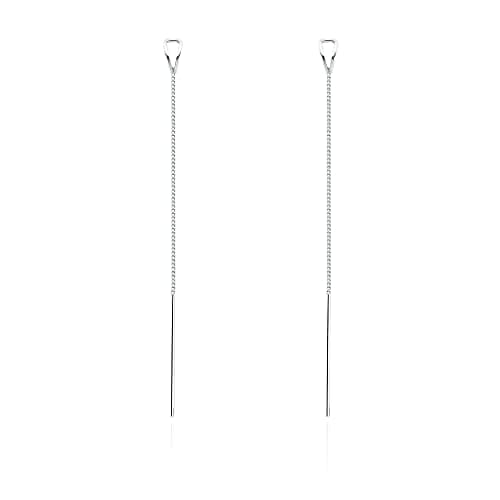
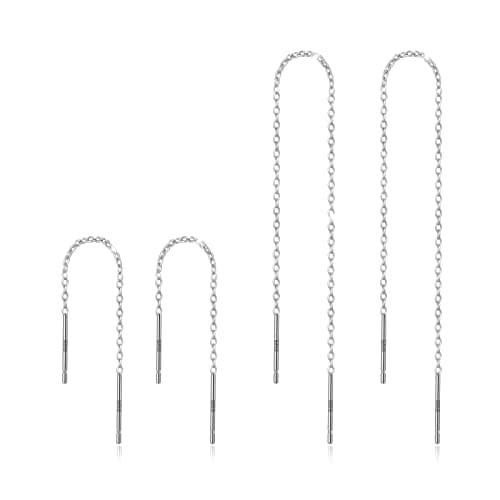
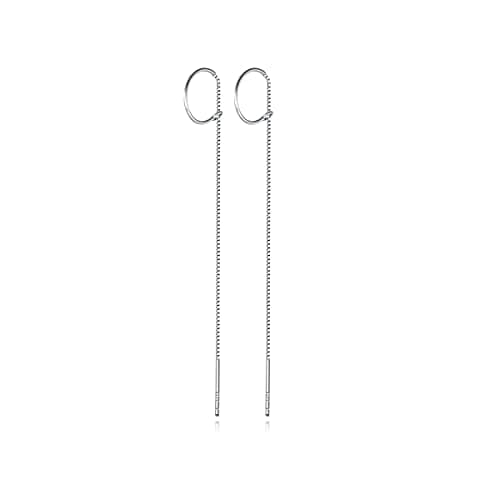
A chain pulled through the piercing and left to hang. No clutch, no butterfly, no separately-made back in a different alloy from the earring — which quietly solves the problem this site complains about most.
Gentle Carat earns a commission when you buy through the links on this page, at no extra cost to you. It never decides what we recommend or how we rank it — here is the full disclosure.
Buy a threader if your reactions have been coming from the back of the earring rather than the front — and the pick is the Reffeer solid 925 sterling silver chain. A threader has no back at all: a chain is pulled through the piercing and held by its own weight. That removes the butterfly clutch, which this site rates as the most common cause of a reaction to an earring that should have been fine. The trade is security — nothing holds a threader in, so it can slide out and be gone.
How we judged these
Criteria first, ranking second, and as everywhere on this site the scores rate what the seller discloses rather than a test nobody ran. One adjustment is needed for this category and we would rather state it plainly:
“Back disclosure” is scored on the absence of a back. There is no clutch to describe, so the question is not “did they name it” but “is the component that usually causes the problem present at all”. On a threader it is not, and that is a genuine structural advantage rather than a scoring loophole.
Is the metal solid or plated? On a threader this matters more than on any other shape, because the wire that wears is the wire inside your piercing.
Is the alloy standard quoted? “925 sterling silver” beats “silver tone” by a mile and still does not tell you everything.
Is the length stated? The detail buyers most often get wrong, and almost nobody publishes.
Honest downsides on every pick, including the one ranked first.
What a threader is, and why the shape matters here
A threader — also sold as a thread earring, pull-through or ear line — is a fine chain with a short stiff section at one end. You feed the stiff end through the piercing from front to back and draw the chain through until as much of it hangs as you want. Nothing fastens. It stays put by friction and by the weight of the chain below.
On most of this site the central question is: what metal passes through the hole, and does the seller say so? A threader answers that question with unusual clarity, because there are no components. There is no post made of one thing and a clutch made of another. There is a single continuous length of metal, and if the listing names it, you know what is touching you everywhere.
That is worth stating because of how often the opposite is true. An earring back is separately manufactured, frequently a cheaper alloy than the earring, and almost never named in the listing. If you have ever had one ear react and the other behave — the classic sign that you are wearing two different backs — you already know the problem a threader design removes.
Threaders against the shapes covered elsewhere on this site
Threader
Flat-back stud
Butterfly stud
Hoop
Separate back component
None
Yes, flat disc
Yes, butterfly clutch
None on a hinged hoop
Back usually named in the listing
Not applicable
Usually
Almost never
Not applicable
Metal in the channel
The whole chain
A short post
A short post
A short bar
Movement while worn
High, it swings
Minimal
Minimal
Moderate
Secure
No, friction only
Yes
Moderate, clutches loosen
Yes
Safe to sleep in
No
Yes, designed for it
No
Not usually
Common material here
925 sterling
Titanium
Mixed, often unstated
Mixed
Threaders against the shapes covered elsewhere on this site
Sterling silver, read properly
Four of the five picks here are sterling, because that is what this shelf is made of. The 925 stamp is a real standard and considerably more than most jewelry listings give you, but be precise about what it fixes: 92.5 percent silver. The remaining 7.5 percent is conventionally copper and is not required to be. Nothing in the hallmark excludes nickel from the balance.
In practice, copper-alloyed sterling is well tolerated by most people with mild sensitivity, and the site’s sterling versus steel comparison goes through the trade-offs properly. If you have a confirmed nickel allergy and react at low exposures, implant-grade titanium remains the material with an actual composition specification behind it. There are very few titanium threaders on the open market, which is a genuine limitation of this style rather than something we can shop around.
Getting the length right
The single most common disappointment with threaders is length, and it is almost always avoidable. These are sold anywhere from roughly an inch to the length of a hand, product photographs are rarely to scale, and only one listing on this page prints a measurement.
Two practical notes. First, a longer chain is more weight pulling on the front edge of the piercing, so if you came to threaders because heavy earrings drag on your lobes, stay at the short end. Second, a tassel design — several fine chains rather than one — tangles more readily and is considerably harder to re-thread through a piercing that has narrowed from years of small studs. Start with a single strand.
Quick picks
Ranked on what the seller actually discloses. Tap a row for the full write-up, or go straight to the listing.
#
Product
Best for
Score
Price
1
Reffeer Solid Sterling Silver Chain ThreadersThe only title here that says solid rather than leaving you to wonder, which on a wire that spends all day inside a piercing is the distinction that matters most.
S.Leaf CZ Chain Threaders, 9cmSterling silver with the drop length actually printed, which is the one measurement that decides whether a threader suits you and the one almost nobody states.
SLUYNZ Sterling Silver Chain Threaders, TasselQuotes the 925 stamp, keeps the design simple, and asks no more of you than the metal does. Nothing here is overstated, which is most of the recommendation.
A plain 925 threader at the middle of the price range
Aocelly Sterling Silver Chain ThreadersEleven words, one of which is the alloy standard and none of which is a claim. It is also the least informative listing here, and both of those are true at once.
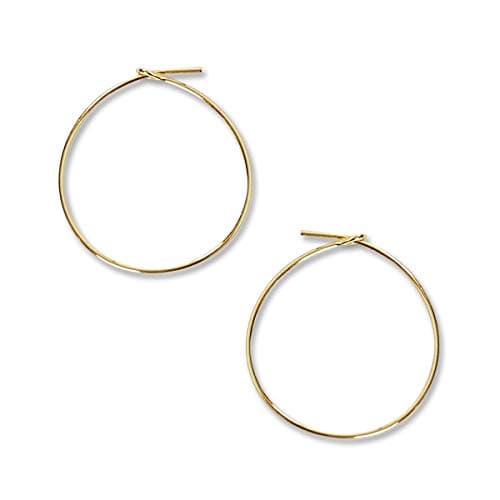
Humble Chic NY Gold-Plated Wire Threader Hoops, 1 inchThe only pick making an explicit sensitive-ears claim, and the only one whose metal configuration this site would steer you away from: plating, on the exact section that sits inside the piercing.
A gold look, with the compromise stated here rather than in the listing
“Score” is a disclosure score, not a test result. It rates how completely the seller states the post metal, the back metal and the nickel claim, and how that metal holds up for reactive skin. The full rubric is published on our methodology page.
#1 · The word solid, doing real work
Reffeer Solid Sterling Silver Chain Threaders
The only title here that says solid rather than leaving you to wonder, which on a wire that spends all day inside a piercing is the distinction that matters most.
Post material
Sterling silver, stated as solid rather than plated, at the 925 standard
From the seller’s own product title: “Reffeer Solid 925 Sterling Silver Chain Dangle Earrings Tassel”
Back material
There is no back. A threader is pulled through and held by its own weight, so the separately-made clutch that causes most surprise reactions simply does not exist on this design
From the seller’s own product title: “Minimalist Threader Earrings”
Nickel claim
Names a metal, makes no nickel claim. The seller’s own words: “Solid 925 Sterling Silver”
"Solid" is a small word carrying a lot here. A plated threader has its base metal exposed on the one section that is inside your piercing all day, and plating is thinnest and wears first exactly where a chain flexes. Solid sterling has no coating to wear through, so what touches you on day four hundred is what touched you on day one.
The 925 hallmark is a real standard and worth more than an adjective, but be clear about what it fixes. It guarantees 92.5 percent silver. It says nothing about the other 7.5 percent, which is conventionally copper and is not required to be. That is why this scores well on material rather than perfectly.
The structural advantage of the whole category shows up best on a plain design like this one. No butterfly clutch, no screw back, no separately manufactured component in a different alloy from the earring. On this site that is unusual enough to be worth ranking for on its own.
Who it’s for
Anyone who has worked out that their reactions track the back rather than the earring, and who wants a long, light design with no back to get wrong.
Skip it if
Skip this if you will lose it. Nothing secures a threader except friction, and a chain that slides freely through a piercing can slide the whole way out on a scarf.
Sterling silver with the drop length actually printed, which is the one measurement that decides whether a threader suits you and the one almost nobody states.
Post material
Sterling silver. The title names the metal but not the grade stamp
From the seller’s own product title: “S.Leaf Cz Threader Earrings Sterling Silver Thread Earrings for Women”
Back material
None by design — a pull-through chain with no clutch or disc
From the seller’s own product title: “Thread Earrings for Women Chain Earrings 9cm”
Nickel claim
Names a metal, makes no nickel claim. The seller’s own words: “Sterling Silver Thread Earrings”
Nine centimeters is roughly three and a half inches, and knowing that before you buy is more useful than it sounds. Threaders are sold in everything from an inch to a hand's length, the photographs are never to scale, and a chain that reads as elegant at 4cm reads as a statement at 9cm. This is the only listing on the shelf that removes the guesswork.
Length is also a wear question, not just a style one. More chain is more weight pulling on the front edge of the piercing, and more chain to catch on a collar or a seatbelt. If you are coming to threaders because heavy earrings bother your lobes, this is the long end of the range rather than the gentle end.
It names sterling silver without quoting the 925 stamp, which is why it scores a notch below the pick above on disclosure. Sterling in the US trade effectively means 925, but the title is describing rather than certifying.
Who it’s for
Someone who already knows they want a long threader and wants to know exactly how long before it arrives.
Skip it if
Skip this if you want something subtle for daily wear. At 9cm this is an evening earring, and it sits at the top of this shelf's price bracket.
#3 · A plain 925 threader at the middle of the price range
SLUYNZ Sterling Silver Chain Threaders, Tassel
Quotes the 925 stamp, keeps the design simple, and asks no more of you than the metal does. Nothing here is overstated, which is most of the recommendation.
Post material
Sterling silver at the 925 standard
From the seller’s own product title: “SLUYNZ 925 Sterling Silver Chain Threader Earrings Dangle”
Back material
None. The chain threads through and hangs; there is no clutch
From the seller’s own product title: “Chain Threader Earrings Dangle”
Nickel claim
Names a metal, makes no nickel claim. The seller’s own words: “925 Sterling Silver”
There is not a great deal to say about this listing, and that is a compliment on a shelf where the alternative is stone-grading language and invented standards. It states the alloy standard, describes the shape, and stops.
The practical note is about the tassel end. A tassel is several fine chains rather than one, so it tangles more readily than a single strand and is harder to thread back through a tight piercing once it has. If your piercing has narrowed from years of small studs, start with a single-chain design instead.
Same caveat as every sterling pick here: 925 fixes the silver fraction, not the remainder. If you have patch-tested positive to nickel and react at very low exposures, implant-grade titanium remains the material with an actual composition standard behind it.
Who it’s for
Someone who wants a straightforward sterling threader, is not paying a premium for a length measurement, and does not need the listing to flatter them.
Skip it if
Skip the tassel version if your piercings have tightened up. Multiple fine chains are considerably more fiddly to thread than one.
Eleven words, one of which is the alloy standard and none of which is a claim. It is also the least informative listing here, and both of those are true at once.
Post material
Sterling silver at the 925 standard
From the seller’s own product title: “Chain Threader Earrings Dangle for Women Sterling Silver 925”
Back material
None, as with every threader — nothing is fastened behind the lobe
From the seller’s own product title: “Chain Threader Earrings Dangle”
Nickel claim
Names a metal, makes no nickel claim. The seller’s own words: “Sterling Silver 925”
This title is so short it is almost a specification: style, who it is for, metal, standard. No "hypoallergenic", no stone grade, no list of eleven occasions. For a site that spends most of its time complaining about padded titles, that deserves acknowledging.
The cost of that brevity is that nothing else is stated either — no length, no chain gauge, no weight. On a threader, length is the detail buyers most often get wrong, so you are buying from the photograph.
It also sits toward the upper end of this shelf without a stated reason for doing so. Sterling threaders are close to a commodity, and price differences here track branding more than they track material.
Who it’s for
Someone who wants plain solid sterling and is happy to judge proportions from the listing photographs.
Skip it if
Skip this if length matters to you. Other picks on this page print the measurement, and none of them asks more for doing so.
#5 · A gold look, with the compromise stated here rather than in the listing
Humble Chic NY Gold-Plated Wire Threader Hoops, 1 inch
The only pick making an explicit sensitive-ears claim, and the only one whose metal configuration this site would steer you away from: plating, on the exact section that sits inside the piercing.
Post material
18K gold plating over a base metal the title never names. The plated wire is the part that passes through the piercing
From the seller’s own product title: “18K Gold Plated Lightweight Wire Threader | 18K Gold Plated, Hypoallergenic, Safe for Sensitive Ears”
Back material
None — a wire threader with no clutch
From the seller’s own product title: “Wire Threader Loop Drop Dangles, 1 inch”
Nickel claim
Says hypoallergenic, not nickel-free. The seller’s own words: “Hypoallergenic, Safe for Sensitive Ears”
Ranked last, and the reason is structural rather than a judgement about the brand. "18K Gold Plated" describes a coating; it says nothing about what is underneath, and on this shelf every other pick is solid metal all the way through. Plating is a wearing layer, and it wears fastest where the piece flexes and rubs — which on a threader is the section inside your ear.
That is the whole argument of this site's gold-plated page, and it applies here with unusual force. A plated stud wears on its decorative face, which is cosmetic. A plated threader wears on the wire, which is not.
Two things it does better than the rest. It states a size, one inch, and it says "Lightweight", which on a threader is a genuine functional claim rather than a flourish. If weight on the lobe is your actual problem, that is worth something. The claim it makes about sensitive ears, however, rests on an adjective with no regulatory definition rather than on a named base metal.
Who it’s for
Someone who wants a warm gold tone in a threader, wears earrings occasionally rather than daily, and understands they are buying a coating.
Skip it if
Skip this if you react to nickel and wear earrings every day. When the plating thins on the wire, whatever is underneath is inside your piercing, and the listing does not say what that is.
A fine chain with a short stiff section at one end, which you feed through the piercing and pull until the chain hangs the length you want. They are also sold as thread earrings, pull-throughs or ear lines. Nothing fastens behind the lobe — there is no clutch and no back — so they are held in by friction and the weight of the chain.
Are threader earrings good for sensitive ears?+
They have one real advantage: no separately-made back, which on this site is the component most often responsible for a reaction to an earring that should have been safe. The counterweight is that the chain passes through the whole channel and keeps moving, so there is more metal contact and more friction than with a stud. Good for an alloy problem, less good for a friction problem.
Do threader earrings fall out?+
They can, and this is the honest drawback of the design. Nothing secures them except friction against the inside of the piercing, so a chain that moves freely can work its way out on a scarf, a jumper or a car seat. If your piercings are on the roomier side, treat threaders as occasion jewelry rather than everyday wear.
Can you sleep in threader earrings?+
No, and more firmly than with most shapes. A long chain with nothing holding it in is exactly what a pillow pulls out, and a chain wrapped around a healing piercing overnight is an avoidable risk. For anything worn overnight the answer on this site is consistently a flat-back stud.
Is 925 sterling silver nickel free?+
Not necessarily. The 925 standard fixes the silver content at 92.5 percent and says nothing about the other 7.5 percent, which is conventionally copper but is not required to be. Most people with mild sensitivity wear sterling without trouble. If you have patch-tested positive to nickel, a hallmark is not the same thing as a nickel-free guarantee.
How do you put threader earrings in?+
Feed the stiff end through from the front, let it come out the back, then draw the chain gently until it hangs where you want it. Do it over a sink or a towel, because the thing you will drop is small and the floor is large. If the end will not pass through easily, stop and do not force it — that usually means the chain is heavier gauge than your piercing, not that you need to push harder.