Gentle Carat earns a commission when you buy through the links on this page, at no extra cost to you. It never decides what we recommend or how we rank it — here is the full disclosure.
Solid yellow gold at 14K or above is the safe answer: there is no plating to wear through and yellow gold is normally alloyed with copper and silver. The trap is white gold, which is gold alloyed with a whitening metal — and one of the traditional whitening metals is nickel. Price is not a guide here. A hundred-dollar white gold stud can be the wrong purchase where a twelve-dollar titanium one is right.
How we judged these
The five standing criteria, with the gold-specific question folded into the first one: does the title commit to solid or plated, and if plated, does it name the base? A listing that says "14K gold plated over 316L surgical steel" has told you everything. One that says "14k gold" has told you a color.
Gold descriptions from strongest to weakest. Only three of these six tell you what you will be wearing in a year.
What the listing says
What you get
Wears through?
Score impact
Solid 14K / 18K
Gold alloyed all the way through.
No surface to lose.
Highest
Gold filled
A bonded layer, at least 1/20th of the item weight in gold.
Years. Effectively a different product from plating.
High
Gold vermeil
A US-regulated term: minimum gold thickness over sterling silver.
A year or more, and the base is sterling.
High — the one plating word with teeth
Plated over a named base
A thin layer over steel, sterling or titanium.
Months at the post; you land on a metal you would have worn anyway.
Moderate
"14k gold plated", base unnamed
A surface over an unstated core.
Months, then you are wearing the mystery.
Low
"14k gold", unqualified
Ambiguous. Could be either.
Unknowable from the title.
Marked down for the ambiguity
Gold descriptions from strongest to weakest. Only three of these six tell you what you will be wearing in a year.
The white gold problem, stated plainly
This is the single most expensive mistake in this category and almost nobody is warned about it at the point of sale.
Gold is naturally yellow. White gold is gold alloyed with a white metal to change its color, and one of the traditional choices for that job is nickel. Many modern white golds use palladium instead, which is fine — but nickel white gold is still sold, and both kinds are usually finished with a rhodium plating to get the bright white people expect.
Two consequences follow. First, a white gold earring can contain the exact metal you are trying to avoid, at a price that implies safety. Second, because the rhodium is a plating, a white gold piece behaves like plated jewelry over time — the finish wears, and what is underneath comes to the surface.
If nickel is your trigger and you want gold, yellow gold at 14K or above is the simple answer. If you specifically want white, ask whether the alloy is palladium-based, or buy platinum, or buy titanium and spend the difference on something else.
Is solid gold worth it?
For a piercing you intend to keep and wear constantly, yes — but not for the reason people usually give. It is not that gold is inherently gentler than titanium; implant-grade titanium is at least as inert and costs a fraction as much. It is that solid gold has no surface to lose, which means it does not develop a problem in month four the way a plated piece does.
If what you want is the look of gold, plated over a named base is honest value. If what you want is a piece that behaves identically in ten years, solid is the only version that does.
Quick picks
Ranked on what the seller actually discloses. Tap a row for the full write-up, or go straight to the listing.
#
Product
Best for
Score
Price
1
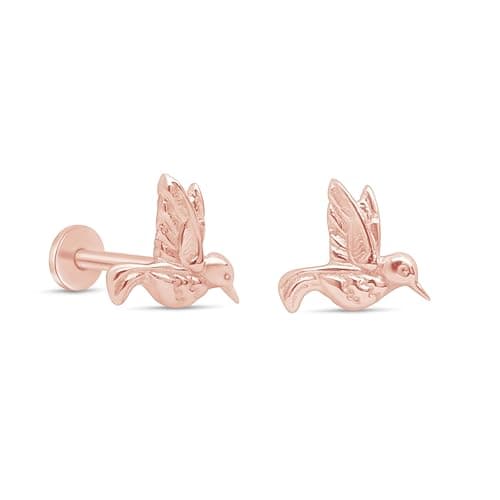
Estella Collection 14K Solid Yellow Gold Hummingbird Flat-Back Stud, 18GSolid 14K gold with an internally threaded flat back — the two things that make gold genuinely safe for a piercing, both stated in the title.
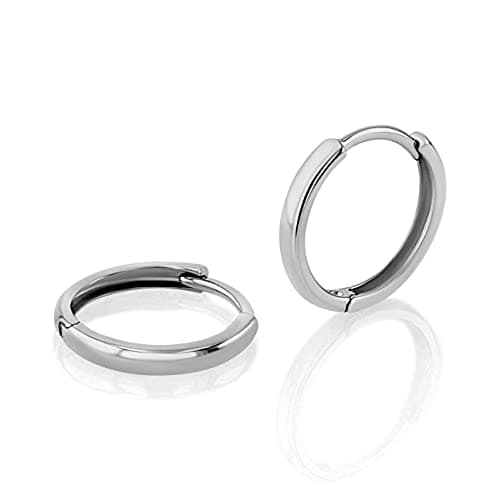
coquelicot Solid 14K White Gold Huggie Hoops, 10mmGenuinely solid white gold rather than plated — and white gold is the one gold that needs a question asked of it.
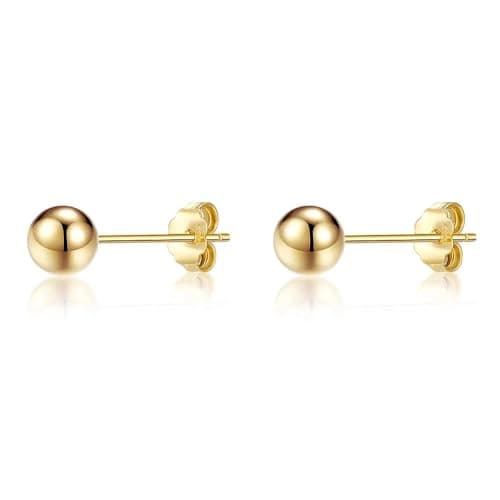
ToHeart 14K Gold Flat-Back Stud EarringsA flat-back stud in a gold finish, in the shape that suits sleeping in and the placement most people actually wear.
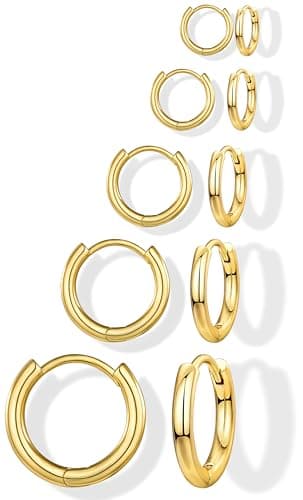
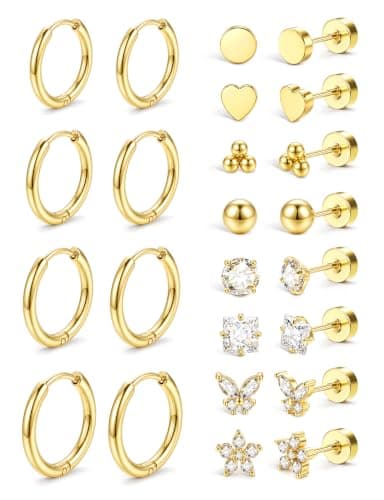
Gokeey 14K Gold-Plated Huggie Hoop Set, five sizesFive diameters in one order, each one printed in the title, which is how you find out what size huggie you actually wear.
“Score” is a disclosure score, not a test result. It rates how completely the seller states the post metal, the back metal and the nickel claim, and how that metal holds up for reactive skin. The full rubric is published on our methodology page.
From the seller’s own product title: “14K Solid Yellow Gold Hummingbird Flat Back Stud Earrings Pair | 18G Internally Threaded - Cartilage Helix Tragus Conch Daith | Hypoallergenic Piercing Minimalist Bird Jewelry”
Back material
Flat back, internally threaded — the thread sits in the decorative end, not on the post
From the seller’s own product title: “18G Internally Threaded”
Nickel claim
Says hypoallergenic, not nickel-free. The seller’s own words: “Hypoallergenic Piercing Minimalist Bird Jewelry”
Solid gold means there is no plating to wear through, which removes the single most common failure mode in this category. What it does not automatically remove is the alloy question: gold is alloyed with other metals for hardness, and in white gold that whitening metal is sometimes nickel. Yellow gold, as here, is normally alloyed with copper and silver and is very well tolerated.
The internally threaded detail is why this sits at the top of the gold list rather than in the middle. On externally threaded jewelry the screw thread is cut into the post, so sharp edges pass through the piercing on every insertion. Internally threaded leaves the post smooth. For the cartilage placements this is explicitly sold for, that matters a great deal.
It is priced as fine jewelry rather than fashion jewelry, and the listing offers a single stud as well as a pair. Read which one you are adding to the basket.
Who it’s for
A cartilage or lobe piercing you intend to keep, where you want real gold and no surface to lose.
Skip it if
Skip this if you want a matched pair on a budget. This is fine-jewelry pricing, and the single-stud option exists because people buy it one at a time.
coquelicot Solid 14K White Gold Huggie Hoops, 10mm
Genuinely solid white gold rather than plated — and white gold is the one gold that needs a question asked of it.
Post material
Solid 14K white gold, 10 x 10mm, 1mm wide
From the seller’s own product title: “Solid 14k White Gold Hoop Earrings - Small Gold Hoop Earrings - Hypoallergenic - Gold Huggies - Women's Jewelry Gifts - 10 x 10mm (1mm Wide)”
Back material
Huggie closure — the hoop closes on itself, no separate back
From the seller’s own product title: “Gold Huggies”
Nickel claim
Says hypoallergenic, not nickel-free. The seller’s own words: “Solid 14k White Gold Hoop Earrings ... Hypoallergenic”
This is on the list because it is solid rather than plated, and because it lets us make the white gold point against a real product rather than in the abstract.
Gold is naturally yellow. White gold is gold alloyed with a whitening metal, and one of the traditional choices is nickel. Many modern white golds use palladium instead, and most are rhodium-plated on top to get the bright white finish — which means a white gold piece can behave like a plated one as the rhodium wears. The title says hypoallergenic and does not say which alloy it uses.
None of that makes it a bad earring. It makes it the one item on this page where we would ask the seller a question before buying, and if nickel is your specific trigger, the yellow gold options here sidestep the issue entirely.
Who it’s for
Someone who specifically wants white gold, in solid form, and is willing to confirm the alloy with the seller.
Skip it if
Skip this if nickel is your known trigger and you cannot confirm a palladium alloy. Yellow gold at the same karat removes the question rather than answering it.
A flat-back stud in a gold finish, in the shape that suits sleeping in and the placement most people actually wear.
Post material
14K gold — the title does not say solid or plated
From the seller’s own product title: “ToHeart 14k Gold Stud Earrings Women Hypoallergenic Flat Back Stud Earrings”
Back material
Flat back; metal not separately named
Not named in the seller’s product title — the headline nearly every buyer reads. That omission is the finding, not a gap in our notes.
Nickel claim
Says hypoallergenic, not nickel-free. The seller’s own words: “14k Gold Stud Earrings Women Hypoallergenic”
"14k gold" in a title without the word solid or the word plated is genuinely ambiguous, and it is the most common ambiguity on the gold shelf. Solid 14K and 14K-plated are very different products at very different prices; the price bracket is usually the giveaway.
What is not ambiguous is the shape. A flat back sits flush against the lobe, spreads pressure rather than concentrating it, and has nothing to catch on a pillow — which is why it is the shape to choose for anything worn overnight.
Scored down on post disclosure for the solid-versus-plated ambiguity, not for anything wrong with the earring itself.
Who it’s for
Everyday gold-tone flat-backs, where the shape matters more to you than the karat question.
Skip it if
Skip this if you need to know whether the gold is solid. Ask the seller, or buy one of the two explicitly solid options on this page.
Gokeey 14K Gold-Plated Huggie Hoop Set, five sizes
Five diameters in one order, each one printed in the title, which is how you find out what size huggie you actually wear.
Post material
14K gold plated — base metal not named in the title
From the seller’s own product title: “Gokeey 14K Gold Plated Small Gold Huggie Hoop Earrings for Women, Hypoallergenic Lightweight Minimalist Hoops Earrings Sets for Cartilage Earrings Piercings Stack Set Jewelry 6mm 8mm 10mm 12mm 14mm”
Back material
Huggie closure — hinged, no separate back
From the seller’s own product title: “Huggie Hoop Earrings”
Nickel claim
Says hypoallergenic, not nickel-free. The seller’s own words: “Hypoallergenic 14K Gold Plated Hoop Earring”
Huggie diameter is almost impossible to judge from a product photograph, and it is the difference between a hoop that sits tight to the lobe and one that stands away from it. A graduated set solves that in a single purchase, and this listing prints all five diameters — 6, 8, 10, 12 and 14mm — rather than leaving you to guess from the images.
The hinged closure is the structural advantage huggies have over post-and-back hoops: one piece of metal, no separate fastening to be a different alloy.
The gap is the base metal. "14K gold plated" tells you what is on top and nothing about what is underneath — and on a hoop, which flexes every time it opens and closes, plating wears faster than it does on a rigid stud.
Who it’s for
Building a stacked ear in gold tone, or working out your huggie size before spending more.
Skip it if
Skip this for daily wear if you react to plated jewelry. There is no named base metal here, and a flexing hoop is the hardest place for a plated finish to survive.
Studs and hoops together for a stacked ear, on a steel base the seller names further down its listing.
Post material
Gold-tone; the title names neither the base metal nor the plating thickness
From the seller’s own product title: “Jstyle Hypoallergenic Gold Stud Hoop Earrings for Women Flat Back Earrings”
Back material
Flat back; metal not separately named
Not named in the seller’s product title — the headline nearly every buyer reads. That omission is the finding, not a gap in our notes.
Nickel claim
Says hypoallergenic, not nickel-free. The seller’s own words: “Jstyle Hypoallergenic Gold Stud Hoop Earrings”
A stud-and-hoop set is aimed at someone with two or three piercings who wants them to read as one arrangement rather than three unrelated earrings. That is a real styling need and it is why these sets sell.
The title is short and does the usual thing: hypoallergenic, gold, flat back, and no base metal. Elsewhere in the listing this maker describes 316L stainless steel, which is a reasonable base — but the rule on this site is that we score the headline claim, because that is what most buyers actually read.
Plated gold over steel is a sound construction. When the finish eventually wears at the post, you are down to steel rather than down to an unnamed alloy.
Who it’s for
Two or three healed piercings, gold tone, and a preference for buying the set rather than assembling it.
Skip it if
Skip this if surgical steel is what bothers you. The plating buys time, and what is underneath is steel.
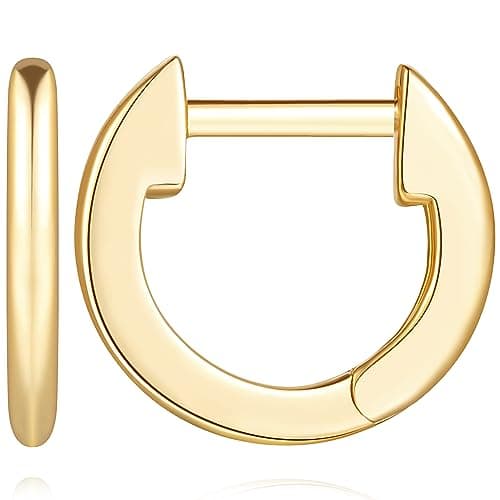
A single pair of plain gold huggies, for when a graduated set is more hardware than the look needs.
Post material
14K gold — the title does not distinguish solid from plated
From the seller’s own product title: “Kelli Myers 14K Gold Huggie Earrings Small Hoop Earrings”
Back material
Huggie closure — hinged, no separate back
From the seller’s own product title: “Huggie Earrings”
Nickel claim
No nickel language at all. The listing never uses the word.
This title makes no allergy claim at all. It names a karat, a shape and a size. On this site that scores as a material-only listing rather than a weak one — but with the solid-versus-plated ambiguity unresolved, it tells you less than the two explicitly solid options above.
As a plain everyday huggie it is exactly what most people mean when they say they want small gold hoops: one pair, worn constantly, no stacking.
The hinged closure keeps the component count at one, which is why huggies keep appearing near the top of lists on this site.
Who it’s for
One pair of small gold hoops for constant wear, where you do not want a set.
Skip it if
Skip this if the solid-versus-plated distinction matters to you and you will not ask. Two products on this page state it outright.
Solid yellow gold at 14K and above is generally very well tolerated. White gold is the exception, because the whitening alloy is sometimes nickel. Gold-plated earrings depend entirely on the base metal underneath.
Is 14k gold good for sensitive ears?+
Solid 14K yellow gold usually is — it is 58.3 percent gold with the balance typically copper and silver. The question to ask of any "14k" listing is whether it means solid or plated, because the two behave completely differently over time.
Is white gold safe if I am allergic to nickel?+
Not automatically. White gold is alloyed with a whitening metal and nickel is one of the traditional choices; it is also usually rhodium-plated on top, which wears. Palladium white gold and platinum avoid the issue, and yellow gold sidesteps it entirely.
How long does gold plating last on earrings?+
On the decorative front, years. On the post, months of daily wear, because that is where the friction and moisture are. That asymmetry is why a plated earring can look pristine and still start irritating you.
Is solid gold better than titanium for sensitive ears?+
Not inherently. Implant-grade titanium is at least as inert and far cheaper. Solid gold's advantage is that it has no plating to wear through and it looks like fine jewelry; titanium's is price and weight.
What does gold vermeil mean?+
A US-regulated term requiring a minimum gold thickness over a sterling silver base. It is the only common plating word that tells you both how much gold there is and what is underneath it.