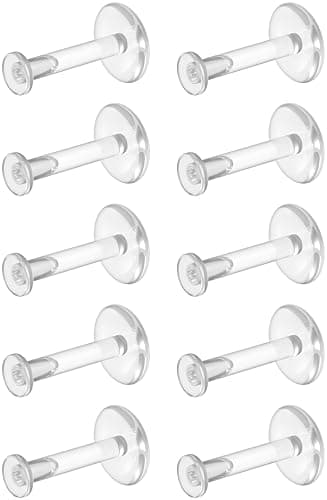
Plastic posts and clear retainers are the end of the line when every metal has failed, and the only jewelry you can keep in for a scan. They are also the least well described category on the shelf.
Gentle Carat earns a commission when you buy through the links on this page, at no extra cost to you. It never decides what we recommend or how we rank it — here is the full disclosure.
Buy metal-free for one of two specific reasons, not as a general upgrade. The first is that you react to titanium itself — uncommon, but real, and the point at which this site’s usual answer runs out. The second is procedural: metal has to come out for an MRI and for much surgery, and a clear plastic retainer keeps the channel open without going anywhere near the scanner. For everything else, implant-grade titanium is the better material, because it is harder, smoother, actually standardised, and safe in a fresh piercing where plastic is not the conventional choice.
How we judged these
Criteria first, ranking second. Nobody here has worn these earrings, so the scores rate what each seller discloses and how the named material suits reactive skin — never a test result. In order:
Are gauge, length and back type stated? On a retainer these three decide whether it fits at all, and almost nothing in this category states all three.
Is the polymer actually named? “Clear plastic” could be PTFE, acrylic or something else, and they do not behave the same.
What is the back made of? The most under-disclosed component on this site, and the one most likely to reintroduce metal.
Is the claim honest? “Metal free” scores above “anti allergy”, which scores above nothing at all.
Honest downsides on every pick, including the one ranked first.
Why hospitals ask for all metal out
This is the use case that sells most of the products on this page, and it is usually explained badly. The dramatic version — your earring flying across the room — is largely not the issue: titanium is non-magnetic and most jewelry steel is only weakly so. The real concerns the FDA describes are radiofrequency heating of metal and the tissue around it, which can cause burns, and the fact that the agency’s own definition of an MR Safe device is one that “is nonmagnetic, contains no metal, does not conduct electricity”. Add image artifact near the metal and you get a blanket instruction to remove everything, because it is far simpler than assessing each earring.
A plastic retainer satisfies that instruction while keeping a piercing you would rather not lose. Buy it before the appointment, not on the day — and if the piercing is recent, ask the department rather than assuming, because the alternative may simply be to take it out.
Plastic posts against the metals covered elsewhere on this site
Plastic / PTFE
Implant-grade titanium
316L steel
Published standard
None for jewelry
ASTM F136
Alloy spec, not a release limit
Contains nickel
No metal at all
No deliberate nickel
Yes, by design
Safe in a fresh piercing
Not the conventional choice
Yes, the usual recommendation
Commonly used, second best
Goes through an MRI
Yes
Removed under standard protocol
Removed under standard protocol
Surface durability
Scratches; treat as consumable
Excellent
Excellent
Stiffness for threading
Flexible, can be fiddly
Rigid, easy
Rigid, easy
Plastic posts against the metals covered elsewhere on this site
If you react to titanium
First, be reasonably sure that is what happened. True titanium sensitivity is uncommon, and several much more likely explanations look identical: a butterfly back made of something else, a plated coating that has worn through on the post, soap and shampoo residue trapped in the piercing, or simple friction from a heavy earring. The nickel test and the process of elimination are both cheaper than replacing your whole collection.
If titanium genuinely is the problem, the two remaining directions are the plastics on this page and niobium, which is elemental rather than alloyed. Plastic is far easier to buy; niobium is a metal, which some people would rather keep. Neither is a reason to skip a dermatologist, who can patch test and tell you what you are actually reacting to instead of leaving you to guess by trial and error.
Quick picks
Ranked on what the seller actually discloses. Tap a row for the full write-up, or go straight to the listing.
#
Product
Best for
Score
Price
1
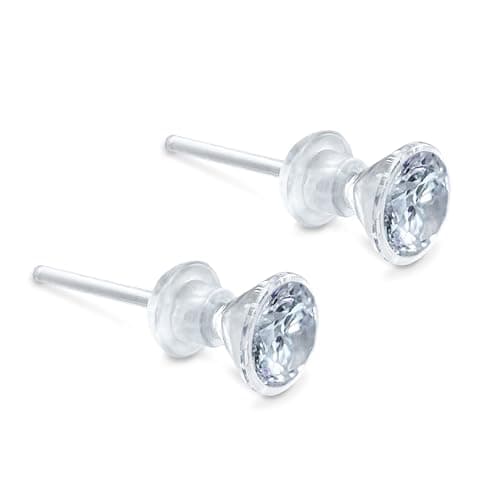
WildVibe Clear Flat-Back Plastic Studs, 18g, 6mmThe only listing on this shelf that states gauge, post length and back type, which is what separates a retainer that fits your piercing from one that does not.
ALOTYA Metal-Free Plastic StudsThe only title here that makes the claim this page is about in plain words, and the only one priced as a considered purchase rather than a multipack.
PiercingArt Clear Plastic Retainer Kit, 36 PiecesThirty-six retainers in assorted shapes for under ten dollars, which is the sensible thing to own before a hospital appointment rather than after one.
KASFREE Plastic-Post CZ Studs, 30 PairsThirty pairs of stone studs on plastic posts, which is the practical answer for a child or a teenager who reacts to metal and wants earrings rather than retainers.
OwlkOrmy Plastic Studs with Silicone Backs, 8 PairsThe only set here that supplies the backs as well, and supplies them in silicone — which closes the gap every other plastic-post listing leaves open.
“Score” is a disclosure score, not a test result. It rates how completely the seller states the post metal, the back metal and the nickel claim, and how that metal holds up for reactive skin. The full rubric is published on our methodology page.
#1 · Gauge, length and back type all stated
WildVibe Clear Flat-Back Plastic Studs, 18g, 6mm
The only listing on this shelf that states gauge, post length and back type, which is what separates a retainer that fits your piercing from one that does not.
Post material
Plastic, described as Bioflex — a PTFE-based material; no metal in the post
From the seller’s own product title: “18g Clear Earrings for Sports for Ear, Work, Surgery, Mri, School - Bioflex Plastic Earrings for Sensitive Ears - Flatback Clear Piercing Earring Retainers - Plastic Post Flat Back Studs Earings - 6mm”
Back material
Flat back, same plastic as the post
From the seller’s own product title: “Flatback Clear Piercing Earring Retainers - Plastic Post Flat Back Studs”
Nickel claim
Names a metal, makes no nickel claim. The seller’s own words: “Bioflex Plastic Earrings for Sensitive Ears”
Three numbers make this the pick: 18 gauge, 6mm, flat back. Gauge has to match the hole or the post will not go in or will not stay; length has to match the thickness of the lobe or the back presses in; and a flat back is the shape that sits against the skin without a protruding clutch. Almost nothing else in this category states all three.
"Bioflex" is worth being precise about. It began as a brand name for a PTFE-based flexible plastic used in piercing jewelry, and listings now use it as a generic word. That means it describes a family of materials rather than certifying one, so treat it as "flexible plastic, probably PTFE-based" rather than as a specification you could check.
The use cases in the title are real, not padding. Metal jewelry has to come out for an MRI and for a great deal of surgery; a plastic retainer keeps the channel open without going near the scanner's magnetic field. That is the strongest practical argument for owning some.
Who it’s for
Anyone with an MRI or an operation scheduled, anyone in a job or a sport that bans visible jewelry, and anyone who reacts to titanium.
Skip it if
Skip this if the piercing is new. A fresh piercing is an open wound and implant-grade titanium remains the conventional first choice.
The only title here that makes the claim this page is about in plain words, and the only one priced as a considered purchase rather than a multipack.
Post material
Plastic, described as medical grade; stated to contain no metal
From the seller’s own product title: “Medical Grade Plastic Earrings for Sensitive Ears, Metal Free, Lightweight”
Back material
Back type not named in the title
Not named in the seller’s product title — the headline nearly every buyer reads. That omission is the finding, not a gap in our notes.
Nickel claim
Names a metal, makes no nickel claim. The seller’s own words: “Metal Free”
"Metal Free" is a stronger and more useful claim than "hypoallergenic" because it is falsifiable. Hypoallergenic is a marketing adjective with no regulatory definition behind it; metal-free is a statement about composition that either holds or does not.
"Medical grade" is the weaker half of the same title. Unlike implant-grade titanium, which points at a published specification, medical-grade plastic is not a defined grade for jewelry, and this page scores it as a description rather than crediting it as a standard.
Lightweight is not a throwaway either. Weight is what drags on a healed lobe and slowly widens the hole over years, and plastic weighs a fraction of steel.
Who it’s for
Someone who has reacted to every metal they have tried, including titanium, and wants one decent pair rather than a bag of spares.
Skip it if
Skip this if the back type matters to you. It is the one thing this listing does not say, and at this price it should.
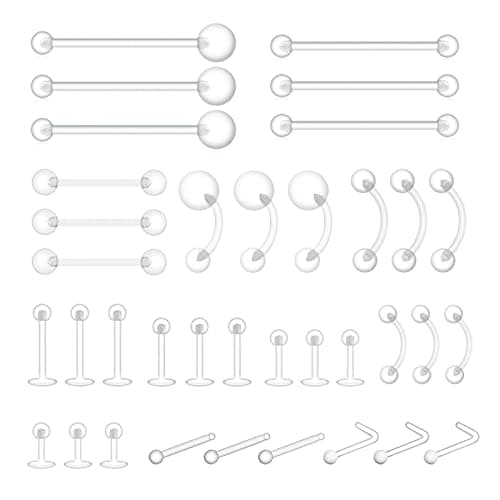
Thirty-six retainers in assorted shapes for under ten dollars, which is the sensible thing to own before a hospital appointment rather than after one.
Post material
Clear plastic; the specific polymer is not named
From the seller’s own product title: “PiercingArt 36Pcs Clear Plastic Piercing Retainers for Surgery MRI”
Back material
Varies by piece; not described in the title
Not named in the seller’s product title — the headline nearly every buyer reads. That omission is the finding, not a gap in our notes.
Nickel claim
Names a metal, makes no nickel claim. The seller’s own words: “Clear Plastic Piercing Retainers”
The value here is coverage rather than quality. If you have several piercings in different gauges, being told at short notice to remove all metal is a problem a mixed box solves and a single pair does not.
The polymer is unnamed, which is the main mark against it. "Clear plastic" could be PTFE, acrylic or something else, and those behave differently — acrylic is rigid and can craze, PTFE stays flexible. For short-term use through a scan that distinction matters less than it would for daily wear.
Treat plastic retainers as consumable. Fine scratches in a polymer surface hold bacteria in a way polished metal does not, so replace them rather than cleaning the same pair indefinitely.
Who it’s for
Anyone with multiple piercings facing surgery, imaging, or a workplace jewelry ban.
Skip it if
Skip this as an everyday earring. It is a kit of placeholders, and most of the shapes are not meant to be seen.
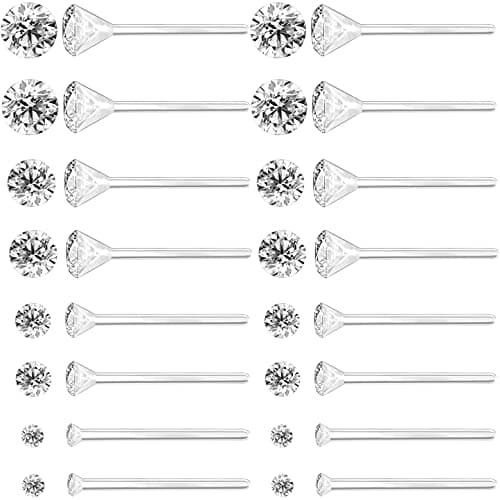
Thirty pairs of stone studs on plastic posts, which is the practical answer for a child or a teenager who reacts to metal and wants earrings rather than retainers.
Post material
Plastic post; the polymer is not named
From the seller’s own product title: “KASFREE 30 Pairs CZ Plastic Post Earrings for Girls - Hypoallergenic Stud Earrings for Sensitive Ears (Mix Color)”
Back material
Back type not named in the title
Not named in the seller’s product title — the headline nearly every buyer reads. That omission is the finding, not a gap in our notes.
Nickel claim
Says hypoallergenic, not nickel-free. The seller’s own words: “Plastic Post Earrings ... Hypoallergenic Stud Earrings for Sensitive Ears”
The reason to buy plastic posts and not plastic earrings is that only the post is inside you. On a stud the stone and its setting sit outside the lobe, so the post is the part that has to be inert, and that is exactly what this listing changes.
The polymer is unnamed and the back is undescribed, so the disclosure is thin. What is not thin is the count: at thirty pairs these are effectively disposable, and disposable is the right way to treat a plastic post that has been in and out of a piercing for months.
One caution the listing does not give. A plastic post flexes, so it can be harder to thread through a tight or slightly healed channel than a rigid titanium post. Warm the lobe first and do not force it.
Who it’s for
Parents of a child who reacts to metal studs, and anyone who wants variety without wearing a different alloy each week.
Skip it if
Skip this if you want one good pair. This is volume, and the settings look like what thirty pairs for nine dollars should look like.
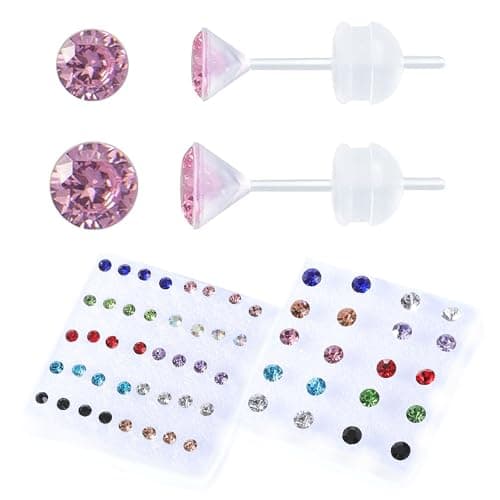
OwlkOrmy Plastic Studs with Silicone Backs, 8 Pairs
The only set here that supplies the backs as well, and supplies them in silicone — which closes the gap every other plastic-post listing leaves open.
Post material
Plastic post; the polymer is not named
From the seller’s own product title: “OwlkOrmy 8 Pairs Anti Allergy Plastic Earrings for Sensitive Ears & Include 8 Pairs Silicone Soft earring backs”
Back material
Silicone, included in the set — no metal clutch
From the seller’s own product title: “Include 8 Pairs Silicone Soft earring backs”
Nickel claim
Names a metal, makes no nickel claim. The seller’s own words: “Anti Allergy Plastic Earrings ... Silicone Soft earring backs”
The back is the under-disclosed component across this entire site, and on a plastic-post earring it is the thing most likely to reintroduce the metal you were avoiding. A plastic post with a nickel-bearing butterfly clutch behind it is a solved problem re-broken. Naming silicone backs and including them is the single most useful thing a listing in this category can do.
"Anti Allergy" is marketing rather than a standard, in the same family as "hypoallergenic". The materials named beside it are the evidence, and here the materials are plastic and silicone, which is about as inert as an earring gets.
Four stone sizes from 2mm to 5mm in one set is genuinely handy for second and third holes, where a 5mm stud crowds the ear.
Who it’s for
Anyone going fully metal-free who has been caught out by a metal back, and anyone with stacked lobe piercings.
Skip it if
Skip this if you need silicone backs to stay put in a stretched or loose piercing. Soft backs grip less than a screw fitting.
They remove metal from the equation entirely, which is the strongest possible answer to a metal allergy. They are not automatically better than titanium, though: plastic is softer, scratches, holds bacteria in those scratches, and has no published standard behind it. Use plastic if metal has genuinely failed you or if you need a retainer for a procedure.
What is Bioflex made of?+
Bioflex began as a brand name for a flexible PTFE-based plastic used in piercing jewelry, and listings now use the word generically for any flexible clear plastic. So it describes a family of materials rather than certifying one. Treat a “Bioflex” listing as flexible plastic, probably PTFE-based, and not as a specification you can verify.
Can I wear plastic earrings for an MRI?+
That is what clear retainers are sold for, and the FDA’s definition of an MR Safe device is one that is nonmagnetic, contains no metal and does not conduct electricity. But confirm with the department running the scan rather than with us. They may still want everything out, and if your piercing is recent they will have a view on that too.
Can I sleep in plastic earrings?+
A flat-back plastic stud is a reasonable thing to sleep in, and the flat back is the reason — nothing protrudes to press into your head. The caution is different here than with metal: check the post regularly for scratches and roughness, because a scored plastic surface is harder to keep clean than a polished metal one.
Is medical grade plastic a real standard?+
Not for jewelry, no. “Implant grade titanium” points at a published specification, ASTM F136, that governs alloy content. There is no equivalent published grade for the plastic in an earring, so “medical grade” on these listings is a description rather than something you could check. That is why this page scores it as one.
Can I put plastic retainers in a brand-new piercing?+
It is not the conventional first choice. A fresh piercing is an open wound, and the standard recommendation is implant-grade titanium, which is harder, smoother and can be sterilised properly. Piercers do use flexible plastic in specific situations, but that is a judgement for the person looking at the piercing. See new piercing earrings.
Sources
US FDA — MRI benefits and risks — Defines an MR Safe device as one that 'is nonmagnetic, contains no metal, does not conduct electricity'. Also describes radiofrequency heating of metal and surrounding tissue, which is why scan protocols ask for all metal to be removed.