Almost everything sold for this is a steel clip, and steel clamped to damaged skin for hours is the worst combination on this site. Here is what the labels say, and where the medicine stops and the shopping starts.
Gentle Carat earns a commission when you buy through the links on this page, at no extra cost to you. It never decides what we recommend or how we rank it — here is the full disclosure.
What this page can tell you is what is touching your skin, and on this shelf that is nearly always unspecified stainless steel. That matters, because the conditions a pressure clip creates — sustained pressure, warmth, occlusion and sweat, on skin whose barrier is already damaged — are the exact conditions under which nickel-bearing steel causes trouble. So the pick ranked first here is the one that applies a bearing surface to the lobe without clamping metal against it. It is also, not coincidentally, the one material family that appears on the NIH treatment list at all.
How we judged these
Criteria first, ranking second, and the criteria are deliberately narrow — they are about materials and disclosure, because that is what this site is equipped to assess. Nobody here has worn any of these, and no score is a clinical judgement. In order:
What touches the skin, and is it named? Silicone above steel above unnamed. This is weighted most heavily.
Does the tension adjust? A clip that cannot be loosened is either unwearable or ineffective.
Is the bearing surface sized? A stated diameter lets you match the pad to the area instead of guessing.
Does the listing overclaim? Marketing language on a medical-adjacent product is marked down, not rewarded.
Honest downsides on every pick, including the one ranked first.
Why steel is the wrong default here specifically
Elsewhere on this site the argument against unspecified stainless steel is a probability one: most jewelry steel is austenitic, the 300-series grades contain nickel by design, and plenty of people wear it with no trouble at all. A pressure clip changes that calculation in three ways at once. It is held tight, so contact is continuous rather than incidental. It is worn for hours at a stretch, which is closer to the week-long sweat test the European release limits are measured by than any earring is. And it is pressed against skin that is already injured, where the barrier that normally slows nickel absorption is compromised. Each of those raises the exposure; together they make grade-free steel the least suitable material for the job.
What the clip is made of, and what that means on damaged skin
Material
Nickel content
How the load is applied
Suits reactive skin
Silicone disc
None — no metal
Spread across the lobe
Yes
Stainless steel, grade unstated
Unknown; usually present
Concentrated on a small pad
Poorly
Material not named
Unknown
Unknown
Treat as unsuitable
What the clip is made of, and what that means on damaged skin
The part that is genuinely in our lane: the piercing itself
MedlinePlus names ear and body piercing among the injuries keloids form after, which puts one decision squarely on this site’s territory — what goes through the hole in the first place. A piercing that stays inflamed for months is a wound that is not closing, and the two most common avoidable reasons for that are a reactive metal and a back that traps debris. Implant-grade titanium in a flat-back fitting is the conventional answer to both: no deliberate nickel, and no crevice behind the lobe. If you are keloid-prone and getting a new piercing, new piercing earrings and implant-grade titanium are the pages to read, and a piercer or a dermatologist is the person to ask about whether to do it at all.
If a clip is uncomfortable to wear because the steel pad itself is irritating you rather than the pressure, the clip-on earrings page covers the same mechanism in a non-medical context, and the silicone discs on this page can sit between a metal pad and your skin.
Quick picks
Ranked on what the seller actually discloses. Tap a row for the full write-up, or go straight to the listing.
#
Product
Best for
Score
Price
1
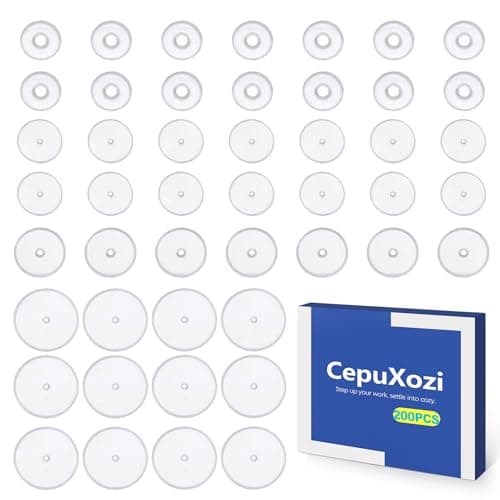
CepuXozi Clear Silicone Support Discs, 3-9mm, 200 PiecesRanked first on this page for one reason: it is the only option that applies a flat bearing surface to the lobe without clamping steel against it.
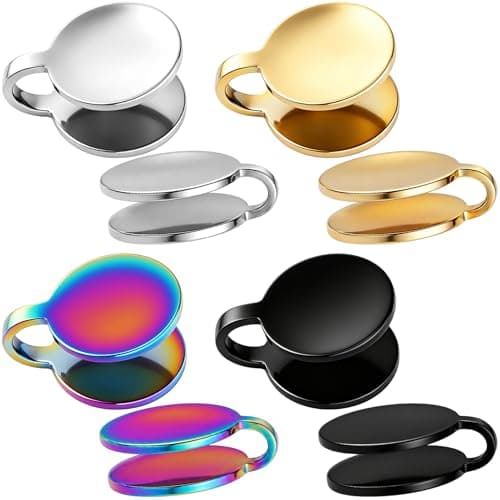
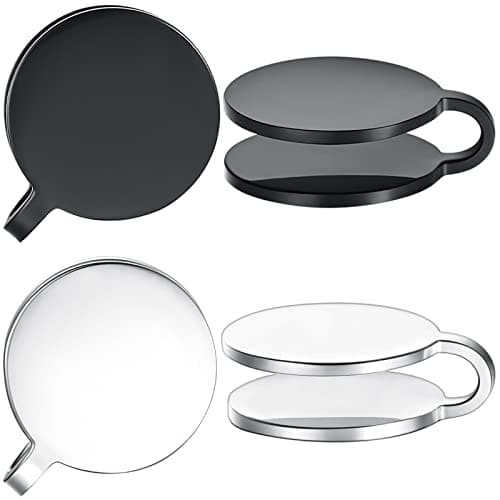
Pivotik Adjustable Pressure Clip-Ons, 8 PiecesThe only clip on this shelf whose title says the tension adjusts, which is the difference between usable compression and a sore ear.
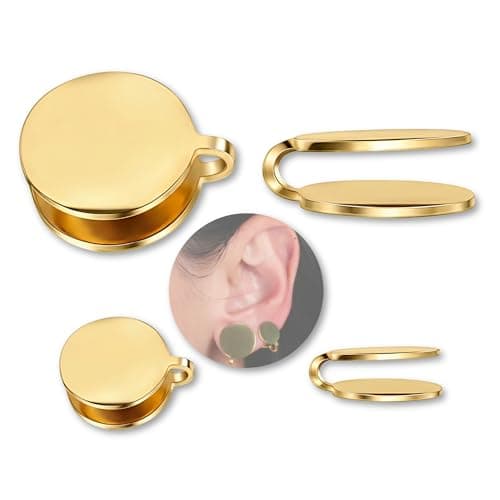
FLYUN Pressure Clip-On with Ear Cuff, 12mmTwelve millimeters printed in the title, which is the one number that tells you whether the pad will actually cover the area you are trying to compress.
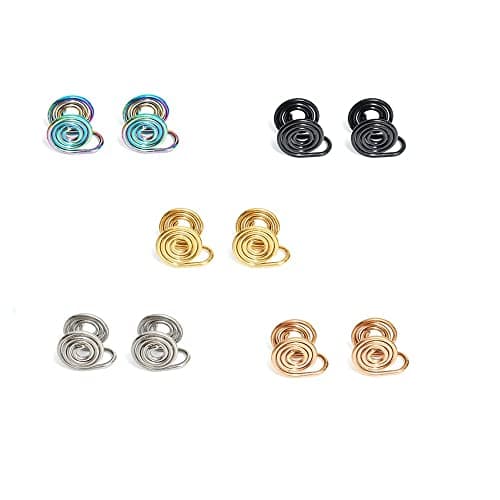
Hilufiet Spiral Pressure Clips, 5 PairsFive pairs for under seven dollars, included as the budget option and marked down for the word "acupressure" doing work it has not earned.
“Score” is a disclosure score, not a test result. It rates how completely the seller states the post metal, the back metal and the nickel claim, and how that metal holds up for reactive skin. The full rubric is published on our methodology page.
#1 · Pressure with no metal touching the scar
CepuXozi Clear Silicone Support Discs, 3-9mm, 200 Pieces
Ranked first on this page for one reason: it is the only option that applies a flat bearing surface to the lobe without clamping steel against it.
Post material
Silicone — no metal in contact with the lobe
From the seller’s own product title: “CepuXozi 200 Pcs Clear Silicone Piercing Discs for Piercing Bump 3/5/7/9mm, No Pull Soft Earring Spacers, Stoppers & Backs, Keloid Pressure Clip Disk for Ear Piercings Support, Plastic Pads”
Back material
The disc is the bearing surface; it is used with whatever post or clip you already own
From the seller’s own product title: “No Pull Soft Earring Spacers, Stoppers & Backs”
Nickel claim
Names a metal, makes no nickel claim. The seller’s own words: “Clear Silicone Piercing Discs”
This is the entry that makes the page worth writing on a hypoallergenic site. Everything else on this shelf is a steel clip, and a steel clip held tight against irritated or scarred skin for hours is the worst possible set of conditions for a nickel-sensitive wearer: occlusion, pressure, warmth and sweat, all at once, on skin whose barrier is already compromised.
A silicone disc spreads load across the lobe instead of concentrating it on a small metal pad, and it is the only material here with no alloy to release anything. Four sizes in the pack means you can match the disc to the lobe rather than the other way round.
What it is not: a treatment. It is a spacer and a bearing surface. Whether compression is appropriate for your ear at all is a question for the person who can look at it, and that is not this page.
Who it’s for
Anyone who has been told to try compression and who also reacts to metal, and anyone whose lobe is sore from a clip pad.
Skip it if
Skip this if you need the clip itself. These are discs to use with jewelry you already have, not a standalone earring.
The only clip on this shelf whose title says the tension adjusts, which is the difference between usable compression and a sore ear.
Post material
Stainless steel — grade not stated, so nickel content is unknown
From the seller’s own product title: “Pivotik 8pcs Pressure Earrings for Keloids, Non-Pierced Keloid Compression Clip-Ons Earrings, Adjustable Stainless Steel Ear Clips Jewelry for Women Men- 4 Colors”
Back material
Adjustable clip mechanism, same steel as the face
From the seller’s own product title: “Adjustable Stainless Steel Ear Clips”
Nickel claim
Names a metal, makes no nickel claim. The seller’s own words: “Adjustable Stainless Steel Ear Clips”
Adjustability is the specification that matters most on a compression clip and almost nobody states it. A clip that cannot be loosened is either too tight to wear for the hours it would need to be worn, or too loose to be doing anything.
The material is the problem, and it is the same problem across this whole category: "stainless steel" with no grade. Most jewelry steel is 300-series and contains nickel by design. Pressed against a lobe for hours it is a genuinely poor choice for a nickel-reactive wearer, and no listing here discloses enough to rule that out.
Eight pieces in four colors is a practical amount: these get lost, and tension slackens with use.
Who it’s for
Someone with no metal sensitivity who needs the tension to be controllable.
Skip it if
Skip this if nickel allergy is confirmed. Use the silicone discs above, or ask a clinician about a purpose-made compression device.
Twelve millimeters printed in the title, which is the one number that tells you whether the pad will actually cover the area you are trying to compress.
Post material
Stainless steel — grade not stated, so nickel content is unknown
From the seller’s own product title: “FLYUN 12MM Pressure Earrings for Keloids, Keloid Earrings Pressure Clip On Earring, Ear Cuff, Stainless Steel Non-Pierced Earrings”
Back material
Clip and cuff in the same steel; mechanism not described
Not named in the seller’s product title — the headline nearly every buyer reads. That omission is the finding, not a gap in our notes.
Nickel claim
Names a metal, makes no nickel claim. The seller’s own words: “Stainless Steel Non-Pierced Earrings”
Diameter is the thing people get wrong when buying these unseen. A pad smaller than the area it is meant to bear on concentrates all the pressure at one edge, which is uncomfortable and pointless; too large and it will not sit. A title that states 12mm lets you measure first.
Non-pierced is worth understanding rather than skimming: the clip does not pass through the lobe, so it can be used on an ear that is currently not taking jewelry at all. That is often the situation people are in when they start looking for these.
Grade unstated, mechanism undescribed, and the same nickel caveat as every steel clip here.
Who it’s for
Someone who has measured the area and wants a pad sized to it.
Skip it if
Skip this if you need a range of sizes. This is one diameter, not a set.
Both a large and a small pad in one box, which is the sensible hedge when you cannot try before buying.
Post material
Material not named anywhere in the title
Not named in the seller’s product title — the headline nearly every buyer reads. That omission is the finding, not a gap in our notes.
Back material
Clip mechanism not described
Not named in the seller’s product title — the headline nearly every buyer reads. That omission is the finding, not a gap in our notes.
Nickel claim
No nickel language at all. The listing never uses the word.
Two diameters is genuinely useful and it is why this is on the page. It is also the least disclosed listing here: the title names no material at all, which on an item intended to be clamped to damaged skin is a real omission rather than a pedantic one.
Because nothing is stated, nothing can be assumed. This page scores it as unknown rather than guessing it is steel, and a nickel-sensitive buyer should treat unknown as unsuitable until the seller answers.
The title also uses the phrase "for Swelling", which is seller language about what the product is marketed for. It is not a clinical indication and this page does not repeat it as one.
Who it’s for
Someone with no metal sensitivity who wants both pad sizes to try.
Skip it if
Skip this if you need to know what is touching your skin. No material is named, and on this shelf that should be disqualifying for a reactive wearer.
Five pairs for under seven dollars, included as the budget option and marked down for the word "acupressure" doing work it has not earned.
Post material
Stainless steel — grade not stated, so nickel content is unknown
From the seller’s own product title: “Keloids Pressure Acupressure Clip Earrings Non-pierced Stainless Steel Spiral Earrings (5pairs)”
Back material
Spiral design; the coil is the mechanism, no separate clasp
From the seller’s own product title: “Spiral Earrings”
Nickel claim
Names a metal, makes no nickel claim. The seller’s own words: “Stainless Steel Spiral Earrings”
The spiral is a reasonable piece of engineering: a coil applies more even tension than a hinged clip and it has no spring to tire, which is the usual way these fail.
"Acupressure" is a different matter. It is a term from an unrelated tradition and it is not evidence of anything about keloids. Mechanical compression and acupressure are not the same claim, and stacking the words does not strengthen either. This page credits the coil and ignores the adjective.
Five pairs at this price is a sensible way to find out whether you can tolerate wearing a clip for hours before spending more — provided steel is safe for you, which the unstated grade cannot confirm.
Who it’s for
Someone testing whether they can wear compression at all, with no metal sensitivity.
Skip it if
Skip this if you react to steel, or if marketing language on a medical-adjacent product bothers you as much as it should.
This page cannot tell you, and it will not pretend to. MedlinePlus lists keloid treatments as corticosteroid injections, cryotherapy, laser, radiation, surgical removal, and silicone gel or patches; pressure earrings are not on that list. They are widely sold and commonly worn after a dermatologist removes a keloid. Ask the dermatologist, because the same source notes that treatment can sometimes enlarge the scar.
What earrings should I wear if I am prone to keloids?+
The material question is the one we can answer: implant-grade titanium in a flat-back fitting, because it has no deliberate nickel and no crevice behind the lobe to trap debris. Keeping a piercing from staying inflamed for months is the part within your control. Whether to have the piercing at all, if you scar this way, is a conversation with a dermatologist.
Can earrings cause keloids?+
MedlinePlus names ear or body piercing among the injuries after which keloids form, so the piercing itself is the injury. The earring is not the cause, but a reactive metal or a debris-trapping back can keep a piercing inflamed for longer, and a wound that takes longer to settle is not what you want if you scar this way.
Are pressure earrings safe to wear all day?+
That is a question for a clinician rather than for us, and it is the main reason this page weights adjustable tension so heavily — a clip you cannot loosen gives you no way to respond if it becomes uncomfortable. If the skin under the pad is broken, damp or sore, something is wrong regardless of what any product description says.
Why does the metal matter if the clip is only touching the outside of my ear?+
Because the outside of your ear is skin, and the conditions here are unusually harsh: firm pressure, warmth and no air, for hours, on tissue that is already damaged. That combination increases how much nickel a steel alloy releases into sweat and how readily the skin takes it up. It is why a clip is a worse place for grade-free steel than a stud worn to dinner.
Is a keloid the same as an infection or a piercing bump?+
No, and they are managed completely differently, which is why guessing is a poor idea. This site is not able to tell you which one you have from a description. A persistently lumpy, tender or growing bump at a piercing is worth showing to a professional rather than treating with something bought online.
Sources
MedlinePlus (US National Library of Medicine) — keloids — Lists ear or body piercing among the injuries keloids form after. Its treatment list is corticosteroid injections, cryotherapy, laser, radiation, surgical removal, and silicone gel or patches — pressure earrings are not on it, and it warns that treatment can sometimes enlarge the scar.