Everyone who has had pierced ears for a while has noticed it, almost nobody mentions it, and the fix is less about scrubbing than about what you are wearing.
Gentle Carat earns a commission when you buy through the links on this page, at no extra cost to you. It never decides what we recommend or how we rank it — here is the full disclosure.
It is sebum, dead skin and ordinary skin bacteria, not dirt. A piercing is a small tunnel lined with skin, and skin sheds and produces oil whether it is on the outside of your ear or inside the channel. In a narrow, warm, airless tube that material has nowhere to go, bacteria metabolise it, and the result smells exactly like the sulfurous, cheesy note people recognize instantly. It is normal, it is not usually an infection, and washing your ears harder is not the answer. What actually changes it is the jewelry: designs with crevices behind the lobe hold that material against the skin, and plating that has worn through gives it a rough surface to sit in.
Why it happens more in some ears than others
Three variables, and only the last one is really in your control. The first is how much sebum your skin produces, which varies enormously between people and over a lifetime. The second is the channel itself: a piercing that was placed at an angle, or that has been stretched and partly shrunk back, has a longer and less regular tunnel with more surface area. The third is the jewelry, and it is the reason this page exists on a jewelry site rather than a medical one.
How much a fitting contributes to the problem
Fitting
Where debris collects
How easy to clean
Butterfly back
Inside the folded clutch and in the gap behind the lobe
Poorly — the clutch has to come apart
Screw back
In the thread grooves on the post
Fair — unscrews fully, but the thread holds residue
Flat back, threadless or internally threaded
Very little — the back sits flush
Well — two smooth pieces
Hinged huggie
At the hinge and the catch
Fair, if the hinge opens wide
Worn plating, any fitting
In the pitted surface where the coating has gone
Cannot be fixed by cleaning
How much a fitting contributes to the problem
That last row is the one people miss. Plating does not wear evenly — it goes first at friction points, and on an earring the friction point is the post, inside the channel. What you are left with is a microscopically rough surface in the worst possible location, and no amount of cleaning restores it. If an old pair has started to smell when it never used to, look at the post in good light before you blame your ears. There is more on how quickly that happens in gold-plated and gold filled vs gold plated.
What to actually do
Take the earring out and wash it, not just your ear. Warm water and plain soap, both sides of the post, and the inside of the clutch if it is a butterfly. This is the step most people have never done, and on a healed piercing it fixes most cases on its own.
Wash the channel while the earring is out. Soap and warm water in the shower, then rinse properly — trapped soap is itself a common cause of irritation people mistake for a metal reaction.
Dry it. A damp channel is the whole problem in miniature. Let it air rather than putting the earring straight back in.
Rotate your jewelry. Wearing one pair continuously for months gives the channel no chance to dry out and gives you no chance to notice the post degrading.
Change the fitting if it keeps coming back. A flat back in unplated titanium is the version of this problem that mostly does not recur.
When it is not just housekeeping
Odor on its own, in a piercing that has been healed for years, is a maintenance issue. The combination that is worth taking seriously is odor plus something else:
Itching, redness and a rash that follows the metal rather than the hole suggests a contact reaction. That is nickel allergy basics and why earrings irritate ears, and the fix is the material, not the cleaning.
Pain, heat, swelling, or discharge that is yellow or green is not what this page is about. That needs a clinician, and soon.
A lump that persists or grows is also not this. See keloid-prone ears for why guessing between a piercing bump, a cyst and a keloid is a bad idea.
A new piercing that smells is a different situation from a healed one, because it is still a wound. Follow whatever your piercer told you and see new piercing earrings.
Why titanium flat-backs are the recommendation
It is not because titanium is odor-resistant — no metal is, because the smell comes from your skin rather than from the metal. It is that a flat-back fitting has no clutch to trap anything and nothing protruding behind the lobe, and that unplated implant-grade titanium has no coating to wear through and roughen. Those two properties remove the two jewelry-side contributors at once. It is also, conveniently, the same answer this site gives for reactive skin, which is why the picks below overlap with best for sensitive ears.
Quick picks
Ranked on what the seller actually discloses. Tap a row for the full write-up, or go straight to the listing.
#
Product
Best for
Score
Price
1
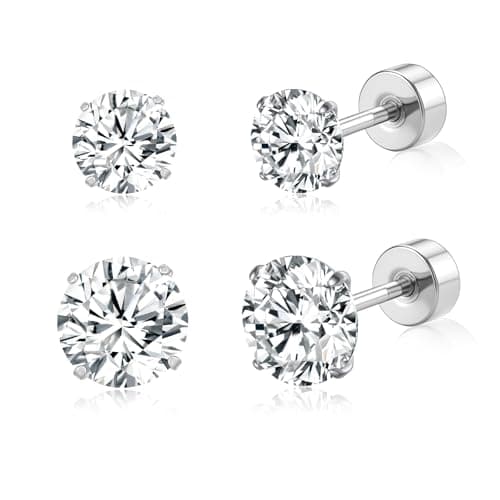
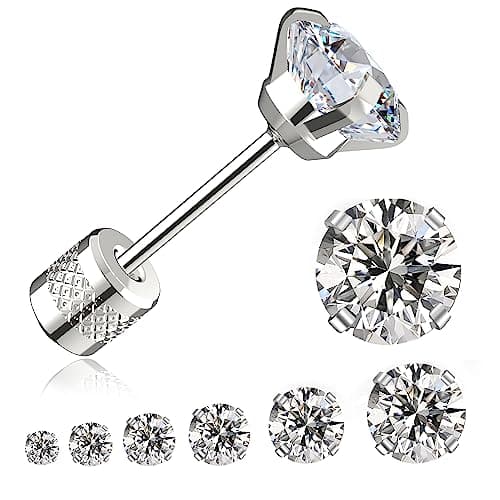
Threadless Titanium Flat-Back Studs, 6 pairs (2–8mm)Six sizes of flat-back in one box, and one of the few titles that names both the titanium and a steel component rather than leaving the second one to your imagination.
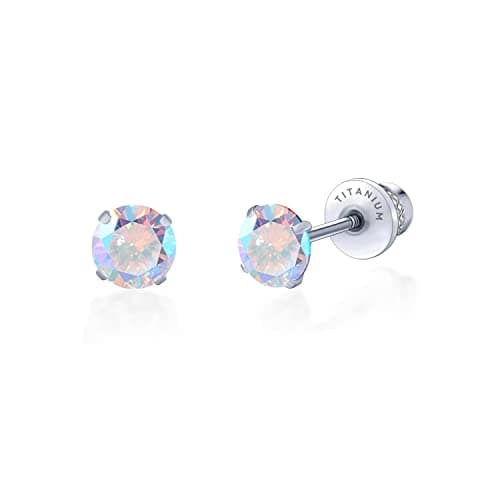
Limerencia F136 Titanium Screw-Back Flat-Back CZ Studs (20G)The clearest material claim in this whole category: the standard number, the gauge and the fastening are all in the title before you have clicked anything.
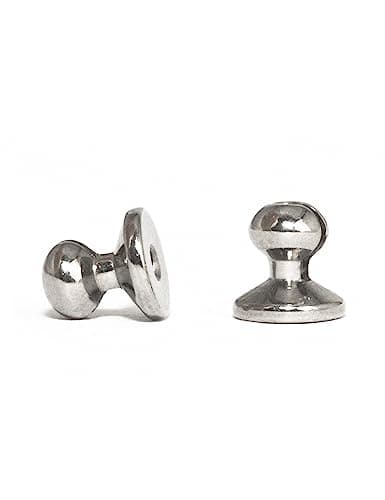
Limerencia Pure Titanium Replacement Earring Backs (2 pairs)The cheapest fix in this whole category: keep the earrings, replace the part that is actually touching you.
G23 Titanium Flat-Back CZ Studs, 20G (plated finish)An implant-grade post with a plated decorative front — the right way round, and the title is unusually clear about which part is which.
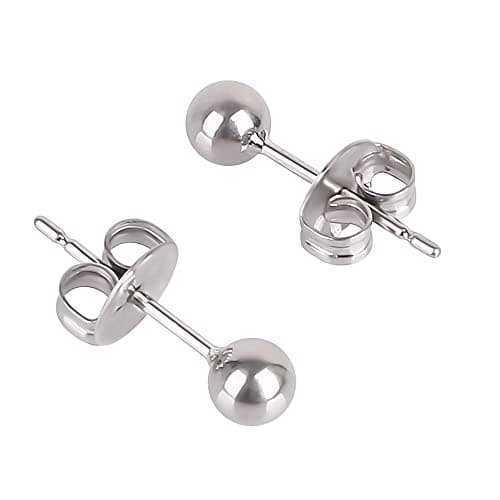
VGACETI Pure Titanium Ball Post Studs, 3mm and 4mmThe rare listing that says nickel-free rather than hypoallergenic, and names the post specifically rather than the earring generally.
“Score” is a disclosure score, not a test result. It rates how completely the seller states the post metal, the back metal and the nickel claim, and how that metal holds up for reactive skin. The full rubric is published on our methodology page.
Six sizes of flat-back in one box, and one of the few titles that names both the titanium and a steel component rather than leaving the second one to your imagination.
Post material
Titanium
From the seller’s own product title: “Threadless Flat Back Stud Earrings, 6 Pairs Titanium Hypoallergenic Earrings for Women Men, Cubic Zirconia Silver Gold Stud Earrings Surgical Stainless Steel Stud Earring Set for Cartilage 2-8mm”
Back material
Surgical stainless steel appears in the title alongside titanium — read it as a mixed set
From the seller’s own product title: “Surgical Stainless Steel Stud Earring Set”
Nickel claim
Says hypoallergenic, not nickel-free. The seller’s own words: “Titanium Hypoallergenic Earrings”
This one is genuinely useful and genuinely ambiguous, and it is worth reading the title twice. It says 'Titanium' and it also says 'Surgical Stainless Steel'. Both metals appear in the same set, and the title does not tell you which component is which — so treat it as containing steel unless the seller says otherwise.
That is a real limitation and the reason it does not score higher. For most people steel is fine, so a mixed set is a sensible way to own six sizes cheaply. For someone who reacts to steel, the ambiguity makes this the wrong purchase.
Threadless is the fastening piercers prefer: a post with a pin that friction-fits into the decorative end, so nothing screws and nothing has a sharp thread to drag through a healing channel. It is easier to insert than a screw-back once you have the knack, and harder before you do.
Who it’s for
Someone who tolerates surgical steel, wants a spread of flat-back sizes for stacked piercings, and is buying on value.
Skip it if
Skip this if you have reacted to surgical steel. The title names both metals without saying which part is which, and that ambiguity is exactly what you cannot afford.
The clearest material claim in this whole category: the standard number, the gauge and the fastening are all in the title before you have clicked anything.
Post material
F136 implant-grade titanium, 20 gauge
From the seller’s own product title: “Limerencia Hypoallergenic G23 Implant Grade Titanium Screw Back Earrings | 20G F136 Pure Titanium Flat Back CZ Studs”
Back material
Screw-on flat back; the same titanium is implied but the metal is not separately named
Not named in the seller’s product title — the headline nearly every buyer reads. That omission is the finding, not a gap in our notes.
Nickel claim
Says hypoallergenic, not nickel-free. The seller’s own words: “Hypoallergenic G23 Implant Grade Titanium”
Two numbers do all the work here. F136 is the ASTM specification for the Ti-6Al-4V ELI alloy used in surgical implants, and G23 is the grade designation for that same alloy. A seller putting both in the title is pointing at a published document rather than reaching for an adjective, and that is rarer than it should be.
The flat back matters as much as the metal. A flat disc sits against the back of the lobe instead of a butterfly clip pressing a small area, which is why piercers use this shape for anything that has to be slept in. Combined with a screw thread rather than a friction push-fit, it is about as low-drama as an earring gets.
What the title does not do is name the back separately. In practice a screw-back on a titanium post is almost always the same titanium, and the design leaves little room for it to be anything else — but the seller has not committed to it in the headline, and we score what is stated rather than what is likely.
Who it’s for
Anyone who has reacted to something before and wants to stop running experiments. Also the sensible default for a piercing you intend to sleep in.
Skip it if
Skip this if you want a decorative statement earring. A 20-gauge flat-back CZ stud is deliberately unobtrusive, and if you want to be seen wearing something, this is not it.
Limerencia Pure Titanium Replacement Earring Backs (2 pairs)
The cheapest fix in this whole category: keep the earrings, replace the part that is actually touching you.
Post material
Not applicable — this is the back component
From the seller’s own product title: “Limerencia Pure Titanium Earring Backs Replacements”
Back material
Pure titanium
From the seller’s own product title: “Limerencia Pure Titanium Earring Backs Replacements, Hypoallergenic for Sensitive Ears, Secure Ear Locking for Stud Earrings for Posts”
Nickel claim
Says hypoallergenic, not nickel-free. The seller’s own words: “Pure Titanium Earring Backs ... Hypoallergenic”
This is the pick that most often solves the problem for the least money, and almost nobody writing about sensitive ears mentions it. A butterfly back is a separately manufactured part, frequently a cheaper alloy than the earring it holds on, and it sits against the back of your lobe for exactly as long as the earring does.
So if you have earrings you love that started irritating you, or one ear reacts and the other does not, changing the backs is the first thing to try. It costs a fraction of a new pair and it isolates the variable.
Titanium backs also grip differently from steel butterflies — generally more securely, which is a side benefit if you lose earrings.
Who it’s for
Anyone with a drawer of earrings they cannot wear. Try this before replacing any of them.
Skip it if
Skip this if the post itself is the problem. A titanium back on a plated brass post fixes half of a two-part contact and the half it does not fix is inside the piercing.
An implant-grade post with a plated decorative front — the right way round, and the title is unusually clear about which part is which.
Post material
G23 / F136 implant-grade titanium, 20 gauge
From the seller’s own product title: “20G G23 Implant Grade Titanium Flat Back Stud Earrings for Women Men, Gold/White Gold Plated Tragus Labret Cartilage Helix F136 Piercing Jewelry for Sensitive Ears”
Back material
Flat back; metal not separately named
Not named in the seller’s product title — the headline nearly every buyer reads. That omission is the finding, not a gap in our notes.
Nickel claim
Names a metal, makes no nickel claim. The seller’s own words: “G23 Implant Grade Titanium ... F136”
This is the plating arrangement to look for. The gold appears in the title attached to the decorative end — 'Gold/White Gold Plated' — while the structural claim, G23 and F136, attaches to the post. A plated front over a titanium post is a completely different proposition from a plated post, because the plating is nowhere near your piercing.
Most listings do not draw that distinction, which is why plated jewelry has a bad reputation it only half deserves. Plating is not the problem; plating on the wrong component is.
Twenty gauge is the standard for a healed lobe or a cartilage piercing done at that size. If your piercing was done at 18 gauge, a 20-gauge post will fit but will move around in the channel more than you want.
Who it’s for
Helix, tragus and conch piercings where you want a gold look and cannot risk the metal that goes through the hole.
Skip it if
Skip this if your piercing is 18 gauge or larger. A thinner post in a wider channel migrates and irritates, and the fix is the right gauge rather than a better metal.
VGACETI Pure Titanium Ball Post Studs, 3mm and 4mm
The rare listing that says nickel-free rather than hypoallergenic, and names the post specifically rather than the earring generally.
Post material
Pure titanium, ball post construction
From the seller’s own product title: “Ball Stud Titanium Earrings,Hypoallergenic for Women High Polished Colored for Sensitive Ears, 3mm and 4mm Pure Titanium Nickel-Free Lead-Free”
Back material
Not named in the title
Not named in the seller’s product title — the headline nearly every buyer reads. That omission is the finding, not a gap in our notes.
Nickel claim
Explicitly nickel-free. The seller’s own words: “Pure Titanium Nickel-Free Lead-Free”
This is the strongest nickel language on this page and the reason the pick is here. 'Nickel-free' is a definite factual claim about composition that the seller can be held to. 'Hypoallergenic' is not. Almost every competing listing chooses the second and this one chose the first.
Commercially pure titanium rather than the F136 alloy: no aluminum, no vanadium, one element. Slightly softer, which is why you see it as balls and discs rather than as thin structural parts, and completely fine for a healed lobe.
A 3mm or 4mm ball is the smallest sensible everyday earring. It is what you put in when you want the piercing to stay open and otherwise want to forget it exists, and at this price there is no reason to compromise on the metal to get it.
Who it’s for
First purchase for someone who has just worked out that nickel is the problem. Cheap enough to be a low-stakes test of whether titanium fixes it.
Skip it if
Skip this if you want the earring to be visible from more than a foot away. A polished 3mm ball is jewelry in the technical sense only.
Because the same thing is happening chemically. Sebum and shed skin cells collect in the piercing channel, skin bacteria break them down, and some of the by-products are the sulfur compounds that give aged cheese its smell. It is normal, it is not a sign of poor hygiene, and it does not mean the piercing is infected.
Is it normal for earring holes to smell?+
Yes, and it is far more common than the silence around it suggests. A piercing is a tunnel lined with skin that cannot easily shed or dry. If the only symptom is the smell, it is housekeeping. If there is pain, heat, swelling or colored discharge, that is different and needs a clinician.
How do I clean my earring holes?+
Take the earring out. Wash the earring itself with warm water and plain soap, including inside the clutch. Wash the lobe and channel in the shower, rinse thoroughly so no soap is left behind, then let it dry before putting jewelry back in. On a healed piercing that is the whole routine. Avoid alcohol and peroxide, which dry the channel and make it worse.
Will changing my earrings stop the smell?+
Often, yes, and more reliably than cleaning harder. Move to a flat-back fitting so there is no clutch and no gap behind the lobe, in an unplated material so there is no worn coating to hold debris. That removes both jewelry-side causes. What it will not change is how much sebum your skin produces.
Why do only some of my earrings smell?+
Look at the backs and at the posts. Butterfly clutches trap material in the fold and behind the lobe; flat backs have nowhere to hold it. And a plated post that has worn through is microscopically rough in exactly the place it matters. A pair that has started smelling after a year of being fine has usually lost its plating.
Does the smell mean my earrings contain nickel?+
Not by itself. The odor comes from your skin, not from the alloy, and a solid gold earring in a neglected channel will smell the same as a cheap one. Nickel announces itself differently: itching, redness and a rash that maps to where the metal sits. If you have both the smell and an itchy rash, treat them as two separate problems.
Can I use hydrogen peroxide or rubbing alcohol on my piercing?+
It is not what you want here. Both are harsh on the thin skin lining the channel, and drying it out damages the barrier that keeps the piercing comfortable, which tends to make irritation worse rather than better. Warm water and plain soap on a healed piercing, or whatever your piercer specified on a new one.