Gentle Carat earns a commission when you buy through the links on this page, at no extra cost to you. It never decides what we recommend or how we rank it — here is the full disclosure.
Usually, yes. Surgical stainless steel — almost always 316L — contains 8 to 12 percent nickel by weight, but that nickel is locked into the alloy and released so slowly that most people wear it with no trouble at all. It is not nickel-free, so if you are strongly sensitized it can still bother you. Most people are fine; a real minority are not, and they are not imagining it.
What the grade numbers mean
“Surgical steel” on its own is decorative language. The number after it is the part that carries information.
Stainless steel grades that appear in jewelry, and what distinguishes them.
Grade
What it is
Turns up in
316L
Low-carbon austenitic stainless. Chromium, nickel and molybdenum. The molybdenum is what makes it resist pitting.
The overwhelming majority of decent jewelry sold as surgical steel.
304 / 18-8
The common general-purpose stainless. No molybdenum, so less corrosion resistant.
Cheaper findings and multipacks. Fine for most, less good in sweat.
430
Ferritic stainless with much less nickel — often under 1 percent.
Some earring backs and findings. Lower nickel, lower corrosion resistance.
"Surgical steel" with no number
Unknown. The phrase has no legal definition for jewelry.
Listings that would rather not commit.
Stainless steel grades that appear in jewelry, and what distinguishes them.
The paradox: high nickel content, low nickel release
This is the fact that makes stainless steel confusing, and it is worth understanding because it explains most of the arguments people have about it online.
Nickel in 316L is dissolved into the steel’s austenitic crystal structure rather than sitting on the surface. Chromium in the alloy reacts with oxygen to form a thin, self-repairing passive film, and that film is what keeps the nickel where it is. Damage the film and it re-forms in seconds. The result is a metal that is roughly a tenth nickel and still passes European release limits.
So both of these statements are true at once: surgical steel contains a lot of nickel, and surgical steel is safe for most people with a nickel allergy. The reconciliation is that allergy is a dose response, and the dose here is very small.
When steel stops being fine
You are strongly sensitized. Below a certain threshold, a very small release is still a release. If you have reacted to steel more than once, believe yourself and move to titanium.
The piercing is healing. An open channel is far less tolerant than intact skin. Piercers reach for titanium for this reason and not out of snobbery.
The steel is pitted or scratched. Damage that outpaces the passive film’s ability to re-form increases release. Old, worn, scratched steel is not the same product as new steel.
It is not actually 316L. An unnumbered “surgical steel” multipack from an anonymous seller may be 304, or may be plated. This is the most likely explanation when one pair from a set bothers you and the rest do not.
Long, sweaty wear. Sweat is mildly corrosive and increases release slightly. Gym-then-straight-out days are when people notice steel.
What steel is genuinely excellent at
It is easy to spend a page hedging about steel and lose the plot, so plainly: 316L is a very good jewelry metal. It does not tarnish, it does not bend, it survives showers and gyms and being lost in a bag for a year, and it is the cheapest way to own a lot of pairs. For the large majority of people, including many with a mild nickel sensitivity, it is the correct everyday answer and titanium is an upgrade they do not need.
The three picks below are all steel sets, chosen because their listings state the grade rather than just saying “surgical”.
Quick picks
Ranked on what the seller actually discloses. Tap a row for the full write-up, or go straight to the listing.
#
Product
Best for
Score
Price
1
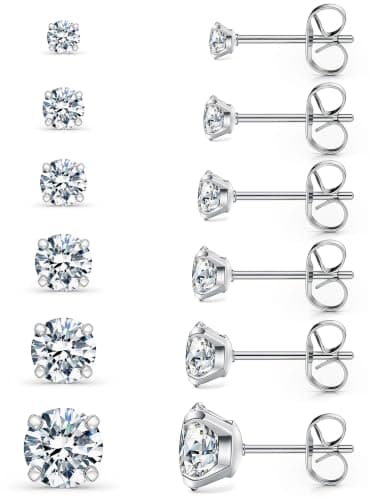
316L Stainless Steel CZ Studs, 6 pairs (3–8mm)The grade number is in the title, which is the single thing that separates a useful steel listing from a decorative one.
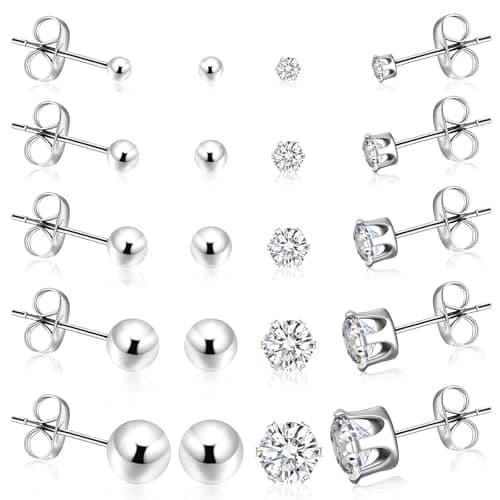
Surgical Stainless Steel Studs, 10 pairsA large steel set with a title that says 'surgical' but never says which grade, which is the common shape of this category.
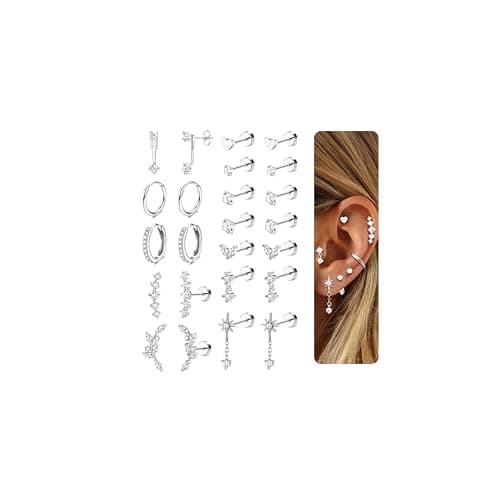
Surgical Steel Flat-Back Cartilage Stack SetAimed squarely at multiple piercings, with the placements named in the title — helix, tragus, conch, daith.
“Score” is a disclosure score, not a test result. It rates how completely the seller states the post metal, the back metal and the nickel claim, and how that metal holds up for reactive skin. The full rubric is published on our methodology page.
#1 · The cheap everyday set
316L Stainless Steel CZ Studs, 6 pairs (3–8mm)
The grade number is in the title, which is the single thing that separates a useful steel listing from a decorative one.
Post material
316L stainless steel
From the seller’s own product title: “6 Pairs Stud Earrings Set, Hypoallergenic Cubic Zirconia 316L Earrings Stainless Steel CZ Earrings 3-8mm (Steel color)”
Back material
Not named in the title
Not named in the seller’s product title — the headline nearly every buyer reads. That omission is the finding, not a gap in our notes.
Nickel claim
Says hypoallergenic, not nickel-free. The seller’s own words: “Hypoallergenic Cubic Zirconia 316L”
'316L' is doing all the work in this title. Most steel jewelry is sold as 'surgical steel', which has no legal definition for jewelry and could be 304, 430 or something unnumbered. A specific alloy designation is a claim you can go and read about, and 316L is the good one — the molybdenum in it is what resists pitting in sweat.
Six sizes from 3mm to 8mm covers most of what anyone actually wears, and cubic zirconia at this price is exactly what you would expect: bright when new, gradually less so.
For the large majority of people, including many with a mild nickel sensitivity, this is the correct everyday answer and titanium is an upgrade they do not need.
Who it’s for
Anyone who wears steel without trouble and wants a full size range for the price of one titanium pair.
Skip it if
Skip this if you have reacted to surgical steel before. 316L contains eight to twelve percent nickel by weight even though it releases very little, and if you are past that threshold no grade number will help.
A large steel set with a title that says 'surgical' but never says which grade, which is the common shape of this category.
Post material
Surgical stainless steel — no grade number stated
From the seller’s own product title: “Hypoallergenic Surgical Stainless Steel Stud Earrings for Women,10 Pairs”
Back material
Not named in the title
Not named in the seller’s product title — the headline nearly every buyer reads. That omission is the finding, not a gap in our notes.
Nickel claim
Says hypoallergenic, not nickel-free. The seller’s own words: “Hypoallergenic Surgical Stainless Steel”
The word missing here is a number. 'Surgical stainless steel' is a marketing phrase; 316L, 304 and 430 are alloys, and they behave differently in sweat and contain very different amounts of nickel. A listing that will not commit to one has left the most useful fact out.
That is not a reason to assume the worst. Most jewelry sold this way is 316L or 304 and most people wear both without incident. It is a reason to score the disclosure below the listing above it, which names its alloy for the same money.
Ten pairs is a genuinely useful quantity if steel agrees with you and you lose earrings, which most people do.
Who it’s for
Steel-tolerant buyers who want quantity and are not trying to solve a specific reaction.
Skip it if
Skip this if you need to know exactly what alloy is going through your ear. The title does not say and no amount of hoping will change that.
Aimed squarely at multiple piercings, with the placements named in the title — helix, tragus, conch, daith.
Post material
Surgical steel / stainless steel — no grade number stated
From the seller’s own product title: “Hypoallergenic Flat Back Earrings-Cartilage Earring Stacks-Surgical Steel Earrings for Sensitive Ears - Small Stainless Steel Flatback Stud Hoop Earring Sets for Helix Tragus Conch Daith Multiple Piercing Jewelry”
Back material
Flat backs; metal not separately named
Not named in the seller’s product title — the headline nearly every buyer reads. That omission is the finding, not a gap in our notes.
Nickel claim
Says hypoallergenic, not nickel-free. The seller’s own words: “Hypoallergenic Flat Back Earrings”
Naming the placements is more useful than it looks. A conch needs a different post length from a tragus, and a daith takes a ring rather than a stud. A seller listing them is at least indicating that the sizing has been thought about rather than that the pack is a random assortment.
Flat backs are the right choice for cartilage generally: less pressure on the back of the piercing, nothing to catch on a pillow, and no butterfly clip to lose.
As with most of this category, no grade number and no back metal. Cartilage heals for months, which makes the missing information matter more here than it would on a lobe.
Who it’s for
Someone building out a cartilage stack who tolerates steel and wants matched pieces across several placements.
Skip it if
Skip this if any of the piercings is fresh. For a healing cartilage piercing, implant-grade titanium with a stated grade is worth the extra few dollars, and this listing does not offer that.
For most people, functionally yes. 316L surgical steel contains 8 to 12 percent nickel by weight but releases very little of it, which is why it passes European nickel-release limits and is used for surgical instruments. It is not nickel-free, so a strongly sensitized person can still react.
Are stainless steel earrings good for sensitive ears?+
Generally yes, for healed piercings, and it is the best value in the category. For a healing piercing, or if you have reacted to steel before, implant-grade titanium is the better choice.
What does 316L mean?+
316 is an austenitic stainless alloy containing chromium, nickel and molybdenum; the L means low carbon, which improves corrosion resistance at welds. The molybdenum is what makes 316 more resistant to pitting than the more common 304.
Is surgical steel the same as stainless steel?+
“Surgical steel” is a marketing term with no legal definition for jewelry. It usually means 316L stainless, but a listing that uses the phrase without a grade number has not actually told you which alloy it is.
Does stainless steel rust or turn skin green?+
It does not rust in normal wear and does not turn skin green — green is a copper reaction and there is no copper in stainless. It can pit after very long exposure to salt water or chlorine, particularly in the cheaper 304 grade.
Why did one pair from a steel multipack irritate me and the others did not?+
Most likely they are not all the same alloy, or one pair has a plated finish or a different back. Multipacks are assembled from whatever findings are available, and the listing describes the set rather than each pair.
Worn 24/7 against a sweating wrist, steel is the worst case and the category default. The titanium and silicone options, and the clasp nobody discloses.
The pharmacy-counter brand, judged on its own labels. It names the post metal — and then says nickel safe on three listings and nickel free on a fourth.