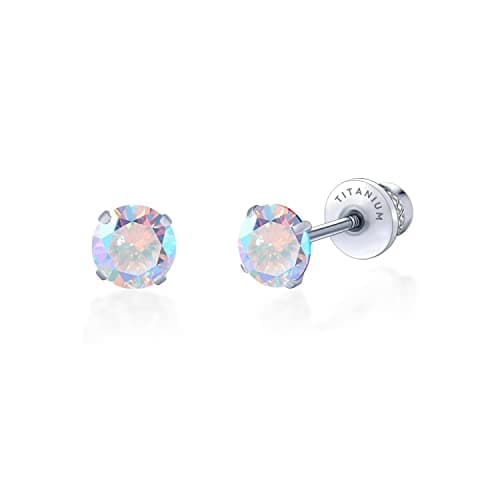
Almost every piece of inexpensive jewelry is one of these, usually under a coating, and almost none of them is named on the listing. Here is what each actually is, and which ones matter for skin that reacts.
Gentle Carat earns a commission when you buy through the links on this page, at no extra cost to you. It never decides what we recommend or how we rank it — here is the full disclosure.
Brass itself is not a nickel problem — it is copper and zinc, and neither is a common contact allergen. The problem is everything around it: the word “brass” is used loosely for a whole family of yellow alloys, some of which do contain nickel; brass is what sits under most plating, so it is what you meet when the plating wears through; and copper against sweat turns skin green, which is not an allergy but gets treated as one. If your ears react, the answer is not a better base metal — it is a named one, and the picks below are titanium, 316L steel and niobium.
Why this page exists
Every other page in this hub covers a metal somebody is proud of. Titanium, niobium, surgical steel, sterling, platinum — sellers put those words in the title because they are selling points. This page covers the opposite: the alloys that are in most inexpensive jewelry precisely because nobody mentions them.
That silence is the whole issue. If a listing says “gold plated” and stops, you have been told about the coating and told nothing about the thing the coating is on. The coating is measured in microns and the base metal is the rest of the earring. Reading these four alloys properly is what lets you work out what you are probably buying when a listing declines to say.
Brass
Brass is an alloy of copper and zinc. In its ordinary form it contains no nickel at all, so for someone with a straightforward nickel allergy, plain brass is not the enemy it is often assumed to be.
Three caveats, in order of how often they bite. First, “brass” is used loosely in jewelry copy to mean “a yellow base alloy”, and several yellow base alloys are not brass. Second, brass contains a lot of copper, and copper reacts with the salts and acids in sweat to produce the green mark everyone recognizes — the tarnish page covers that in full. Third, and most relevant here: brass is overwhelmingly the thing underneath gold plating and gold fill, which means it is what a worn earring eventually presents to your skin.
Copper
Copper on its own turns up in jewelry mostly as a decorative metal and as the balance in other alloys — it is the usual 7.5 percent in 925 sterling silver, and it is the major component of brass and bronze.
For contact-allergy purposes, copper is not in the same league as nickel; nickel is the classic jewelry contact allergen, which is why it is the metal with a legal release limit in the EU and copper is not. What copper does do reliably is discolor, and it discolors you. Green skin under a ring or behind an earlobe is copper salts forming on the surface and transferring. It is cosmetic, it washes off, and it is not evidence of an allergy — a point worth holding on to, because a lot of people conclude they are allergic to a metal that has merely made a mess.
Zinc alloy
“Zinc alloy” on a listing almost always means a zinc-based die-casting alloy — the family often sold under the trade name Zamak, zinc with small additions of aluminum, magnesium and copper. It is cheap, it casts beautifully into detailed shapes, and it is structurally what a great deal of fashion jewelry is.
It is also the least transparent material on this page. A listing saying “zinc alloy” has named a family, not a composition, and the specific mix is essentially never published. It is nearly always plated, so what you touch on day one is the coating and what you touch on day four hundred is whatever the casting is. We cannot tell you whether a given zinc-alloy piece contains nickel, and neither can the listing — which is the honest answer and also the reason this page does not recommend any of it.
Pewter
Pewter is a tin-based alloy, traditionally with copper and antimony. Modern jewelry pewter is normally sold as lead-free, and historical pewter often was not, which is why the phrase “lead-free pewter” appears on listings at all.
It is soft, it is heavy for its size, and it is a relatively uncommon choice for earrings because of both. Where it turns up for readers of this site is in pendants and charms rather than posts. Tin is not a common contact allergen in the way nickel is, so pewter is a lower-concern material than the plated alloys above — but the same rule applies: what matters is whether the listing tells you, and most do not.
The base-alloy tier, as against the metals this site recommends
What it is
Nickel by definition
Usually coated
Named on listings
Brass
Copper + zinc
No
Usually
Rarely, it is the hidden base
Nickel silver
Copper + zinc + nickel, no silver
Yes
Often
Sometimes, under a confusing name
Zinc alloy
Zinc-based casting alloy
Not by definition; composition unpublished
Almost always
Named as a family, never a composition
Pewter
Tin-based, usually with copper
No
Sometimes
Usually, when it is used
316L steel
Iron, chromium, nickel
Yes, deliberately
No
Yes, and the grade too
Titanium, ASTM F136
Ti-6Al-4V ELI
No deliberate nickel
No
Yes, with a standard number
Niobium
An element, not an alloy
No
No
Yes
The base-alloy tier, as against the metals this site recommends
PVD and ion plating: a better coating, still a coating
A lot of modern “gold” steel jewelry is PVD coated — physical vapor deposition, sometimes sold as ion plating or IP. It is a vacuum process that lays down a very thin, very hard color layer, and it is genuinely more durable than the electroplating on a cheap gold-tone earring. If you have worn a PVD-coated watch case, you will have noticed it does not wear through the way plating does.
Two things follow, and they pull in opposite directions. A tougher coating that survives longer is a real advantage for anyone whose problem is a base metal appearing as the finish wears — so PVD over a named steel is a sensible thing to buy. But a coating is still not a composition: PVD tells you how the color was applied, not what it was applied to. “PVD gold” over 316L is a good buy. “PVD gold” over an unnamed alloy is the same unanswered question as always, in a more impressive-sounding wrapper. The distinction is the same one gold-filled versus gold-plated draws, one layer further along.
So what should you actually buy?
The useful move is not to find a safe base metal. It is to stop buying unnamed ones. Three materials on this site give you a real answer:
Implant-grade titanium — the only one pointing at a published composition standard, ASTM F136. The default recommendation for anything going through a piercing.
316L stainless steel — contains nickel on purpose and releases very little. Fine for most people with mild sensitivity, not for a confirmed allergy.
Niobium — an element rather than an alloy, so there is nothing in it to be allergic to besides niobium. The fallback when titanium itself has failed.
And one cheap, specific thing worth doing before you replace anything: check the back. Backs are separately manufactured, routinely a cheaper alloy than the earring they hold on, and almost never named. A set of titanium backs costs very little and fixes more reactions than new earrings do. If you want to settle the question on jewelry you already own, the nickel spot test is a real test you can run at a kitchen table.
Quick picks
Ranked on what the seller actually discloses. Tap a row for the full write-up, or go straight to the listing.
#
Product
Best for
Score
Price
1
Limerencia F136 Titanium Screw-Back Flat-Back CZ Studs (20G)The clearest material claim in this whole category: the standard number, the gauge and the fastening are all in the title before you have clicked anything.
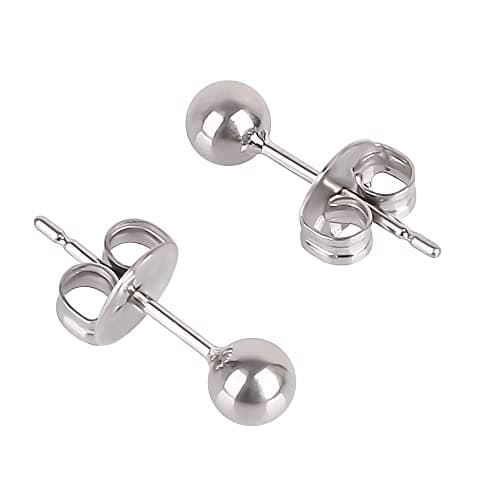
VGACETI Pure Titanium Ball Post Studs, 3mm and 4mmThe rare listing that says nickel-free rather than hypoallergenic, and names the post specifically rather than the earring generally.
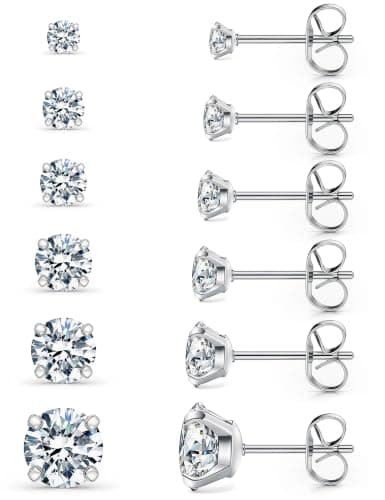
316L Stainless Steel CZ Studs, 6 pairs (3–8mm)The grade number is in the title, which is the single thing that separates a useful steel listing from a decorative one.
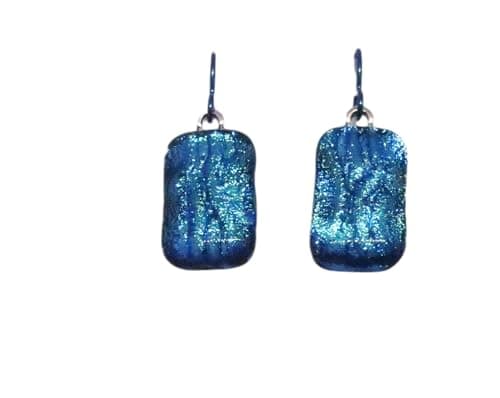
McCray Studios Dichroic Glass Dangle Earrings on NiobiumOne of the very few finished niobium earrings sold at retail rather than as a bag of ear wires for jewelry makers.
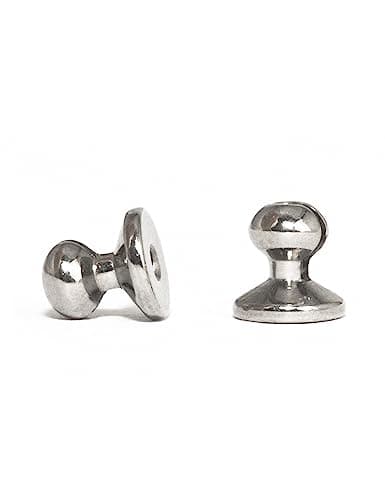
Limerencia Pure Titanium Replacement Earring Backs (2 pairs)The cheapest fix in this whole category: keep the earrings, replace the part that is actually touching you.
“Score” is a disclosure score, not a test result. It rates how completely the seller states the post metal, the back metal and the nickel claim, and how that metal holds up for reactive skin. The full rubric is published on our methodology page.
The clearest material claim in this whole category: the standard number, the gauge and the fastening are all in the title before you have clicked anything.
Post material
F136 implant-grade titanium, 20 gauge
From the seller’s own product title: “Limerencia Hypoallergenic G23 Implant Grade Titanium Screw Back Earrings | 20G F136 Pure Titanium Flat Back CZ Studs”
Back material
Screw-on flat back; the same titanium is implied but the metal is not separately named
Not named in the seller’s product title — the headline nearly every buyer reads. That omission is the finding, not a gap in our notes.
Nickel claim
Says hypoallergenic, not nickel-free. The seller’s own words: “Hypoallergenic G23 Implant Grade Titanium”
Two numbers do all the work here. F136 is the ASTM specification for the Ti-6Al-4V ELI alloy used in surgical implants, and G23 is the grade designation for that same alloy. A seller putting both in the title is pointing at a published document rather than reaching for an adjective, and that is rarer than it should be.
The flat back matters as much as the metal. A flat disc sits against the back of the lobe instead of a butterfly clip pressing a small area, which is why piercers use this shape for anything that has to be slept in. Combined with a screw thread rather than a friction push-fit, it is about as low-drama as an earring gets.
What the title does not do is name the back separately. In practice a screw-back on a titanium post is almost always the same titanium, and the design leaves little room for it to be anything else — but the seller has not committed to it in the headline, and we score what is stated rather than what is likely.
Who it’s for
Anyone who has reacted to something before and wants to stop running experiments. Also the sensible default for a piercing you intend to sleep in.
Skip it if
Skip this if you want a decorative statement earring. A 20-gauge flat-back CZ stud is deliberately unobtrusive, and if you want to be seen wearing something, this is not it.
VGACETI Pure Titanium Ball Post Studs, 3mm and 4mm
The rare listing that says nickel-free rather than hypoallergenic, and names the post specifically rather than the earring generally.
Post material
Pure titanium, ball post construction
From the seller’s own product title: “Ball Stud Titanium Earrings,Hypoallergenic for Women High Polished Colored for Sensitive Ears, 3mm and 4mm Pure Titanium Nickel-Free Lead-Free”
Back material
Not named in the title
Not named in the seller’s product title — the headline nearly every buyer reads. That omission is the finding, not a gap in our notes.
Nickel claim
Explicitly nickel-free. The seller’s own words: “Pure Titanium Nickel-Free Lead-Free”
This is the strongest nickel language on this page and the reason the pick is here. 'Nickel-free' is a definite factual claim about composition that the seller can be held to. 'Hypoallergenic' is not. Almost every competing listing chooses the second and this one chose the first.
Commercially pure titanium rather than the F136 alloy: no aluminum, no vanadium, one element. Slightly softer, which is why you see it as balls and discs rather than as thin structural parts, and completely fine for a healed lobe.
A 3mm or 4mm ball is the smallest sensible everyday earring. It is what you put in when you want the piercing to stay open and otherwise want to forget it exists, and at this price there is no reason to compromise on the metal to get it.
Who it’s for
First purchase for someone who has just worked out that nickel is the problem. Cheap enough to be a low-stakes test of whether titanium fixes it.
Skip it if
Skip this if you want the earring to be visible from more than a foot away. A polished 3mm ball is jewelry in the technical sense only.
The grade number is in the title, which is the single thing that separates a useful steel listing from a decorative one.
Post material
316L stainless steel
From the seller’s own product title: “6 Pairs Stud Earrings Set, Hypoallergenic Cubic Zirconia 316L Earrings Stainless Steel CZ Earrings 3-8mm (Steel color)”
Back material
Not named in the title
Not named in the seller’s product title — the headline nearly every buyer reads. That omission is the finding, not a gap in our notes.
Nickel claim
Says hypoallergenic, not nickel-free. The seller’s own words: “Hypoallergenic Cubic Zirconia 316L”
'316L' is doing all the work in this title. Most steel jewelry is sold as 'surgical steel', which has no legal definition for jewelry and could be 304, 430 or something unnumbered. A specific alloy designation is a claim you can go and read about, and 316L is the good one — the molybdenum in it is what resists pitting in sweat.
Six sizes from 3mm to 8mm covers most of what anyone actually wears, and cubic zirconia at this price is exactly what you would expect: bright when new, gradually less so.
For the large majority of people, including many with a mild nickel sensitivity, this is the correct everyday answer and titanium is an upgrade they do not need.
Who it’s for
Anyone who wears steel without trouble and wants a full size range for the price of one titanium pair.
Skip it if
Skip this if you have reacted to surgical steel before. 316L contains eight to twelve percent nickel by weight even though it releases very little, and if you are past that threshold no grade number will help.
McCray Studios Dichroic Glass Dangle Earrings on Niobium
One of the very few finished niobium earrings sold at retail rather than as a bag of ear wires for jewelry makers.
Post material
Niobium ear wire
From the seller’s own product title: “Exceptional Aqua Blue Dichroic Glass Dangle Niobium earrings N280”
Back material
French hook — nothing clips on behind the ear
From the seller’s own product title: “Dangle Niobium earrings”
Nickel claim
Names a metal, makes no nickel claim. The seller’s own words: “Dichroic Glass Dangle Niobium earrings”
Niobium is an elemental metal used unalloyed, so there is no nickel in it to release — not a low amount, none. That is a structurally stronger position than even implant-grade titanium, which is an alloy of three metals.
The hanging element is dichroic glass, a laminated glass that shifts color with the viewing angle. Glass is inert against skin and it is not the part that goes through the piercing anyway; the wire is, and the wire is the niobium.
The title names the metal and makes no allergy claim of any kind, which on this site scores as honest material-only wording rather than as a weakness. It also does not say what the small connecting loops are made of.
Who it’s for
Someone who reacts even to implant-grade titanium and has given up on finding niobium in anything but findings.
Skip it if
Skip this if you want a stud. It is a dangle, it moves, and it is glass — none of which suits a healing piercing or a heavy sleeper.
Limerencia Pure Titanium Replacement Earring Backs (2 pairs)
The cheapest fix in this whole category: keep the earrings, replace the part that is actually touching you.
Post material
Not applicable — this is the back component
From the seller’s own product title: “Limerencia Pure Titanium Earring Backs Replacements”
Back material
Pure titanium
From the seller’s own product title: “Limerencia Pure Titanium Earring Backs Replacements, Hypoallergenic for Sensitive Ears, Secure Ear Locking for Stud Earrings for Posts”
Nickel claim
Says hypoallergenic, not nickel-free. The seller’s own words: “Pure Titanium Earring Backs ... Hypoallergenic”
This is the pick that most often solves the problem for the least money, and almost nobody writing about sensitive ears mentions it. A butterfly back is a separately manufactured part, frequently a cheaper alloy than the earring it holds on, and it sits against the back of your lobe for exactly as long as the earring does.
So if you have earrings you love that started irritating you, or one ear reacts and the other does not, changing the backs is the first thing to try. It costs a fraction of a new pair and it isolates the variable.
Titanium backs also grip differently from steel butterflies — generally more securely, which is a side benefit if you lose earrings.
Who it’s for
Anyone with a drawer of earrings they cannot wear. Try this before replacing any of them.
Skip it if
Skip this if the post itself is the problem. A titanium back on a plated brass post fixes half of a two-part contact and the half it does not fix is inside the piercing.
Brass is copper and zinc, so by definition it contains no nickel, and for most people with a nickel allergy plain brass is not the trigger. But “hypoallergenic” is a marketing word with no legal definition, brass is often what sits under plating rather than what is declared, and some yellow alloys sold loosely as brass do contain nickel. A named titanium or 316L steel is a far more useful answer than a hopeful one about brass.
Does brass contain nickel?+
Ordinary brass does not — it is copper and zinc. The thing to watch for is nickel silver, also sold as German silver or alpacca, which looks like a pale brass and does contain nickel despite containing no silver. If a listing uses any of those three words, treat it as a nickel-bearing alloy.
Why does brass jewelry turn my skin green?+
That is the copper in it reacting with moisture and the salts in your sweat to form copper salts, which transfer onto skin. It is cosmetic, it washes off, and it is not an allergic reaction — an allergy itches and inflames, a green mark just sits there. The tarnish and water page goes through the difference and what actually prevents it.
Is zinc alloy jewelry safe for sensitive skin?+
We cannot tell you, and neither can the listing, which is the problem. “Zinc alloy” names a family of casting alloys rather than a composition, the specific mix is essentially never published, and the piece is nearly always plated over the top. If you react to metals, an unnamed casting alloy under a wearing coating is the configuration to avoid.
Is PVD coating better than gold plating?+
For durability, yes — physical vapor deposition lays down a harder, longer-lasting color layer than standard electroplating, so the base metal is exposed much later if at all. For knowing what you are wearing, it changes nothing: PVD describes how the color was applied, not what it was applied to. PVD over a stated 316L is a good buy; PVD over an unnamed alloy is the same unanswered question.
Is pewter safe to wear?+
Modern jewelry pewter is a tin-based alloy normally sold as lead-free, and tin is not a common contact allergen in the way nickel is, so it is a lower-concern material than the plated casting alloys. It is soft and heavy, which is why it turns up in pendants and charms more than in earrings. As always, the thing that matters is whether the listing says — and for pewter it usually does.
What is the safest metal if I do not know what I react to?+
Implant-grade titanium to ASTM F136, because it is the only option in common jewelry use that points at a published composition specification rather than an adjective. If titanium has itself failed you, niobium is the next step, being an element rather than an alloy. Both are covered in full elsewhere in this hub.