Skip to content
Gentle CaratGentle Carat home

Tarnish, green skin and what actually survives water

Three different things get called a reaction, and only one of them is. Here is how to tell them apart in about ten seconds.

By Scooter M. · Verified on

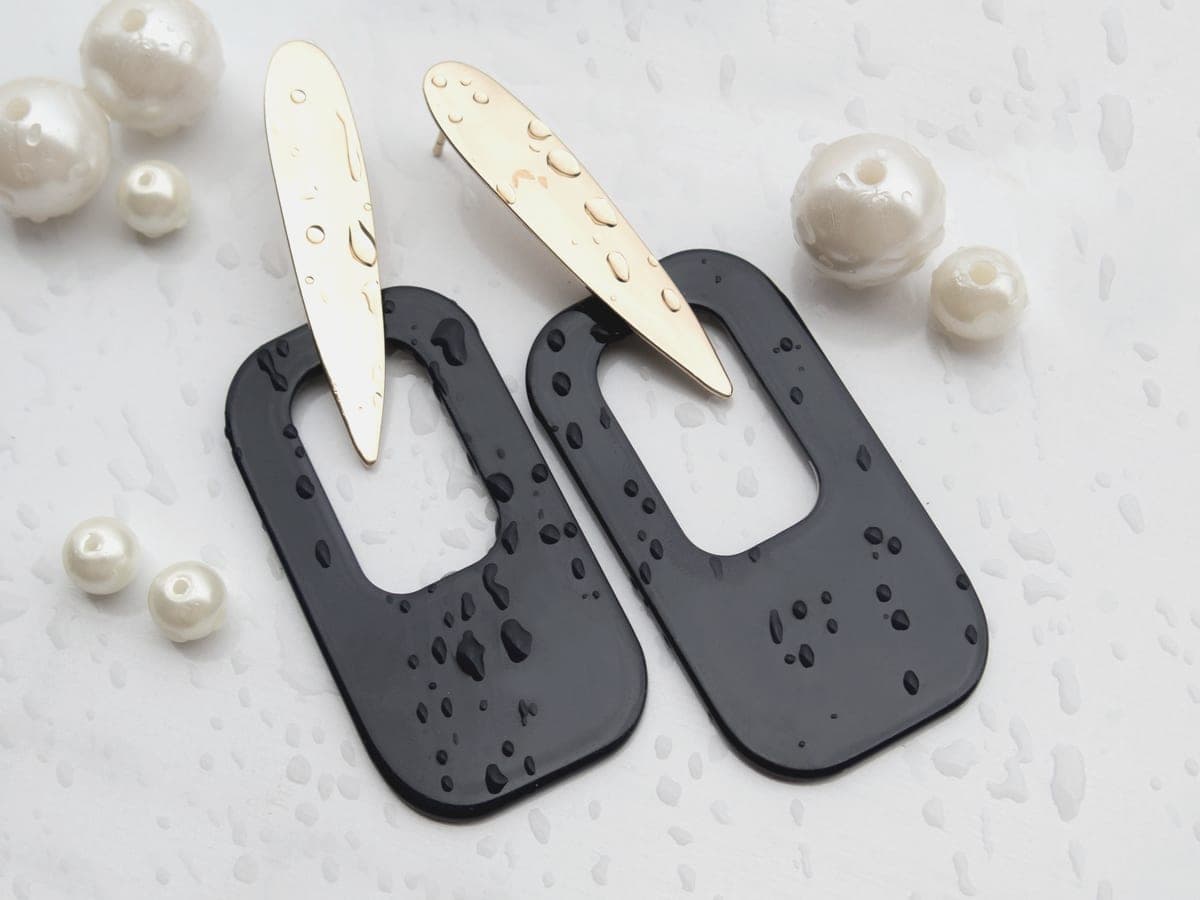
Water droplets beside jewelry on a pale, softly lit surface

Gentle Carat earns a commission when you buy through the links on this page, at no extra cost to you. It never decides what we recommend or how we rank it — here is the full disclosure.

Green skin is copper oxidizing and washes off. Black or gray marks are silver sulfide — tarnish transferring — and also wash off. An allergic reaction itches, is often raised or weeping, and does not wash off. If it comes off with soap, it was a stain, not an allergy.

Telling the three apart

Four things that all get described as 'my ears reacted', and how to distinguish them.
What you seeWhat it isDoes it itch?The fix
Green mark on skinCopper reacting with sweat and air to form copper salts. Common with brass, bronze and cheaper sterling.NoWash it off. Change metal if it bothers you cosmetically.
Black or gray markSilver sulfide from tarnished silver rubbing onto skin.NoPolish the piece. Store it dry and out of the air.
Red, itchy, sometimes weepingAllergic contact dermatitis. Usually nickel.Yes, often intenselyChange the metal, not the cleaning routine. Start here.
Sore but not itchy, with pressure marksMechanical irritation from weight, a tight back or a bad angle.Not reallyChange the fastening or the size, not the metal.
Four things that all get described as 'my ears reacted', and how to distinguish them.

What “waterproof jewelry” actually claims

The phrase has become a category of its own and it is not regulated any more than “hypoallergenic” is. What sellers mean by it is usually: the metal will not tarnish or rust in water, and the finish will not lift. Whether that is true depends entirely on whether there is a finish involved.

How each metal behaves in water. The pattern is simple: solid metals are fine, surfaces are not.
MetalShowerChlorinated poolSea water
Solid titaniumFineFineFine
NiobiumFineFineFine
316L stainlessFineFine occasionally; can pit with daily exposureRinse after
304 stainlessFinePits sooner than 316LRinse after, and expect wear
Solid gold 14k+FineChlorine attacks the alloy metals over timeFine, rinse after
Sterling silverWill tarnish fasterChlorine accelerates tarnish badlyTarnishes
Anything platedShortens plating lifeShortens it a lotShortens it a lot
How each metal behaves in water. The pattern is simple: solid metals are fine, surfaces are not.

Chlorine is harder on jewelry than the sea

Counterintuitive, but consistent. Chlorine is a strong oxidizer and attacks the alloying metals in gold and can pit stainless steel with repeated exposure. Sea water is mechanically abrasive because of sand and salt crystals, but chemically it is gentler on most jewelry metals than a chlorinated pool.

Either way the practical advice is the same and boring: rinse with fresh water afterwards and dry properly. Most jewelry damage is not from a single swim but from repeatedly leaving a wet piece to dry in place.

Storage, briefly

  • Silver: airtight, dark, dry. Anti-tarnish strips genuinely work. Do not store it in the bathroom.
  • Plated pieces: separately, so they do not abrade each other. Abrasion is what kills plating, more than water.
  • Titanium and steel: anywhere. They are not delicate and pretending otherwise is a waste of a nice box.

If you want to stop thinking about this

Buy solid titanium or 316L steel and wear it through everything. Neither tarnishes, neither turns skin green, neither has a finish to lose, and neither cares about a shower. The three picks below are exactly that: pieces you can put in and forget about, which is the actual goal for most people reading a page about tarnish.

Quick picks

Ranked on what the seller actually discloses. Tap a row for the full write-up, or go straight to the listing.

#ProductBest forScorePrice
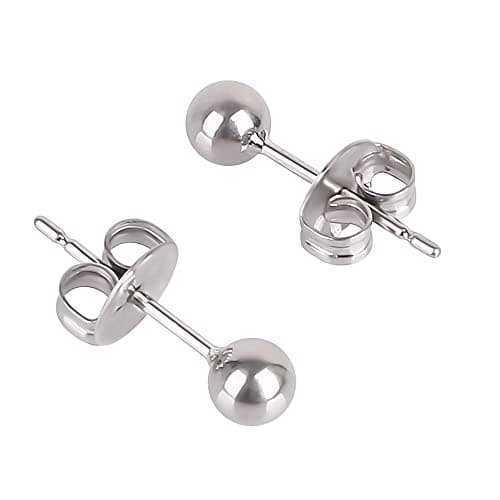
1VGACETI Pure Titanium Ball Post Studs, 3mm and 4mmVGACETI Pure Titanium Ball Post Studs, 3mm and 4mmThe rare listing that says nickel-free rather than hypoallergenic, and names the post specifically rather than the earring generally.The cheapest genuine nickel-free claim8disclosureCheck price
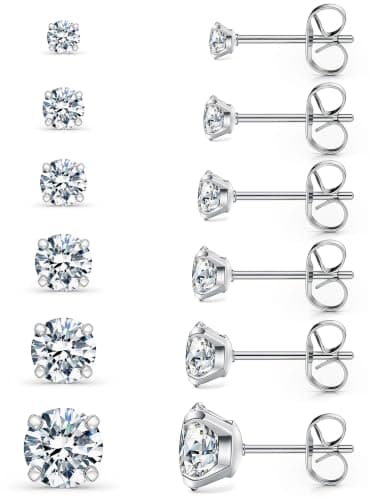
2Threadless Titanium Flat-Back Studs, 6 pairs (2–8mm)Threadless Titanium Flat-Back Studs, 6 pairs (2–8mm)Six sizes of flat-back in one box, and one of the few titles that names both the titanium and a steel component rather than leaving the second one to your imagination.A full flat-back set6.6disclosureCheck price
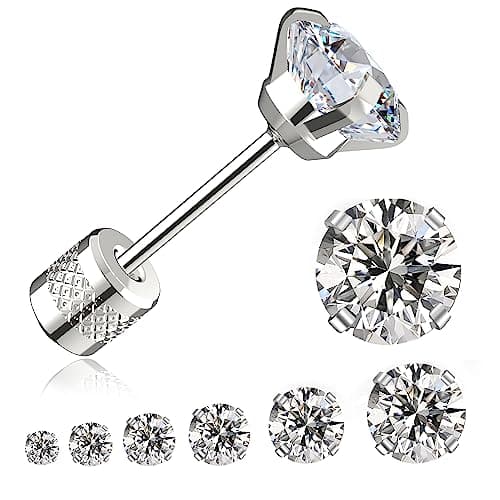
3316L Stainless Steel CZ Studs, 6 pairs (3–8mm)316L Stainless Steel CZ Studs, 6 pairs (3–8mm)The grade number is in the title, which is the single thing that separates a useful steel listing from a decorative one.The cheap everyday set6.2disclosureCheck price

“Score” is a disclosure score, not a test result. It rates how completely the seller states the post metal, the back metal and the nickel claim, and how that metal holds up for reactive skin. The full rubric is published on our methodology page.

VGACETI Pure Titanium Ball Post Studs, 3mm and 4mm

#1 · The cheapest genuine nickel-free claim

VGACETI Pure Titanium Ball Post Studs, 3mm and 4mm

The rare listing that says nickel-free rather than hypoallergenic, and names the post specifically rather than the earring generally.

Post material
Pure titanium, ball post construction
From the seller’s own product title: “Ball Stud Titanium Earrings,Hypoallergenic for Women High Polished Colored for Sensitive Ears, 3mm and 4mm Pure Titanium Nickel-Free Lead-Free
Back material
Not named in the title
Not named in the seller’s product title — the headline nearly every buyer reads. That omission is the finding, not a gap in our notes.
Nickel claim
Explicitly nickel-free. The seller’s own words: “Pure Titanium Nickel-Free Lead-Free

This is the strongest nickel language on this page and the reason the pick is here. 'Nickel-free' is a definite factual claim about composition that the seller can be held to. 'Hypoallergenic' is not. Almost every competing listing chooses the second and this one chose the first.

Commercially pure titanium rather than the F136 alloy: no aluminum, no vanadium, one element. Slightly softer, which is why you see it as balls and discs rather than as thin structural parts, and completely fine for a healed lobe.

A 3mm or 4mm ball is the smallest sensible everyday earring. It is what you put in when you want the piercing to stay open and otherwise want to forget it exists, and at this price there is no reason to compromise on the metal to get it.

Who it’s for

First purchase for someone who has just worked out that nickel is the problem. Cheap enough to be a low-stakes test of whether titanium fixes it.

Skip it if

Skip this if you want the earring to be visible from more than a foot away. A polished 3mm ball is jewelry in the technical sense only.

Disclosure score

8

  • Post metal stated10
  • Back metal stated3
  • Strength of nickel claim10
  • Material for reactive skin9
  • Everyday wearability8

A disclosure score, not a test result. Nobody here wore these. Read how the rubric works.

Threadless Titanium Flat-Back Studs, 6 pairs (2–8mm)

#2 · A full flat-back set

Threadless Titanium Flat-Back Studs, 6 pairs (2–8mm)

Six sizes of flat-back in one box, and one of the few titles that names both the titanium and a steel component rather than leaving the second one to your imagination.

Post material
Titanium
From the seller’s own product title: “Threadless Flat Back Stud Earrings, 6 Pairs Titanium Hypoallergenic Earrings for Women Men, Cubic Zirconia Silver Gold Stud Earrings Surgical Stainless Steel Stud Earring Set for Cartilage 2-8mm
Back material
Surgical stainless steel appears in the title alongside titanium — read it as a mixed set
From the seller’s own product title: “Surgical Stainless Steel Stud Earring Set
Nickel claim
Says hypoallergenic, not nickel-free. The seller’s own words: “Titanium Hypoallergenic Earrings

This one is genuinely useful and genuinely ambiguous, and it is worth reading the title twice. It says 'Titanium' and it also says 'Surgical Stainless Steel'. Both metals appear in the same set, and the title does not tell you which component is which — so treat it as containing steel unless the seller says otherwise.

That is a real limitation and the reason it does not score higher. For most people steel is fine, so a mixed set is a sensible way to own six sizes cheaply. For someone who reacts to steel, the ambiguity makes this the wrong purchase.

Threadless is the fastening piercers prefer: a post with a pin that friction-fits into the decorative end, so nothing screws and nothing has a sharp thread to drag through a healing channel. It is easier to insert than a screw-back once you have the knack, and harder before you do.

Who it’s for

Someone who tolerates surgical steel, wants a spread of flat-back sizes for stacked piercings, and is buying on value.

Skip it if

Skip this if you have reacted to surgical steel. The title names both metals without saying which part is which, and that ambiguity is exactly what you cannot afford.

Disclosure score

6.6

  • Post metal stated7
  • Back metal stated6
  • Strength of nickel claim5
  • Material for reactive skin7
  • Everyday wearability8

A disclosure score, not a test result. Nobody here wore these. Read how the rubric works.

316L Stainless Steel CZ Studs, 6 pairs (3–8mm)

#3 · The cheap everyday set

316L Stainless Steel CZ Studs, 6 pairs (3–8mm)

The grade number is in the title, which is the single thing that separates a useful steel listing from a decorative one.

Post material
316L stainless steel
From the seller’s own product title: “6 Pairs Stud Earrings Set, Hypoallergenic Cubic Zirconia 316L Earrings Stainless Steel CZ Earrings 3-8mm (Steel color)
Back material
Not named in the title
Not named in the seller’s product title — the headline nearly every buyer reads. That omission is the finding, not a gap in our notes.
Nickel claim
Says hypoallergenic, not nickel-free. The seller’s own words: “Hypoallergenic Cubic Zirconia 316L

'316L' is doing all the work in this title. Most steel jewelry is sold as 'surgical steel', which has no legal definition for jewelry and could be 304, 430 or something unnumbered. A specific alloy designation is a claim you can go and read about, and 316L is the good one — the molybdenum in it is what resists pitting in sweat.

Six sizes from 3mm to 8mm covers most of what anyone actually wears, and cubic zirconia at this price is exactly what you would expect: bright when new, gradually less so.

For the large majority of people, including many with a mild nickel sensitivity, this is the correct everyday answer and titanium is an upgrade they do not need.

Who it’s for

Anyone who wears steel without trouble and wants a full size range for the price of one titanium pair.

Skip it if

Skip this if you have reacted to surgical steel before. 316L contains eight to twelve percent nickel by weight even though it releases very little, and if you are past that threshold no grade number will help.

Disclosure score

6.2

  • Post metal stated8
  • Back metal stated2
  • Strength of nickel claim6
  • Material for reactive skin7
  • Everyday wearability8

A disclosure score, not a test result. Nobody here wore these. Read how the rubric works.

Questions people actually ask

Why does jewelry turn my skin green?

Copper in the alloy reacting with sweat and air to form copper salts, which are green and rub off onto skin. It is a stain, not an allergy, and it washes off. Brass, bronze and some sterling do it; titanium and stainless steel do not.

Is green skin from jewelry an allergic reaction?

No. An allergic reaction itches, is often raised, and does not wash away. Green is copper oxidation and comes off with soap. They frequently get confused because they happen to the same people wearing the same cheap jewelry.

Is waterproof jewelry a real thing?

The phrase is unregulated, but the underlying property is real: solid titanium, niobium and good stainless steel genuinely do not care about water. Anything with a plated finish is not waterproof in any useful sense, because water shortens the plating’s life.

Can I shower in stainless steel earrings?

Yes. 316L handles daily showers without trouble. Rinse and dry after chlorinated pools or the sea, and avoid leaving them wet against skin for long periods.

What is tarnish-free jewelry?

Usually solid titanium, niobium or stainless steel — metals that form a stable oxide layer instead of a progressive one. Silver always tarnishes eventually; gold does not tarnish but its alloying metals can discolor.

Does chlorine damage gold?

It attacks the alloying metals in gold rather than the gold itself, which over repeated exposure can make the piece brittle at thin points such as prongs and clasps. Rinse after swimming, or take gold off first.

Sources

Read next